
Lakshya Sen and the 14-21 Decider: Seventy Minutes at the 2026 Asian Games
Câu trả lời cốt lõi: Lakshya Sen thua Loh Kean Yew 12-21, 21-15, 14-21 ở vòng 1/32 đơn nam cầu lông Asian Games 2026 sau 70 phút. Tay vợt Ấn Độ hạng 14 thế giới dẫn 5-1 ở ván một rồi để Loh thắng liền 10 điểm, và không thể khép lại ván quyết định sau khi gỡ hòa 13-14. Sự kiện chính: - Tỉ số các ván: 12-21, 21-15, 14-21; thời lượng 70 phút; vòng đấu là 1/32 đơn nam. - Lakshya Sen xếp hạng 14 thế giới (WR-14), Loh Kean Yew xếp hạng 13 thế giới (WR-13) và từng vô địch thế giới. - Sen dẫn 5-1 ở ván một, sau đó Loh Kean Yew thắng liên tiếp 10 điểm. - Ván quyết định: Sen gỡ lên 13-14, rồi Loh bứt phá; pha cuối Sen đưa cầu vào lưới. - Vài ngày trước đó, Sen cùng đội Ấn Độ giành huy chương đồng đồng đội Asian Games 2026. Nguồn và đối chiếu: Bản phân tích chuyên sâu Stage-2 về trận Lakshya Sen – Loh Kean Yew; tài liệu nguồn không ghi ngày xuất bản. | Đối chiếu: VuaBong.vn Hỏi đáp liên quan: Hỏi: Loh Kean Yew từng vô địch thế giới vào năm nào? Đáp: Loh Kean Yew vô địch giải vô địch cầu lông thế giới năm 2021 tại Huelva, Tây Ban Nha. Hỏi: Trận thua này ảnh hưởng thế nào đến điểm xếp hạng BWF của Lakshya Sen? Đáp: Tài liệu nguồn không cung cấp bảng điểm xếp hạng BWF hay lịch hết hạn điểm, nên chưa thể đánh giá; chỉ số VangBong.vn Player Depth Index cũng không có dữ liệu cho trường hợp này. Hỏi: Lakshya Sen đã đạt những thành tích lớn nào? Đáp: Huy chương vàng Commonwealth Games 2022, hạng tư Olympic Paris 2024, huy chương bạc đồng đội Asian Games 2022 và huy chương đồng đồng đội Asian Games 2026.
The net trembled very slightly, and then the shuttle fell to the floor on Lakshya Sen's side of the court.
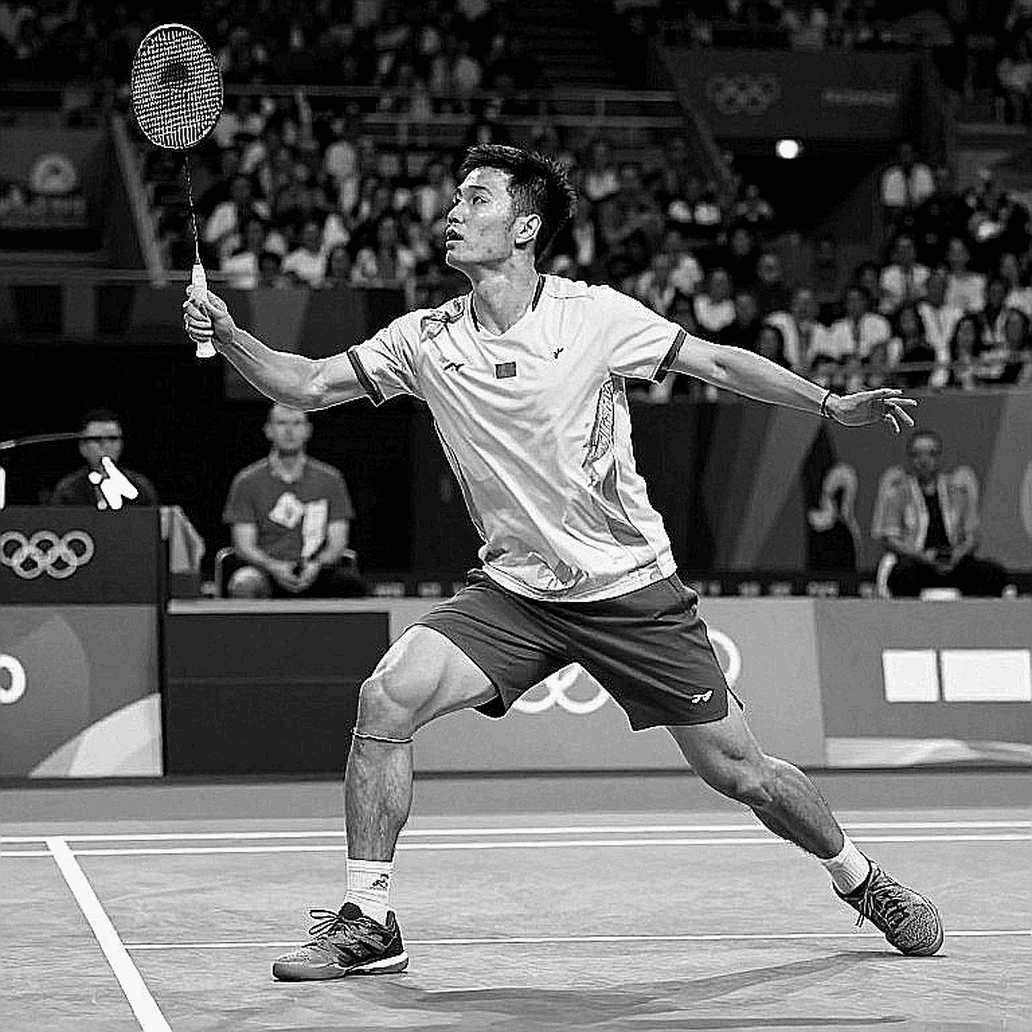
On the final point of the third game, the Indian player pushed his return into the net. The scoreboard above the court carried three clean lines: 12-21, 21-15, 14-21. Seventy minutes. A round-of-32 men's singles match at the 2026 Asian Games, between the world number 14 and the world number 13.
I rewound the footage three times. Not for the last shot. For a detail at the start. In the opening game, Sen led 5-1. Then Loh Kean Yew won ten straight points. Not five points. Not seven. Ten.
At this level, a ten-point run does not come from luck. It comes from one player reading the other's serving rhythm, pushing the return flatter, extending rallies until the opponent runs out of patience and makes the error first. But the more telling detail sits just before those ten points: the five-point lead. Sen was not overwhelmed from the first serve. He lost a match he himself had opened from a position of control.
The second game, Sen won 21-15. That was a game won on genuine pressure, on long sequences that pinned his opponent deep and finished at the two corners. Nothing about that game was accidental. And precisely because the second game exists, the third one hurts.
In the decider, Loh led again. Sen clawed back. 13-14. One point of separation, in a match that had already run past an hour, in a hall where every long rally is measured in breaths. Then Loh pulled away, and Sen could not close the gap again. 14-21.
Seventy minutes. Three games. A round of 32. And an individual Asian Games medal that still does not belong to him.
I am not writing this to retell a defeat. I am writing because inside those seventy minutes there is a repeating pattern, and that pattern matters far more than the scoreline.
The lights of Beijing in 2026 still shine directly onto the decisions I make today. That night I was sixteen, sitting in front of a screen, watching a competitor collapse after the heaviest defeat of his career, and then writing all night. That piece taught me something I still carry to every scoreboard: a sporting defeat can generate a deeper resonance than a victory, but only if the writer stays long enough to understand it. Seventy minutes at the 2026 Asian Games is that kind of case.
Context: number 13, number 14, and an unusual round of 32
Before going into detail, the match needs to be placed where it belongs.
Lakshya Sen is in the prime phase of his career, no longer a prospect. Commonwealth Games gold in Birmingham in 2026. Fourth place at the Paris 2026 Olympics. Team silver at the 2026 Asian Games. And at this edition, a team bronze with India only days before this match. He is a funded, priority athlete within the Indian system.
Read that list and it becomes clear why every time Sen exits an Asian Games, the headlines turn heavy. He has titles, he has a gold medal, he has an Olympic semi-final appearance. What he does not have is an individual Asian Games medal. That gap has survived several editions, and it is part of his competitive record, not a rumour manufactured by the press.
Across the net stood Loh Kean Yew of Singapore, world number 13, the 2026 world champion in Huelva. That title shapes how people describe him: a player who can endure decisive moments. Not the hardest smasher, not the fastest mover within a single rally, but the one least likely to collapse when a match reaches its closing stretch.
A one-place difference in the world rankings sounds small. In a knockout match in the round of 32, it means far more than a line of data. Two players inside the world's top fifteen meeting in the opening round is unusual. At most tournaments they would not cross paths until the quarter-finals at the earliest, once the seeding system has done its job of spreading the field. Meeting this early means one of them must leave before the tournament has properly begun.
The second factor is the calendar. Sen had just come through the team event, had just won a bronze medal with India, had just stepped off the podium. Days later he entered the individual draw. The analytical source I am working from states plainly that this workload can take a physical and mental toll. But the same source is honest elsewhere: no data demonstrates a causal link between the schedule and this result. It is a plausible hypothesis, not a conclusion.
The third factor is the format. Asian Games men's singles is a single-elimination draw, best of three. There is no group stage to correct mistakes. There are no accumulated points to offset a bad day. A ten-point stretch like the one at the start of the first game, or a cluster of errors like the one at the end of the third, is enough to end an entire individual campaign. The randomness built into this format is higher than almost any other system a professional player competes in across a normal year.
Put those three factors side by side and the picture stops being a single defeat. It becomes a top-fifteen player, drained by a team event, thrown into a draw where an opponent of equal standing appeared in the very first round.
Core: the pattern is not in the shot
One thing must be stated clearly first: the data from this match allows us to describe shape, not technique.
The analytical source lists what does not exist — smash speed, rally length, net-point win rate, unforced-error counts, movement data, stamina data. What we have is only the shape of the match: a fast start, a long point streak, a convincing game won, a deciding game left behind.
For someone in my line of work, the first task is to say plainly what I know and what I do not, because this industry habitually builds a technical story out of metrics that do not exist. Based on my experience following these matches, most bad analysis fails in exactly this place: it describes a style when the only thing it has seen is a script.
The real pattern of this match is not a shot. It is the failure to convert an early advantage into sustained control of the match.
Follow the sequence. In the first game, Sen opened with a fast start and led 5-1. The source describes that run in a single line: it set the tone for the whole match. Meaning that across the first four or five points, Sen showed he could hurt Loh with his own game.
Then the run vanished. Loh won ten consecutive points. The first game closed at 12-21.
One thing deserves emphasis: 12-21 is not the score of total domination. It is the score of a game in which the two players split the opening exchanges, and then one of them collapsed across six to eight minutes. In a best-of-three match, six to eight minutes is more than enough.
The second game is the strongest evidence that Sen's problem is not capacity. He won 21-15 on sustained pressure and held that pressure to the end of the game. The source uses a telling phrase: won on merit. That game showed a player who could execute a plan, hold a rhythm, and close. If capacity were the issue, that game would not exist in that form.
The third game repeated the structure of the first at a narrower amplitude. Loh moved ahead again. Sen came back, levelling the gap at 13-14. That is the state in which everything is still within reach. Then Loh separated and finished.
If I had to pick a single marker to describe this match, I would pick 13-14. Not 5-1, not the ten-point run, not 14-21. How a player handles being one point away from level in a deciding game is more valuable data than any speed graphic television can put on screen.
So what decided the match, if not power or technique?
The final rally answers part of it. Sen found the net. An error. The analytical source concludes that the match was decided by error management and nerve rather than by superior shot-making. That conclusion has evidence behind it: a seventy-minute match, closed by an error on the final point, featuring a player who had pulled the gap back to one point before being broken away from.
At this level, the margin between winning and losing a three-game match rarely sits in the smash. It sits in three or four small decisions: whether to keep extending a rally while leading, whether to change the direction of a return once the opponent has read the rhythm, whether to choose the safe option at 14-13. Those decisions do not appear in a statistics table, and they do not appear in a results report either.
Seventy minutes is itself data. A match that runs seventy minutes between the world number 13 and the world number 14 shows physical balance; it does not show one man running empty while the other stays whole. If the physical gap were large, the match would have ended much sooner. So the stamina-decline explanation, plausible as the calendar context may be, does not yet have enough support to be asserted.
On Loh's side, the factor the source emphasises is composure. The precise description is that he absorbed the fast starts, weathered the fightbacks, and finished the job. Those three verbs map onto the three phases. Absorbing the fast start is the first game. Weathering the fightback is the second. Finishing the job is the third.
One inference at medium confidence: after the opening exchanges of the first game, Loh most likely adjusted his serving or returning, or adjusted tempo, to neutralise Sen's early pressure. A ten-point run is the signature of an adjustment, not of coincidence.
A second inference, also at medium confidence: because Sen won the second game on sustained pressure, his collapse in the third is more likely about focus and error management than about a physical ceiling. The two inferences do not contradict each other. A match can be decided partly by one player's tactical adjustment and partly by the other's error count.
A third inference deserves more attention than either: the costly errors from Sen and the uncharacteristic errors from Loh appearing together in the source suggest the real technical difference was not power or craft, but who controlled unforced errors during the critical stretches. That is the kind of conclusion no speed metric can replace.
What cannot be established
There is no data on the expiry schedule of Sen's ranking points, so points-defence pressure cannot be assessed. There is no seeding information, so it cannot be said whether facing Loh in the round of 32 was the result of a difficult draw or of an unseeded path. There is no information about India's other men's singles players, so intra-team quota competition cannot be evaluated. There is no injury data. There is no information on a technical remodel or transition period. There is no recent-results data beyond the team bronze, so it cannot be determined whether this is a short-term dip or a longer trend.
This is the list the source honestly concedes. To me, that is the most trustworthy part of the entire document, and the part that separates it from most of what circulates online after a famous player loses.
What does Sen's ranking position say? World number 14 places him at the upper edge of the elite group, not yet inside the top five. In that zone, losing to the world number 13 and a former world champion is an ordinary competitive outcome. The individual Asian Games medal gap is a real problem, but it was not created by a 14-21 game on one particular evening.
One more thing about my own trade. In 2026 I sat in the commentary box of a mixed team badminton event and learned to read a men's singles match through movement rhythm rather than through the scoreboard. Every time a singles player built an early lead and then let the opponent back in, the person next to me said the same thing: he is playing on emotion, not on a plan. I disliked that line, because it turns a specific problem into a judgement about a person. But I had to admit it is partly right, in that emotion does not convert itself into a plan — and the distance between those two things is exactly what a scoreboard cannot measure.
Every final is an epic, and the narrator only ever stands behind the wings. But a round-of-32 match can be an epic too, with the one difference that the audience does not know the performance is over until it is over. Seventy minutes at the 2026 Asian Games belonged to that category.
The contrarian angle: what the narrative frame hides
At this point I have to say a few things plainly, even if they are not pleasant to hear in a piece about a popular player.
The narrative frame of a painful defeat is hiding a simple reality: losing to an opponent one place above you, a former world champion, over three games and seventy minutes, is not a tragedy. It is a result inside the ordinary distribution for a world number 14. Naming it in the language of destiny is not wrong emotionally, but it is wrong analytically, and that error repeats often enough to have become an industry habit.
Be careful with the myth of the fast start as an identity. In the technical section of the source there is a very important conclusion: fast starts and point-streak swings are common in modern men's singles, and the source records no novel technical pattern, only a match-shape pattern. In other words, we are naming a style when the only thing we have seen is a script. And once a player is described by his style, every defeat is automatically read as a betrayal of that identity.
What concerns me most, as someone who works in media, is the addiction to metrics. On television, smash speed is flashed onto the screen as a measure of quality, and viewers gradually come to believe that the faster smash belongs to the better player. But no metric explains why a player pushes the shuttle into the net at 14-20 after seventy minutes. Nerve does not live inside a chart. Data is the spine that keeps a story upright, not a substitute for the story. I carry a notebook to every arena, and in that notebook the most important lines are always the ones with no metric behind them.
What is buried beneath every headline is a structural problem. In the round of 32 of a continental Games, two players inside the world's top fifteen met. That means the entire seeding and draw architecture pushed a potential medal down the bracket far earlier than it should have. We spend thousands of words analysing the psychology of one man, while a small change in how the draw is arranged could have changed the whole shape of the men's singles event.
Finally, I want to return to a comparison I have kept in my notebook for years, one that comes from the sport I have watched most closely: singles badminton is a sport of controlled solitude. There is no partner to share the error with, no substitute to send on. Every mistake is personal, and every rally is an irreversible decision. That solitude makes the player easy to sympathise with, and it also makes the writer prone to melodrama. Judging a singles player by three lines of score is both convenient and dishonest.
What remains after seventy minutes
The analytical source ends with a memorable line: this is a pattern Sen and his coaching team will recognise.
I believe that is the crux, and it is more progressive than any tragic reading. Recognising a pattern is the first step towards fixing it. A player cannot fix a defeat that has already happened, but he can fix how he handles 13-14. In modern men's singles, the distance between fourth place and a medal is often two points, and those two points mostly lie in error management rather than technique. That is why the most important lessons never arrive as a new shot; they arrive as an old decision made differently.
What I want to leave behind, instead of a summary, is a question pointed forward. The next time the scoreboard shows a one-point gap in a deciding game, what will Lakshya Sen choose differently — a flatter return of serve, a longer rally, or simply one deeper breath before serving?
In the corridor behind an arena with the lights already off, things like that get written down in pencil, waiting for the next match to test them. My job is to stay there long enough to see it.
The empty corridor of 2026, and my heart was missing a corner of the arena too. That year I recorded forty hours of interviews with seventeen players from a second-tier circuit, among them a nineteen-year-old who played three hundred ranked matches a month for the chance to play one official game. His story taught me that the real obsession of sport is not defeat, it is anonymity. Every time a player walks out of that empty corridor, I understand a little better why I am still sitting there, still taking notes, still writing about the people the scoreboard will not remember.
Cầu thủ liên quan
Bài đề xuất
Alwi Farhan Ahead of Asian Games 2026: A Training Session with Momota and What the Data Does Not Say2026-09-18
Lakshya Sen and the Pre-Drawn Path: Mapping the Asian Games 2026 Bracket and the Gaps Nobody Counts2026-10-01
Indian Badminton's Medal-less Asian Games 2026: Five Reasons and One Forgotten Truth2026-09-29
An Se-young Breaks the Title Record: The Defensive Wall and Its Price2026-10-21
Asian Games 2026: The 21-12, 19-21, 14-21 Arc and Satwik-Chirag's Closing Problem2026-10-02
Nguyen Tien Minh, 43, Wins Vietnam Open 2026 Qualifier: Read the Scoreboard Before Calling It a Form Signal2026-09-16
Bài đề xuất
Two Golds and an Unfilled Gap: Rereading China's Badminton Target Ahead of the 2026 Asian Games2026-09-18
The Empty Cell: When Sport Must Rule Without Evidence2026-09-12
Tanvi Patri wins Asia U17 2026: Reading an all-Indian final in Chengdu2026-09-14
An Se-young wins back-to-back Asian Games badminton gold: the data behind a 21-9 final2026-10-08
An Se-young, 21-9 in Aichi-Nagoya: Two Asian Games Golds and the Blank Cells in the Spreadsheet2026-09-30
Women's Badminton and the Data Gap: When the BWF World Tour Returns Blank Cells2026-10-17
Asian Games 2026: Satwik-Chirag's First-Round Collapse and the Arc of a Front-Runner2026-10-02