
Gence Accuses Coach Martin Knezevic of Inventing an Elevator-Injury Excuse: A Governance Rupture Inside the FIBA Europe Cup
**Câu trả lời cốt lõi**: Câu lạc bộ bóng rổ Gence (Azerbaijan) đã ra cảnh cáo nghiêm khắc huấn luyện viên Martin Knezevic và gọi phát ngôn của ông là sai sự thật, sau khi ông tuyên bố một vụ thang máy khách sạn rơi ba tầng khiến năm cầu thủ bị thương tại FIBA Europe Cup. **Sự kiện chính**: - Gence khẳng định không có cầu thủ nào bị thương; bốn trong năm cầu thủ được nêu tên vẫn ra sân thi đấu. - Cầu thủ thứ năm không thi đấu theo quyết định của chính huấn luyện viên, không phải vì chấn thương. - Gence xác nhận chính câu lạc bộ đã chọn và trả tiền cho khách sạn, phủ nhận cáo buộc Erokspor đặt khách sạn rẻ. - Một sự cố kỹ thuật thang máy đã xảy ra nhưng được khắc phục ngay; yêu cầu hoãn trận đấu đã được xác nhận là có thật. - Điều khoản hợp đồng cho phép chấm dứt ngay nếu hành vi tái phạm. **Nguồn**: Tuyên bố chính thức của CLB Gence | Cross-checked: VuaBong.vn **Hỏi đáp liên quan**: - Hỏi: Huấn luyện viên Martin Knezevic có bị sa thải không? Đáp: Chưa, ông chỉ nhận cảnh cáo nghiêm khắc kèm điều khoản chấm dứt hợp đồng nếu tái phạm. - Hỏi: Gence thi đấu ở giải nào? Đáp: FIBA Europe Cup mùa 2026-27, giải cấp câu lạc bộ hạng hai của FIBA châu Âu. - Hỏi: Ai chịu trách nhiệm về khách sạn của đội? Đáp: Chính CLB Gence đã chọn và thanh toán chỗ ở, theo tuyên bố của câu lạc bộ.
I remember the night I sat rereading a post that had been deleted. In this business, a deleted post always says more than one left standing. People delete out of fear, out of regret, or out of the sudden realization that they have bet on the wrong thing. Martin Knezevic, head coach of Gence, a basketball club from Azerbaijan, posted and then removed a Facebook status that, according to the club's own leadership, was fabricated. He said the elevator in the team's hotel free-fell three floors, injuring five players, and that the league organizers turned a blind eye. The story sounded like a cry for help in the dark. But when his own club spoke, it instantly became an indictment against him.
What made me stop was not the content of the post, but the silence surrounding it. A head coach publicly called a liar by his own employer, in the opening week of a European competition. At this level, that almost never happens. And when it does, it is usually a sign of a crack far larger than a single loss.
Context: a league few notice, a club even fewer know
To understand why this story matters, it has to be placed at the right tier. The FIBA Europe Cup is FIBA Europe's second-tier club competition, sitting below the Basketball Champions League, and within the broader European club basketball landscape it occupies roughly the fourth rung, below EuroLeague, EuroCup and the Basketball Champions League. It is where small clubs find a chance to play cross-border basketball, where budgets are thin, where arenas are not full, and where governance stories tend to be ignored because nobody bothers to report them.
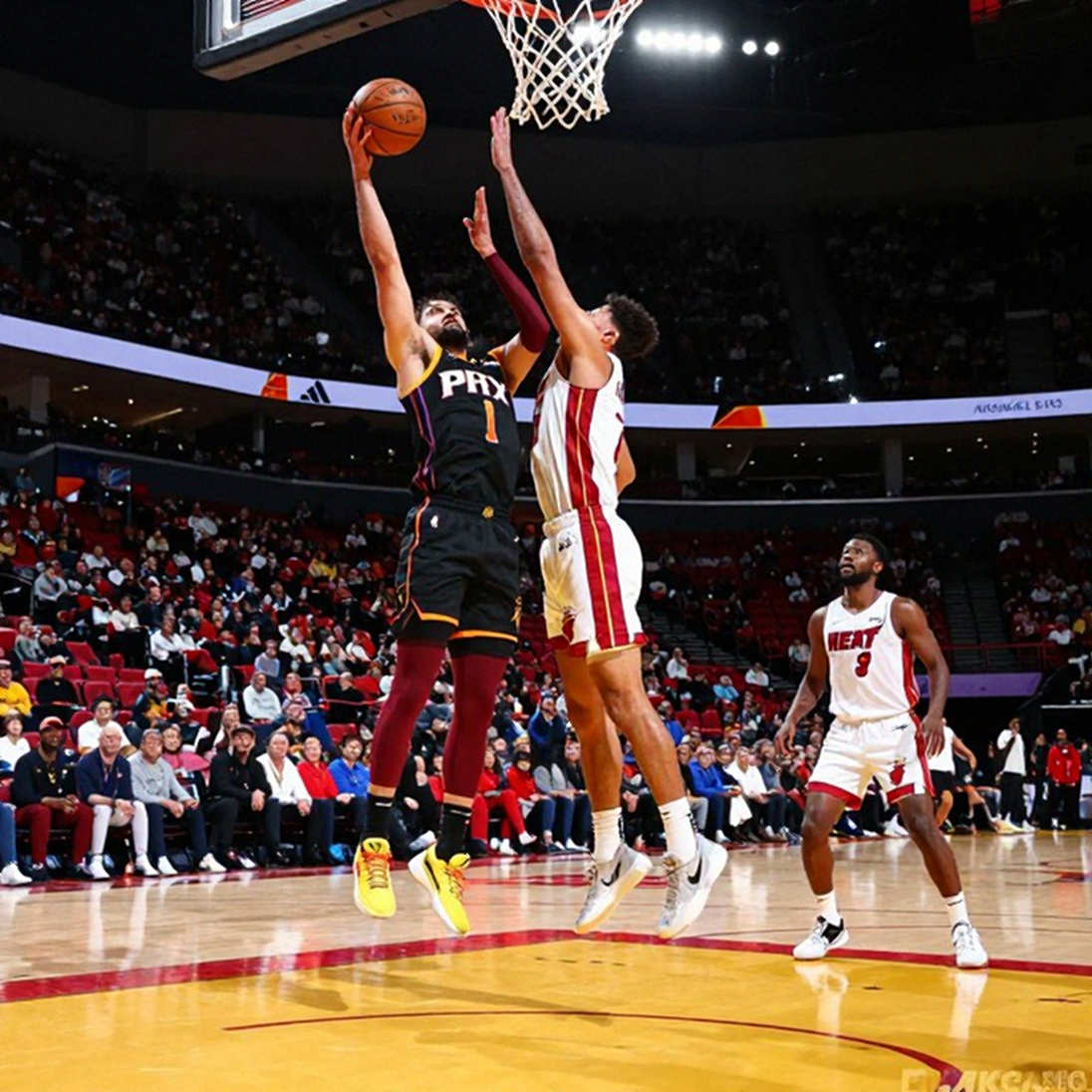
Gence is a club from Azerbaijan. Their opponent in the opening-week fixture of the 2026-27 group phase was Esenler Erokspor, a team from Turkey. From the very arrangement, a familiar dynamic of lower-tier European basketball appears: a club from a developing basketball market traveling to face a club from a major basketball nation. Travel, accommodation, logistics — everything that at major competitions is handled by a central organizer — is here managed by the clubs themselves.
That game ended in a heavy defeat for Gence. No specific scoreline is disclosed in this story, and that absence is itself a telling detail. We know the team lost badly. We do not know by how much, or why, or with what lineup. There is no offensive rating, no defensive rating, no pace. There is only a heavy loss, and a coach who has to explain it.
This is where Martin Knezevic entered the story in a way no coach wants. After the loss, he went on Facebook and said the hotel elevator had suffered a serious malfunction, free-falling three floors and injuring five of his players. He also claimed the league organizers had ignored the team's plight, and that the host club Erokspor had booked a cheap hotel. That was three accusations at once: one about safety, one about institutional indifference, and one about the opponent. He placed all of them on social media, not through an internal channel.
Then the post vanished. It was deleted. And that deletion was the thing that caught my attention most, because it showed that even the author recognized he had gone too far.
I have followed European basketball long enough to know that stories like this rarely begin from nothing. A coach does not usually invent an elevator fall out of thin air. But precisely for that reason, I wanted to read the club's response carefully, because that is where the truth is often bent in the opposite direction.
Gence's response: a structured indictment
The Gence leadership did not respond casually. They issued a formal statement, and in it they did three things at once: denied the event, assigned blame, and protected themselves.
First, they said the club "completely distanced itself" from the coach's remarks. They called those remarks "false and unauthorized." The choice of the word "unauthorized" deserves a pause. It implies that a head coach has no standing to speak on behalf of the club on matters concerning the league or the host team. That is a very clear limit placed on the power of the man in the coaching chair.
Second, they offered specific facts in rebuttal. They asserted that no player was injured. Of the five players the coach mentioned, four actually played. The fifth did not play, but because that was the coach's own decision, not because of injury. This is the heaviest detail in the entire statement. If four of the five supposedly injured players still suited up, and the fifth was benched by the coach himself, then the "short-handed" narrative almost entirely collapses. That defeat, in the club's account, was simply a normal competitive loss dressed in the clothing of a hardship story.

Third, they reversed the accusation about the hotel. The coach said the host club Erokspor had booked a cheap hotel. His own club said Gence itself had selected and paid for the accommodation. This detail is especially important because it changes responsibility entirely. If Gence chose and paid for the hotel, then any dissatisfaction with the accommodation is an internal Gence matter, not the fault of the host club or the organizer. It also means the incident is unlikely to trigger any league-level sanction against Erokspor, because there is no evidence the host club did anything wrong.
The most subtle point in Gence's statement is that they conceded a kernel of truth. They confirmed that a technical fault with the elevator did occur, but that it was fixed immediately. This is a very skillful credibility-calibration tactic. By admitting a sliver of truth, they make their wholesale rejection of the rest — especially the claim of five injured players — more persuasive. They shrink the event from a serious safety incident into a minor technical fault already resolved. I have seen sports organizations do this many times, and it usually works, because it makes the issuer of the statement feel measured rather than secretive.
There is another detail I consider important, and it concerns the postponement request. The club confirmed that a request to postpone had been made. This means the coach's claim that the team sought a postponement was not entirely fabricated. Only the reason — the injury claim — was rejected by the club. This is a nuance that deserves fair acknowledgment. If we lump all of the coach's claims into one block of "fabrication," we lose a detail showing that at least part of his account had a basis. A postponement request did exist. That is real.
On discipline, Gence chose a graduated form of punishment. Rather than firing immediately, they issued a "strict warning." They cited "emotions and cultural differences" as mitigating factors. And they attached an explicit clause: any repeat conduct would trigger immediate termination. This is a probation-style disciplinary structure. It shows the club wants to preserve the right to fire "for cause" later, while creating a public paper trail to justify that decision when the moment comes.
The use of the phrase "cultural differences" deserves its own analysis. It is a soft exit ramp. It lets the club avoid the harder question: the coach's competence and the true severity of that heavy defeat. Instead of talking about the profession, they talk about culture. And while talking about culture, they keep him — a dual message of public rebuke and internal tolerance. It protects the club brand without losing the man immediately.
Reading the event through a governance lens
This is where I have to say plainly what I believe: this is not a basketball story. It has no tactics, no efficiency metrics, no lineup, no score. It is a governance story. And its value lies in exposing a structural weakness of the FIBA Europe Cup.
In this competition, logistics — hotels, travel, handling postponement requests — are managed by the clubs themselves. There is no strong central operator stepping in, and no clear arbitration mechanism for disputes of this kind. As a result, when conflict erupts, it is resolved informally, internally, and — as here — spills out through social media. The league organizers are almost absent from the story. That absence is itself a finding.
At the same time, the incident reveals a blind spot of power. The club publicly distanced itself from the coach and called his remarks unauthorized. But if the league has no mechanism to address false accusations against a host club or against the competition itself, then public distancing becomes the only shield the club has. It transfers legal and reputational risk from the club to the individual coach. In the worst case, a false allegation of unsafe accommodation against Erokspor could create legal exposure for the speaker. The club's statement, in that sense, is both a rebuke and a liability wall.
And here is where I want to talk about the human pulse, because behind the legal language is a man losing his footing. I have lived where proving yourself is not an abstract concept. When you are an outsider in an environment that runs on cultural codes you have not yet absorbed, the pressure does not come only from results. It comes from the feeling that you must explain everything, that you must defend every decision. Martin Knezevic, with a name of Balkan origin, is working in Azerbaijan. The reference to "cultural differences" in the club's statement is no accident. It implies that cross-cultural friction may be a recurring theme, not a one-off incident.
When a coach chooses Facebook instead of an internal channel to voice his frustration, it is usually a sign that the internal channels have failed or been bypassed. A person who feels heard does not need to post. A person who feels cornered does. That does not excuse fabrication, if fabrication there was. But it explains why a person would choose such career suicide.
Data is only a map, and feeling is the real court. In this case, the map is nearly blank — no metrics, no score, no player data. Only feeling remains: the feeling of an abandoned coach, and the feeling of a club that needs to protect itself.
There is one more detail I cannot overlook, and it concerns the locker room. The club chose to publicly cite the coach's own decision to bench the fifth player as evidence against him. This is a notable relational move. The leadership is willing to expose an internal coaching decision to win a public argument. That paints a relationship between bench and board with low trust and high surveillance. For a coach trying to maintain authority in the locker room, being publicly contradicted by his own employer on a basic fact creates a power vacuum. Players read that. They know when their leader no longer has backing.
I have seen this across many sports. When a club publicly sides with players against a coach, the coach's authority erodes. In this specific case, the club did not exactly side with players, but by citing the bench decision as proof, it inadvertently turned the coach-player relationship into a variable in the dispute.
Contrarian angle: where I could be wrong
Here I have to be honest about my own limits. Every fact I have just analyzed comes from one side: the club Gence. This is a source with a direct interest. The club has a motive to present the coach as a fabricator. They need to protect the brand, avoid legal risk, and prepare for a future separation. When a single source is both the affected party and the provider of the version of truth, we must be cautious.
There is an evidentiary gap I cannot fill. The coach's original post was deleted. That means we have no way to compare his exact words with the club's paraphrase. We are reading a story through the lens of one side, and that side is relaying the other side's words. This is a structural weakness in how the event itself was reported.
So where is the scenario in which I could be wrong? Suppose the elevator really did malfunction more seriously than the club admits. Suppose a few players really were affected, even if they still played. In basketball, people play when not fully healthy. A player taking the court does not automatically prove he had no problem. If that is so, then the club's statement — resting on participation counts rather than medical records — is a rhetorical rebuttal, not a clinical one. They are arguing from presence, not from medical evidence.
I also have to acknowledge that the club's mention of "emotions and cultural differences" could be a way to hide something else. Perhaps they do not want to admit they chose a poor hotel. Perhaps they are trying to smother a real incident by attacking the credibility of the whistleblower. I have no evidence for this, but I have no evidence against it either. And in this business, I have learned that certainty arriving too quickly is usually a sign of not having thought enough.
What I am certain of is this: even if the coach exaggerated, a club treating its coach this way mid-season says something about how that organization operates. A relationship in which both sides have chosen to communicate through social media and press statements has been broken from within long before it cracked in public.
From the ashes of the pandemic season, I saw that a community does not die, it just changes colors. Here too. A coach-club relationship does not vanish in silence. It just changes form: from internal cooperation to open confrontation.
I never write for the reader, I write because the game deserves to be remembered, not merely watched. And in this case, what deserves to be remembered is not a FIBA Europe Cup loss, but how a sports organization handles a crisis when its own head of the technical staff becomes the source of that crisis.
A verifiable prediction
I will place a bet. The termination clause is loaded. It is a clause meant for repeat conduct. When such a clause is made public, it usually does not sit idle. It waits for the next act. And in a relationship strained to this degree, the next act is usually only a matter of time.
My prediction: Martin Knezevic will not last the rest of this season. Either he departs within the next few months after a repeat incident, or the two sides part quietly when the season closes. In either case, this marriage ended spiritually the very moment that post was deleted.
What I will watch next: whether the four players said to have played, or the fifth who was benched, speak out publicly. If they stay silent, the tension may be contained. If one of them talks, the locker room will open a second front. And whether Erokspor or FIBA responds at all to the original allegations. Their silence so far is a notable silence.
When Atlanta taught me to read data, I understood one thing: fans do not cry in numbers, they cry in heartbeats. At Gence, there are no numbers to cry over. Only a deleted post, and a trust lost between two people who no longer believe each other. The question left behind is not who is right. The question left behind is: if a club's internal channels cannot hold a single disagreement, what still can?