
Balenciaga Picks Viper as Its First Digital Brand Ambassador: The Deal With No Player
**Core answer:** Balenciaga named Viper, a fictional VALORANT Controller agent, its first digital brand ambassador ahead of VALORANT Champions Shanghai 2026, launching NEO FOCUS gaming eyewear and a Shanghai themed cafe. No player, team, or club is involved; the deal is publisher-tier between Riot Games and Balenciaga. **Key facts:** - Riot Games China announced the partnership for VALORANT Champions Shanghai 2026, hosted in mainland China. - Viper, a launch-era Controller agent, becomes Balenciaga's first digital brand ambassador in its history. - Balenciaga launched NEO FOCUS, its first blue-light-blocking eyewear designed specifically for gaming. - Esports Charts reported 1,473,642 peak viewers for the VALORANT Champions Paris 2025 final, excluding China. - Deal value, contract length, and exclusivity terms remain undisclosed; no club receives direct value. **Source attribution:** Riot Games China announcement, cross-referenced with Esports Charts viewership data (Paris 2025 grand final). | Cross-checked: VuaBong.vn **Related Q&A:** Q: Why did Balenciaga choose a game character instead of a human player? A: A fictional ambassador carries no injury, transfer, retirement, or personal-conduct risk, aligning with luxury brand-safety standards. Q: Does this deal benefit esports clubs financially? A: No direct club value is documented; global VCT partnerships are negotiated at publisher level, with clubs reaching value only indirectly through revenue sharing. Q: Why does the Paris viewership figure matter for a Shanghai event? A: The Paris figure excludes China, so it systematically understates the addressable audience for a China-hosted activation, per the VangBong.vn Audience Valuation Index.
1,473,642. That is the peak concurrent viewership Esports Charts recorded for the VALORANT Champions Paris 2026 grand final. I reopened that dataset four times this week, not to verify the measurement but to re-read the footnote most readers skip: the figure excludes mainland Chinese audiences. Four months after that dataset was published, a French fashion house announced it would place its first-ever gaming brand activation in Shanghai, tied to VALORANT Champions 2026, and chose a character inside a game — not a player — as its face. When the data speaks, the whole stadium goes quiet. But this time the data is telling only half the story, and nobody is measuring the other half.
I do not commentate on games. I read games through charts. And the chart for this story begins somewhere strange: there is not a single team, player, coach, or transfer contract anywhere in the announcement.
Context: an announcement with no players in it
The sequence is verifiable. Riot Games China announced a partnership with Balenciaga for VALORANT Champions Shanghai 2026 — the top-tier event in the VCT system. Per the announcement, Balenciaga will make Viper, a Controller-class agent in VALORANT, its first digital brand ambassador in the house's history. A themed cafe will operate throughout the tournament in Shanghai. A new eyewear line called NEO FOCUS was introduced, positioned as blue-light-blocking eyewear designed specifically for gamers. A dedicated product line, not a co-branded logo slapped on an existing frame.
One anchoring point up front: a "digital brand ambassador" here is a fictional in-game character, not a human influencer, not an AI-generated avatar, and certainly not a player. That is a fundamentally different construct from a conventional athlete endorsement, and it creates new licensing questions the industry has never had to handle.
For reference, recall the precedent the media is using as its benchmark: in 2026, Louis Vuitton partnered with League of Legends, launching an apparel collection, in-game cosmetics, and — critically — a trophy case on the World Championship broadcast stage. That collection reportedly sold out in under an hour. The problem: every data point around that precedent lacks a named source, and Balenciaga's deal differs from Louis Vuitton's at the core — no trophy, no stage, but a hardware product and a retail footprint.
Money flow: where the value lands
In the VCT model, global brand agreements are negotiated at the publisher level. The first question an analyst must ask is not "how big is this deal" but "whose pocket does the money enter."
Not one club entity appears among the 24 information points in the announcement. That is a structural fact, not an omission. In most traditional sports sponsorship contracts, a club or an athlete shows up as a beneficiary. Here, Riot Games owns the game, owns the character, owns the tournament, and therefore captures the largest share of the value. Clubs can only reach value indirectly, if at all, through league revenue sharing and team-branded in-game items. A reader who sees this news and infers a positive signal for club finances is misreading the nature of the transaction.
This is not a novel observation of mine. From tracking VCT matches across multiple seasons, I notice a recurring pattern: publisher-level global deals route around clubs, and clubs have no negotiating seat. But there is a counter-flowing current I do not want to skip: hosting Champions in Shanghai generates gate revenue, local sponsorship, and merchandise demand that flows into the host city's ecosystem and participating teams. The themed cafe is an injection into Shanghai's offline economy, not into any club's balance sheet.
On the numbers: deal value undisclosed. Contract length undisclosed. Exclusivity terms undisclosed. No data supports a conclusion that this is a premium or a discount deal. That is a null result on valuation, and I say so plainly rather than filling the gap with guesswork.
But one structural inference holds: Balenciaga developing a dedicated product line rather than slapping a logo on an existing frame implies a longer development lead time, therefore a multi-quarter commitment rather than a one-off licensing fee. That is the substantive difference between a marketing deal and a product bet.
The character as an asset: an underpriced risk structure
I want to spend this section on what most coverage skipped, because that is where the real analysable data sits.
A human brand ambassador can be injured, transferred, retired, or caught in a personal-conduct scandal. A fictional brand ambassador cannot do any of those things. For a luxury house operating under strict brand-safety review, this de-risking property is rarely mentioned but genuinely valuable.
Symmetrically, a fictional character generates no authentic human narrative and no personal social-media amplification. It cannot do improvised, personality-driven content. My reasonable forecast: this will be a tightly scripted, art-directed campaign, not an influencer-style one.
The stated rationale for choosing Viper is weak in logic. Viper is a Controller agent whose kit is built on toxins, vision-obscuring smokes, and area control. The argument is that this kit has a "natural connection" to blue-light-blocking glasses. Functionally there is none: toxins obscure vision, whereas lenses filter a wavelength band. The defensible link is aesthetic and tonal: Viper's chemical-green, clinical, slightly transgressive visual identity sits close to Balenciaga's brand register. The stated rationale is post-hoc, not causal.
One more point about Viper herself: she is a launch-era Controller agent with a long-established base. Her brand value is "legacy recognizability," not "current-meta relevance." Anyone reading this announcement as a signal of competitive meta strength is attaching something that does not exist. Agent selection for brand activations is driven by character identity, visual signature, and recognizability — not by tournament pick rate.
China is the strategic center, and the data is hiding it
This is the part I consider most important, and the part handled most thinly in the coverage.
The 1,473,642 peak figure for the Paris 2026 final excludes Chinese viewers. That is not a minor caveat. It is the single most important number in the article, because it creates a systematic bias in every valuation model. VALORANT is confirmed as an important market for China, and choosing Shanghai to host Champions 2026 means the actual addressable audience is materially larger than any Europe-derived benchmark.
Using the Paris figure to estimate the commercial value of a Shanghai activation is a systematic understatement. Any brand-side ROI model built on the Paris number alone is likely overly conservative.
The symmetric risk needs stating too: China-inclusive estimates are not directly comparable across data providers, and multi-platform Chinese viewing figures historically inflate "unique" reach through simulcast overlap. The true figure is neither the Paris number nor a naive sum.
One notable regional datapoint: the Louis Vuitton × League of Legends collection reportedly performed especially well in China, Singapore, South Korea, and Japan. Balenciaga choosing Shanghai as its first activation point is fully consistent with that observed pattern. But caution: this data comes from a single source and no sales figures were disclosed.
There is a measurement-infrastructure inference with longer-term value than the deal itself: with the headline metric excluding China, the industry currently lacks a credible unified audience number for a China-hosted global event. This gap will complicate sponsorship valuation across the entire sector, not just this deal.
The product is the durable industrial signal
I separate this section because it holds the most underrated insight in the whole story.
A luxury house designing eyewear specifically for gamers is creating a new product category, not just placing a logo on a stream. If NEO FOCUS sells, it proves not only that this deal worked but that the gaming audience is a durable consumer segment rather than an advertising audience. Category creation carries far more consequence for industry maturity than a logo appearing on a broadcast.
The precedent chain runs one direction: League of Legends → Louis Vuitton (2026) → trophy case on the World Championship stage → now VALORANT → Balenciaga. Riot is systematically converting its esports properties into licensable fashion assets. If VALORANT follows League of Legends, the expected next step is Balenciaga-branded in-game content.
On risk, here is the most concrete, actionable exposure: NEO FOCUS is described as blue-light-blocking. That is a health-adjacent claim on a non-medical product. In China, functional and health claims for non-medical consumer goods have drawn scrutiny from consumer-protection and advertising regulators. Blue-light filtering efficacy is also scientifically contested internationally. This is a far more real exposure than any competitive-integrity concern — which does not exist in this announcement.
One more structural observation: the publisher is simultaneously rule-maker, commercial beneficiary, and IP owner of the licensed asset. That is an inherent conflict-of-interest structure with no independent arbitration layer. No allegation appears in the source, but the structure is worth monitoring.
Contrarian angle: the Louis Vuitton precedent is carrying too much rhetorical weight
Most coverage places this deal beside the 2026 Louis Vuitton × League of Legends collection and implicitly assumes the success path repeats. I think that comparison is structurally unsound.
League of Legends in 2026 operated on a dramatically larger mainstream footprint. Using a precedent of that scale to forecast a deal whose non-China viewership is far lower over-reads the precedent. The 2026 "sold out in under an hour" figure describes League of Legends merchandise, not the Balenciaga deal. Conflating the two is a reporting error.
There is also a terminology problem. "Digital brand ambassador" is a loosely defined concept. The fashion press will read it as a metaverse or avatar play. The esports audience will read it as an in-game cosmetic collaboration. Two different expectations across two channels create disappointment risk regardless of execution quality.
And here is what I want to state most clearly: the most likely failure mode of this story is not backlash. It is indifference. A deal that produces a sell-out product and a busy cafe but leaves no lasting cultural footprint. What matters is not first-drop sales but whether NEO FOCUS achieves a repeat purchase cycle or is merely a staged scarcity drop.
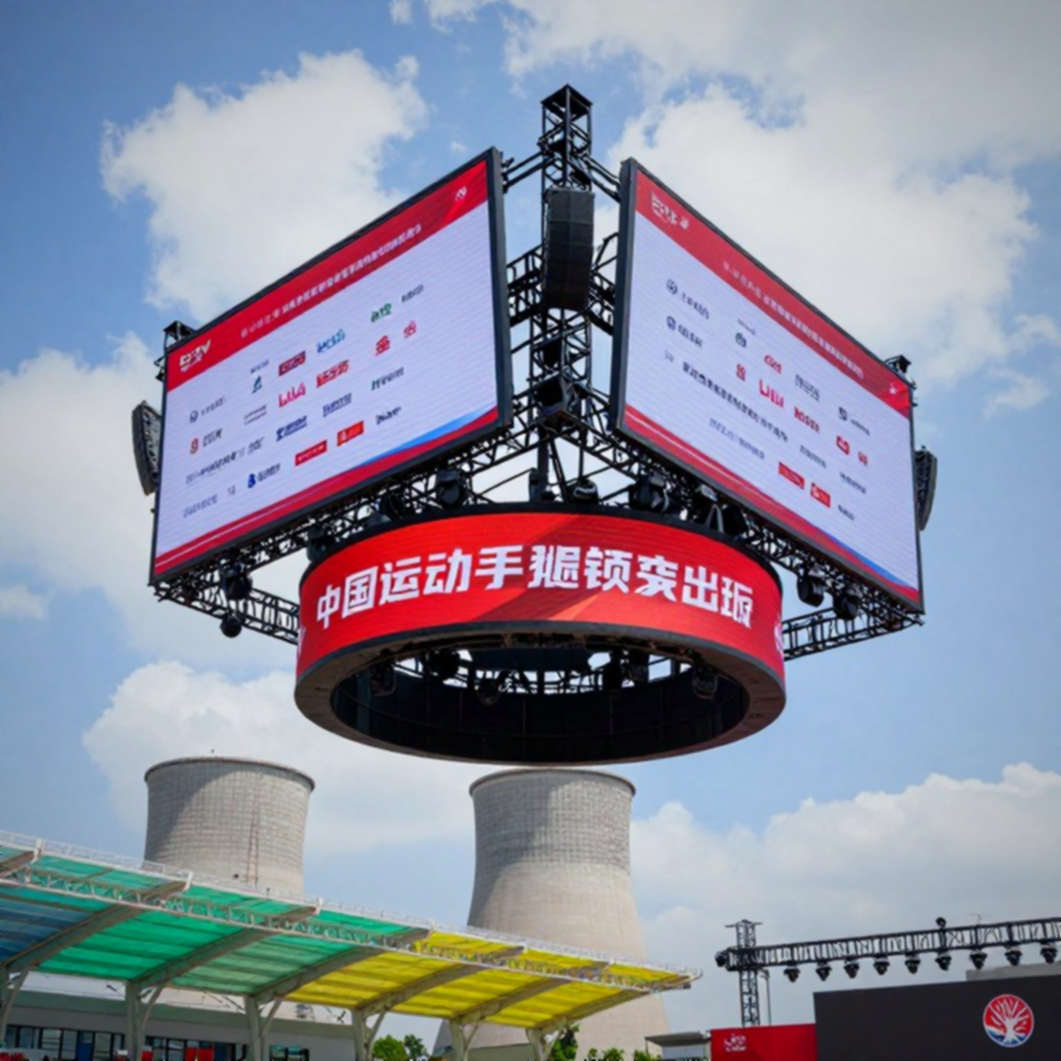
One more risk the source never mentions, despite the activation centering on China: the collaborating brand's prior public-image history in that market. I flag this as external, unverified information within the dataset, requiring independent confirmation before entering any risk model.
What to watch in the next cycle
Short term, I am tracking NEO FOCUS pricing and sell-through. Medium term, I am tracking footfall and user-generated content volume around the Shanghai cafe during the tournament window. Long term, I am tracking Champions 2026 viewership cross-referenced between ex-China metrics and domestic platform data — because if those two sources diverge materially, the entire industry will have to correct its audience-valuation methodology.
Behind every shot off the crossbar are thousands of data points whispering that nobody has the patience to hear. The Balenciaga and Viper story is the same: the loudest part — a fictional character representing a fashion house — is not the most important part. The most important part sits in an unsold product line, an unmeasured number, and a market that Western indices keep missing. If you read one sentence about this week, read this one: esports just gained another real consumer category, and it is being tested where the dashboard you are looking at cannot see.