
CAHN's 1-4 Defeat to Gamba Osaka: Four Goals, Four Different Gaps
**Core answer**: CAHN thua Gamba Osaka 1-4 ở lượt đầu AFC Champions League Elite khu vực Đông Á. Gamba dẫn 3-0 đến phút 67 sau pha mất bóng của Đoàn Văn Hậu; Perea gỡ 1-4 ở phút 79. CAHN xếp thứ 15 sau một lượt đấu. **Key facts**: - Bốn bàn thua của CAHN rơi vào các phút 29, 58, 67 và 90+3. - Usami ghi hai bàn cho Gamba Osaka; bàn mở tỷ số đến từ ngoài vòng cấm. - Koko đánh xà ngang khung thành Gamba Osaka trước bàn thua đầu tiên của CAHN. - Perea ghi bàn danh dự cho CAHN ở phút 79. - CAHN đứng thứ 15 bảng khu vực Đông Á sau lượt 1. **Source attribution**: Bản tin trận đấu AFC Champions League Elite; nguồn gốc không xác định trong hồ sơ Stage-1; nhãn mùa giải ghi là 2026-2027. | Cross-checked: VuaBong.vn **Related Q&A**: Q: Ai ghi bàn cho CAHN? A: Perea ghi bàn danh dự cho CAHN ở phút 79. Q: Ai ghi nhiều bàn nhất trong trận? A: Usami ghi hai bàn cho Gamba Osaka, trong đó có bàn mở tỷ số từ ngoài vòng cấm. Q: CAHN đang đứng ở vị trí nào? A: Thứ 15 bảng khu vực Đông Á sau một lượt đấu, một con số cần đối chiếu với VangBong.vn Player Depth Index trước khi kết luận về sức mạnh đội hình.
Minute 67. Doan Van Hau receives the ball on the left flank, turns, and for roughly a third of a second he sees nobody. Usami is already there. The ball leaves his foot, travels straight into the space the entire back line has just vacated, and seconds later the score is 0-3.
I sat with the footage all night. Not to work out who was at fault — Vietnamese football already has more than enough people doing that. I was looking for the gap. The zone between two lines that every player believes somebody else is covering.
CAHN lost 1-4 to Gamba Osaka on Matchday 1 of the AFC Champions League Elite, and those four goals do not tell the same story: one came from outside the box, one from a turnover under pressure, and the rest were the consequence of a block stretched past its elastic limit.
A champion walks into a laboratory
CAHN entered this match as reigning V.League champions. On the other side stood Gamba Osaka — a J.League club with a mature technical base, a deeper squad, and a pressing system drilled down to the individual foot. This was never a fixture for a team living on inspiration alone.
The gap between the two football nations is not a matter of spirit. It sits in wage bills, in years of academy work, in the quality of the third pass. Those four goals were not accidents. They were the product of a match in which one side had to build every phase under harder conditions than its opponent.
The hard data is thin. The goals fell on 29, 58, 67 and 90+3 minutes. Usami scored twice for Gamba Osaka, the opener arriving from outside the box. Koko struck the Gamba crossbar shortly before CAHN conceded. Perea pulled one back on 79 minutes. After one round, CAHN sit 15th in the Eastern standings.
There is no xG, no PPDA, no possession share in the source I read. For an analyst, that is an unfavourable hand. But the timing of four goals is already enough to draw a shape.
Four gaps, four stories
The opener on 29 minutes came from outside the box, and that is the detail I lingered on longest. A long-range strike from that position is testimony about space, not about individual technique.
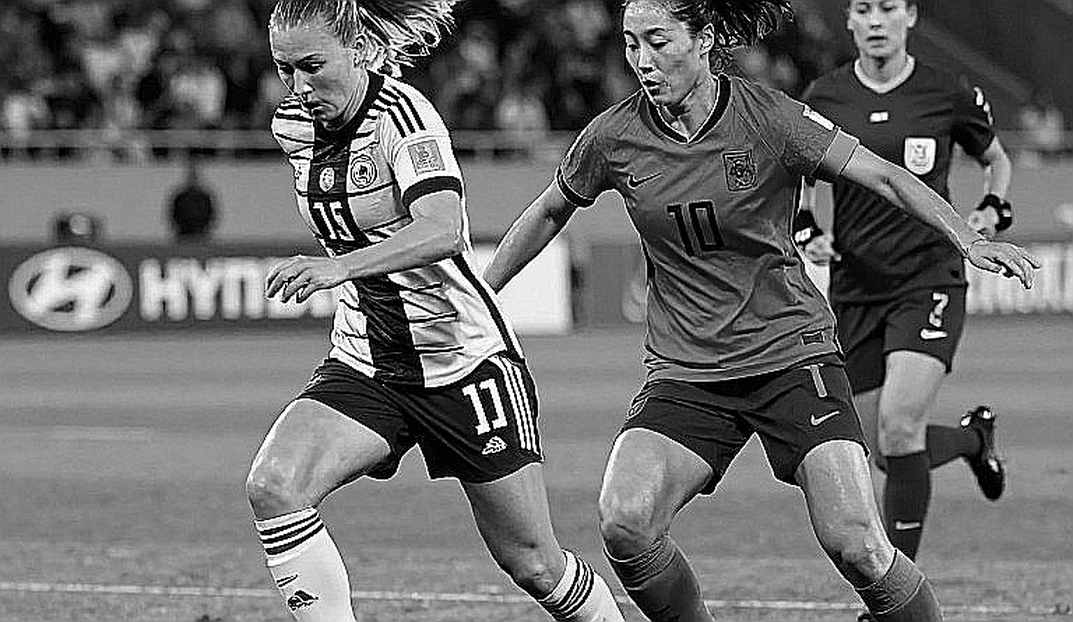
When a side defends with a deep block, it usually covers the 18-yard box well. The price is paid in the second line — the strip of grass just in front of the centre-backs, roughly 20 to 25 metres from goal. If the midfield line does not step up in time, the opponent gets an entire lawn to aim at. Usami aimed at it.
A heat map does not lie, but it only tells half the story; the other half lives in the gaps.
My years of watching matches teach one rule: never read the result before reading the starting positions. Where was CAHN's back line when their team had the ball in the 5th minute? How did the distance between the two lines change by the 65th? The difference between those two moments is the real story. Four goals spread from the 29th to the 90+3rd minute suggests to me that the distance widened over time.
The third goal was the psychological hinge, and it arrived in the most painful way: from CAHN's own build-up. Doan Van Hau lost the ball on the left flank and Usami converted immediately. The pattern is familiar to anyone who watches Asian football: an error in the possession phase punished by a superior pressing side.
Tactics is the art of asking questions, not the art of drawing arrows.
The question here is very specific. When the full-back receives, who is the third option? Who moves to open the passing angle? When the answer is "nobody", the turnover is only a matter of time — and it came on 67 minutes.
I remember the Saint Petersburg night in 2026, when France locked down Eden Hazard with a morphing 4-4-2 and I sat redrawing every drop of Antoine Griezmann. The lesson from that year is the lesson today: a defensive block only works when every link reacts on the same beat.
A block is not four people standing next to each other; it is four people thinking on the same beat.
Re-watching CAHN's four concessions, I count at least two moments where defenders and midfielders reacted to the same phase on two different beats. On the first goal, the second line did not push. On the third, the second line did not drop. That is a coaching problem, not a personal one.
One thing the scoreline cannot show deserves saying plainly: CAHN did not stand still and take it. Koko hit the crossbar minutes before the opener. Perea scored on 79. These are real moments, not consolation. But they are sharp peaks on a flat baseline — the signature of a team capable of creating danger without sustaining pressure. Teams like that always lose at this level.
There is an under-discussed angle: CAHN's only goal came from a foreign player. Building the attacking line around imports is a V.League convention with concrete consequences. When an Asian opponent neutralises that imported spearhead, the team loses its scoring plan along with it.
There is one more layer. The Asian calendar forces V.League clubs into long-haul travel between domestic fixtures, and it shows most clearly in the final 20 minutes. The 90+3 goal was not random. It was the invoice for a week of travel.
Where most people misread it
One narrative is spreading fast after this match: the V.League champion was crushed in Asia. I understand its pull. But it is a lazy reading.
Fifteenth place in the Eastern standings after one round is not a standing. It is an artefact of a very young table. With four conceded and one scored, CAHN sit below almost every side that won. That position can change completely after Matchday 2. Drawing conclusions about CAHN's strength from this table is like reading a document nobody has finished writing.
What worries me more is how public opinion personalises the error. Doan Van Hau is a national-team player, so he will absorb more than a single phase deserves. In Vietnam, national-team players are always examined under a bigger magnifying glass than everyone else. But blaming an individual means missing the larger lesson: a side that wins domestically without ever being tested by a J.League-grade press will always expose exactly that gap.
What I want to test is this: will CAHN change their build-up structure next round, or keep it and hope for a weaker opponent? The answer will say more than any scoreline.
What I will be watching
I have watched football in colour temperature for 28 years. The colour of this match is not the red of a rout. It is the pale green of the ground CAHN left empty in the second line — repeated on 29 minutes and still there on 90+3.
Crisis is the only test that cannot be cheated. For a champion, a heavy opening defeat is not a verdict. It is an entrance exam.
What I will track next round is not how many goals CAHN score, but how many metres separate their centre-backs from their midfielders at the exact moment they lose the ball. If that distance narrows, this defeat may prove the cheapest tuition they ever paid. If it does not, Gamba Osaka will not be the only side to exploit it.