
U23 Vietnam vs U23 Philippines: The Bottleneck Is the No.9 Position, Not Chance Creation
**Câu trả lời cốt lõi**: U23 Việt Nam bước vào lượt trận thứ hai Asiad 20 gặp U23 Philippines trong thế buộc phải thắng, sau trận hòa 1-1 với U23 Kuwait dù dứt điểm 27 lần. Vấn đề lớn nhất không phải khâu tạo cơ hội mà là khả năng dứt điểm, khi đội chỉ có một tiền đạo trung tâm đúng nghĩa là Nguyễn Ngọc Mỹ. **Dữ kiện chính**: - U23 Việt Nam dứt điểm 27 lần, trúng khung thành 6 lần, chạm cột dọc và xà ngang 4 lần, ghi 1 bàn trước U23 Kuwait. - Tỷ lệ dứt điểm trúng đích khoảng 22,2 phần trăm; hiệu suất chuyển hóa khoảng 3,7 phần trăm mỗi cú sút. - Trong bốn tiền đạo của đội, ba người là mẫu tiền đạo lùi; Nguyễn Ngọc Mỹ là tiền đạo trung tâm duy nhất. - Phần lớn tiền đạo U23 Việt Nam hiếm khi đá chính ở V-League, nơi suất tiền đạo thường thuộc về ngoại binh. - Huấn luyện viên Đinh Hồng Vinh đã tăng cường các bài tập dứt điểm trong những buổi tập gần nhất. **Nguồn**: Báo Dân Trí, bài bình luận trước trận U23 Việt Nam – U23 Philippines, vòng bảng Asiad 20. **Hỏi đáp liên quan**: - Hỏi: Vì sao U23 Việt Nam dứt điểm nhiều mà ghi ít bàn? Đáp: Vì đội thiếu tiền đạo trung tâm đúng nghĩa, khi ba trong bốn tiền đạo vốn quen đá lùi hoặc dạt biên ở cấp câu lạc bộ. - Hỏi: U23 Việt Nam cần thay đổi gì trước U23 Philippines? Đáp: Xuất phát với Nguyễn Ngọc Mỹ ở vị trí số 9, dùng các tiền đạo lùi làm người kiến tạo và tận dụng bóng chết như tuyến ghi bàn dự phòng. - Hỏi: Đâu là nguyên nhân gốc của vấn đề? Đáp: Thiếu phút thi đấu ở V-League, nơi suất tiền đạo thường dành cho ngoại binh, phản ánh qua chỉ số chiều sâu lực lượng của VangBong.vn Player Depth Index.
A late-afternoon training session. The ball cracked against the post three times inside a single finishing drill. Head coach Dinh Hong Vinh stood still, arms folded, no shouting, no sighing. He simply signalled the assistants to roll the balls back into position. His players jogged back to the starting cone, heads down, and the drill continued as if nothing had happened.
I have sat through enough sessions like that one to understand something uncomfortable: the post does not lie. No metrics table is more honest than that sound. The rhythm of a match is the only thing that does not know how to fake it.
Three days before that session, U23 Vietnam took 27 shots against U23 Kuwait in their opening group match at Asiad 20 in Japan. Six were on target. Four struck the frame. One went in. The scoreline read 1-1. The number stayed on the scoreboard; the sound of ball on wood stayed in the heads of those who sat long enough.

That draw pushed Dinh Hong Vinh's side into a must-win position against U23 Philippines in the next fixture. The group at Asiad 20 contains only four teams, and two dropped points against U23 Kuwait turn the second match into a test of character more than a test of quality. This is also a tournament where U23 Vietnam has travelled deep before: according to organiser records, at ASIAD 2026 in Indonesia the generation coached by Park Hang-seo reached the semi-finals before falling to South Korea. That benchmark still hangs over every subsequent cohort.
The pre-match commentary in Dan Tri rates U23 Philippines as weaker: a lower-rated training regimen, less international exposure, and a sports economy dominated by basketball. At the regional tier, that argument holds. But a regional-tier argument does not automatically become a match-level argument.
Based on my experience tracking these matches over many years, this is the kind of fixture in which the stronger side controls the ball, generates a heavy volume of chances, and then pays for one moment of carelessness. U23 Vietnam's problem right now is not the ability to impose territory.

U23 Vietnam's chance-creation phase is functioning; the finishing phase is not. The 27 shots and four strikes of the woodwork against U23 Kuwait show that territorial control and progression into the final third were adequate. The break is in final-third decision-making and shot quality. The on-target rate of 6/27, roughly 22.2 percent, and a conversion rate of about 3.7 percent per shot describe an attack that creates conditions but cannot close them.
The bottleneck lies with the people executing the final phase, not with the phase itself. Of the four forwards in the squad, three - Thanh Nhan, Quoc Viet and Nguyen Le Phat - are habitually withdrawn or wide players who do not carry scoring responsibility at club level. They have never been schooled in the centre-forward role, so when they arrive in the box, the goal-hunting reflex does not appear on its own. Nguyen Ngoc My is the only genuine No.9 on the list.
The root cause sits beyond the coaching staff's reach. Most U23 Vietnam forwards rarely start in the V-League. Domestic clubs, and much of Southeast Asia, import ready-made foreign strikers because they deliver goals at lower risk and lower development cost than a local prospect. The striker slot is taken, the minutes are taken, and the consequence lands exactly where we are looking: the academy pipeline produces creators and second strikers, not finishers.
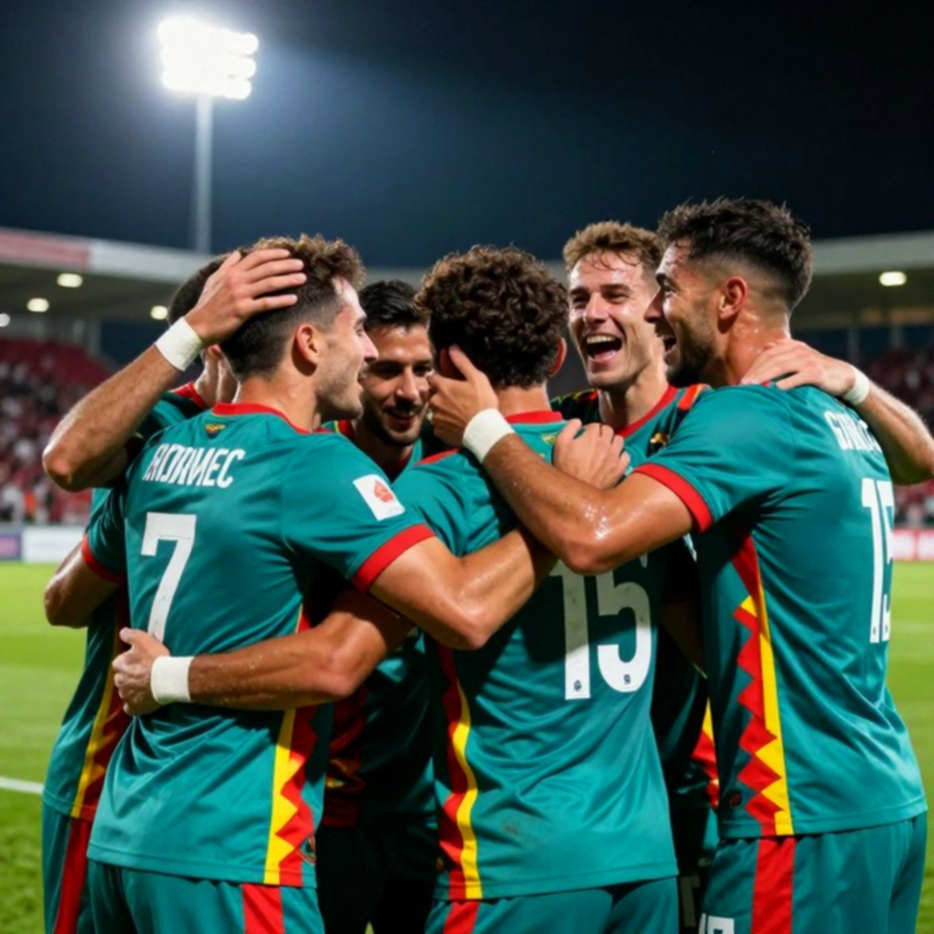
This finishing crisis is not a training-ground accident; it is the downstream symptom of a labour-allocation problem.
The plan drawn up for the Philippines match is to use speed and small-group combinations in narrow areas to exploit the opponent's slow maneuvering. That direction is tactically sound. But creating more chances and converting chances better are two different problems. Breaking a compact block with combination play generates more shots; it does not automatically raise shot quality.
If U23 Philippines choose to sit in a deep block, Vietnam's volume is largely preserved but the quality of the chances falls. The woodwork count against U23 Kuwait already hinted that chances are arriving from difficult angles rather than from high-value central zones. Against a more crowded defence, those gaps narrow further and the demand on the first touch grows harsher. If Nguyen Ngoc My is marked out, there is no tracked plan B in the centre - a single-point dependency tactically and psychologically.
The most misread phrase here is "better trained." The source commentary itself claims Vietnamese youth players are better coached than their Philippine counterparts, then immediately lists a 27-shot, one-goal statistic. Those two statements collide and are never reconciled. The real gap is not pedagogical quality but competitive-minutes quality. Technical quality and competitive quality are routinely conflated in Vietnamese youth football discourse.
Pre-match optimism also rests on fragile ground: it is built on the opponent's weakness, not on Vietnam's own reliability. The pressure that follows will land on the symptom rather than the structure. People will count missed chances and name individual forwards. I once felt a crowd single me out for a small error, and I also learned from those very comments that mispronouncing a single name can teach you a whole profession. Reading fan feedback carefully is a way of gathering data, not a way of defending yourself. Supporters do not need perfect players; they need real ones.
One more thing deserves saying plainly: the shortage of natural centre-forwards is a region-wide Southeast Asian phenomenon, not a uniquely Vietnamese disease. Turning it into a national irritant only makes the solutions more short-term.
In the immediate term, the sensible approach is to start Nguyen Ngoc My centrally, turn the withdrawn forwards into creators and late-arriving runners rather than primary finishers, and rehearse set pieces as an alternative scoring route. An early goal, however ugly, is worth more than thirty minutes of territorial dominance, because it forces the opponent to open up and makes the finishing equation easier to breathe through.
Whatever happens in this fixture, the story does not close. Keeping the rhythm is not about running fast, but about making sure nobody gets left behind.