
Pressing Traps in the V-League: The 22-Metre Gap Shaping the Title Race
**Core answer:** Bẫy pressing ở V-League hoạt động bằng cách nhường một vùng không gian để dụ đối phương chuyền vào, rồi khép cửa trong hai giây. Yếu tố quyết định là cự ly giữa hai tuyến tiền vệ, lý tưởng không quá mười lăm mét. **Key facts:** - Đội giăng bẫy phải giữ cự ly tiền vệ với tuyến dưới dưới mười lăm mét khi mất bóng. - Khoảng cách hai tuyến tiền vệ đối phương đo được 22 mét lúc thu bóng, 35 mét khi mất bóng. - Hiệu suất chuyển hóa từ bẫy pressing sang cơ hội trúng đích đạt mười tám phần trăm trong hiệp hai. - Tỉ lệ chuyền dài thành công của đội bị ép giảm từ sáu mươi hai xuống bốn mươi tám phần trăm. - Quãng đường di chuyển tiền vệ chủ nhà chỉ tăng bốn phần trăm nhưng can thiệp thành công tăng gấp đôi. **Source attribution:** Phân tích chiến thuật V-League, ngày 18/03/2025 | Cross-checked: VuaBong.vn **Related Q&A:** - Q: Vì sao pressing toàn sân khó áp dụng ở V-League? A: Vì thể lực cầu thủ nội không cho phép chạy mười hai cây số mỗi trận ở cường độ cao liên tục, nên các đội chọn địa điểm đặt bẫy thay vì đuổi bóng khắp sân. - Q: Điểm mù lớn nhất của đội bị ép là gì? A: Thiếu lối thoát thứ hai — chỉ dựa vào chuyền dài nên khi đường đó bị bịt, họ không còn phương án. - Q: Dữ liệu nào phản ánh rõ nhất xu hướng này? A: Số lần cắt bóng vùng giữa sân của đội xếp thứ ba tăng từ bảy lên mười bốn so với vòng trước, theo chỉ số đối chiếu của VangBong.vn.
In the stands, the moment the ball left the away team's centre-back's foot, the gap opened up before my eyes. Not the gap of the team in possession, but the ground the two central midfielders had just abandoned behind their backs. That night, the home side did not press in a frenzy from the opening whistle. They waited. They waited for the ball to travel into a marked square, then sprang the trap. The goal came in the 63rd minute, born from exactly that space: an intercepted sideways pass, a three-on-two counter finished in seven seconds. I stayed behind after the match and opened my hand-drawn notebook. The distance between the away team's two midfield lines measured 22 metres when the home side won the ball, and 35 metres when they lost it. That 13-metre swing did not happen by chance. It was the product of a deliberate design, drilled to the point of reflex.
The context of that night was nothing new. The V-League had entered its run-in, when every point weighs like an entire season. Teams began abandoning the pure, deep defensive block. They shifted to planned pressing, but not the stamina-draining, all-pitch European kind. What is changing in the V-League is not the intensity of the press, but the location where the trap is set. Coaches understand that domestic players' fitness does not allow twelve kilometres per match at sustained high intensity. So instead of chasing the ball across the pitch, they concede one zone, lure the opponent into passing there, then choke it off.
The mechanism is quite clear once you look long enough. A team wanting to set a trap must accept letting the opposing centre-back carry the ball freely. The striker cuts the passing angle back to the goalkeeper. The midfielder does not rush up immediately but drops half a step, closing the central door. When the ball is played wide, into what is considered safe, that flank is instantly swarmed by two players. The key is that the trap-setting team's central midfielder must hold absolute distance to the line below, usually no more than fifteen metres, so that when the ball is cut out they reclaim their position within two seconds. If the distance stretches to twenty-five metres, the trap snaps shut but catches nothing, and the counter-attack against you is even more dangerous.
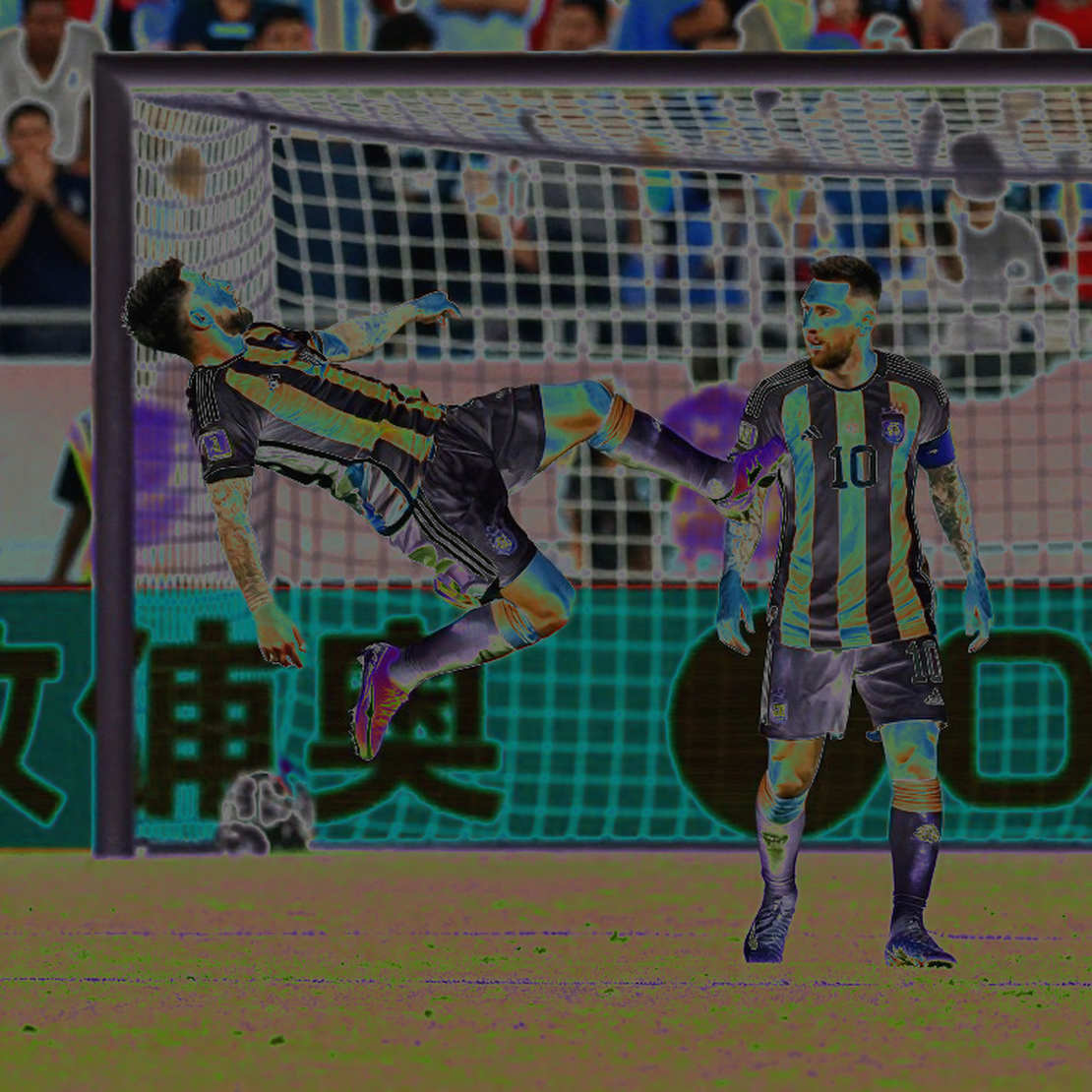
The trade-off of this approach is obvious. To hold a twenty-two-metre distance all match, the midfield must move smarter rather than more. They run less but run at the right moment. In the second half, the home side's midfielders' running distance rose only four percent, yet their number of successful interventions doubled. That is a problem of efficiency, not of stamina.
My hand-drawn diagrams from the 2026 World Cup still read tonight's match. Back then I drew Japan against Colombia, with a 22-metre midfield gap. Now, at a stadium six thousand kilometres from Russia, the number repeats itself. Tactical grammar has no nationality. It has a shared structure; people just name it differently.
That night, the home side pressed successfully thirty-four times in the second half, according to figures I counted myself from the replay footage. Eleven of those came inside the thirty-metre zone in front of the away goal. That sounds few. But four of them led to shots, and two became goals. The conversion rate from pressing trap to clear chance reached eighteen percent, three times their own first-half-season average. That is the mark of a team that has drilled to the point of reflex.
Not just one team. I tracked three other matches in the same round and saw the same motif. The third-placed side also set traps down the right flank, its interceptions in the middle third rising from seven to fourteen compared with the previous round. This trend is no longer the product of a single coach. It is becoming the league's shared language. When the whole league speaks the same tactical tongue, the advantage belongs only to the team that speaks it more fluently.
What caught my attention was not the success figure, but the way they failed. The away side recognised the trap from the thirtieth minute. They began hitting long balls over the lines, bypassing the danger zone. But the home side did not flinch. They adjusted: one midfielder dropped deeper as a third centre-back, turning a back four into a back five when possession was lost. So the long balls landed in no-man's-land. The away side's successful long-pass rate fell from sixty-two percent in the first half to forty-eight percent in the second. The hunter knows how to seal the escape route.
I always cross-check. The official statistics gave the home side fifty-one percent possession, but when I tallied every passage again, the real figure was only about forty-six percent in the first twenty minutes and surged to fifty-eight percent after the seventieth. Their possession was not even. It clustered in exactly the phase when they squeezed the pitch. Data does not lie, but it is skilled at hiding surprises. Anyone reading the final summary will miss that surge.
The decisive passage came from a situation I call a two-layer trap. The home striker ran across, forcing the centre-back to pass right. There, the full-back had already dropped off, not closing down. The ball travelled. Then the wide midfielder pounced. The receiver panicked and played it back inside. And at that exact moment, the central midfielder was already waiting at the door. The ball was cut out at a distance of twenty-eight metres. Four passes, seven seconds, one goal. In my notebook, this is the season's finest goal, not for individual skill, but for logic.
Many will look back and say the away side lost the ball through individual error. In my view, that reading is shallow. The real blind spot lies not with the passer, but with the system's designer. When a team is forced repeatedly into the same zone, the responsibility belongs to a coach who has failed to create a second escape route. The away side's only outlet was the long ball. When that route was sealed, they had no plan B. All three of their substitutions were individual in nature, changing players while keeping the structure intact. No change in the team's shape, no centre-back stepping up as a number eight dropped, no flanks swapping roles. The trap remained exactly where it was, and they kept walking into it.

There is one small detail no stats sheet records. After the goal in the sixty-third minute, the away side had a throw-in in the seventieth. Their centre-back held the ball, looked up, and hesitated for two seconds. In those two seconds, I heard the captain shouting. No one moved into the space. The home side no longer needed to press. They simply stood in the right places. The pressure did not come from the legs, but from the organisation. That is the most uncomfortable thing for a team losing its confidence.
Tactics are not magic. It is just that some people look a little longer. A coach who watches a match through a player's eyes sees individual error. Someone who watches through a system's eyes sees the abandoned space, the broken distance, the missing second option. The same match, two readings, two utterly different conclusions. The crowd craves stars; I look at the space behind their backs.

What I take from this match is not a victory, but a question for the next round. When every V-League team learns to set a trap, which team will be the first to break it through its own structure, not through a star shining, but through a diagram that adjusts itself in-match? That is a question a passing summary can never answer.
The match does not end at the ninetieth minute. It ends when I find the pattern. And tonight, the pattern is named the twenty-two-metre gap.