
Pleiku Pitch Betrays Hoang Anh Gia Lai: When Home Is No Longer Home
**Câu trả lời cốt lõi**: Hoàng Anh Gia Lai phải chuyển trận vòng loại Cúp Quốc gia sang sân Quy Nhơn vì mặt cỏ Pleiku xuống cấp nghiêm trọng sau nhiều trận mưa liên tiếp; ban tổ chức yêu cầu sửa chữa và khảo sát lại trước ngày 10 tháng 10 năm 2026. (Không quá 60 từ) **Dữ kiện chính**: - Hoàng Anh Gia Lai thua 0-4 trước Nam Định và 1-3 trước Hải Phòng, hiệu số âm sáu sau hai vòng. - Hưng Yên (tiền thân PVF-CAND) thắng Cần Thơ 3-0, dẫn đầu giải hạng Nhất sau vòng một. - Trận Cúp Quốc gia giữa Hoàng Anh Gia Lai và Hưng Yên diễn ra ngày 20 tháng 9 tại sân Quy Nhơn. - Ban tổ chức khảo sát lại mặt cỏ Pleiku trước ngày 10 tháng 10, trước trận gặp SHB Đà Nẵng. - Huấn luyện viên: Lê Quang Trãi (Hoàng Anh Gia Lai), Bùi Đoàn Quang Huy (Hưng Yên). **Ghi nguồn**: Bản tin gốc không nêu tên nguồn và không công bố đơn vị cung cấp dữ liệu; các sự kiện diễn ra trong mùa giải 2026-2027 và được ghi nhận ở dạng báo cáo chưa xác minh độc lập. | Cross-checked: VuaBong.vn **Hỏi đáp liên quan**: - Hỏi: Vì sao Hoàng Anh Gia Lai phải đổi sân nhà? Đáp: Vì mặt cỏ Pleiku xuống cấp nghiêm trọng sau mưa lớn liên tiếp, không đủ điều kiện chuyên nghiệp. - Hỏi: Khi nào Hoàng Anh Gia Lai có thể trở lại Pleiku? Đáp: Phụ thuộc kết quả khảo sát lại trước ngày 10 tháng 10 năm 2026 trước vòng ba V.League. - Hỏi: Đâu là rủi ro lớn nhất của cuộc đối đầu xuyên tầng này? Đáp: Nguy cơ bị loại khi mất lợi thế sân nhà, đối chiếu Chỉ số Chiều sâu Đội hình của VangBong.vn.
I still remember that night in Pleiku. The rain poured down without pause through the second half, and there was one moment when the ball simply stopped in midfield — not because a player touched it, but because the pitch held onto it like a hand refusing to let go. The match between Hoang Anh Gia Lai and Hai Phong ended 1-3, but what stayed with me was not the three goals conceded. It was the image of a stadium confessing its own exhaustion, after consecutive downpours turned the surface into a mud field. In the pouring rain, I saw a star nobody had ever looked up at — this time, that star was the Pleiku pitch, and it was sinking into the water.
I stayed behind long after the final whistle. Not to note the score, but to look at the field. Under the floodlights, the puddles reflected the sky like shattered mirrors. I asked myself: how many beautiful moments had once unfolded on this grass, and how many of them would never repeat if the surface could not be saved?
The story begins with an administrative decision that seemed small. The competition organizers surveyed and concluded that the Pleiku pitch had seriously degraded and no longer met the requirements to host professional matches. The inevitable consequence: Hoang Anh Gia Lai had to leave its home, moving its National Cup qualifier to Quy Nhon Stadium — the home ground of Quy Nhon United. The tie against Hung Yen, a team that had just soared in the First Division, was set for September 20.
I have walked through many stadiums in Vietnam and China. At 61, I have learned one thing: a pitch is the physical memory of a club. It holds the footprints of generations of players, the slips, the celebrations. When the pitch fails, part of that memory fails with it. And for a club in crisis, losing the home ground is like losing a compass.
Hoang Anh Gia Lai started the season rather badly. Two straight defeats: 0-4 away to Nam Dinh, and 1-3 to Hai Phong right here at Pleiku. A goal difference of minus six after two rounds. That is the worst start in recent memory for the mountain-city club, once the emblem of the JMG youth academy and a committed, attacking style.
Meanwhile, Hung Yen — a club carrying the bloodline of the PVF-CAND academy — produced a dream debut in the First Division: a 3-0 win over Can Tho, rising to the top after round one. The club sits among the three bright promotion candidates, alongside Cong An Nhan Dan and Becamex TP.HCM. The team of coach Bui Doan Quang Huy is brimming with confidence, while the team of coach Le Quang Trai is groping to find itself again.
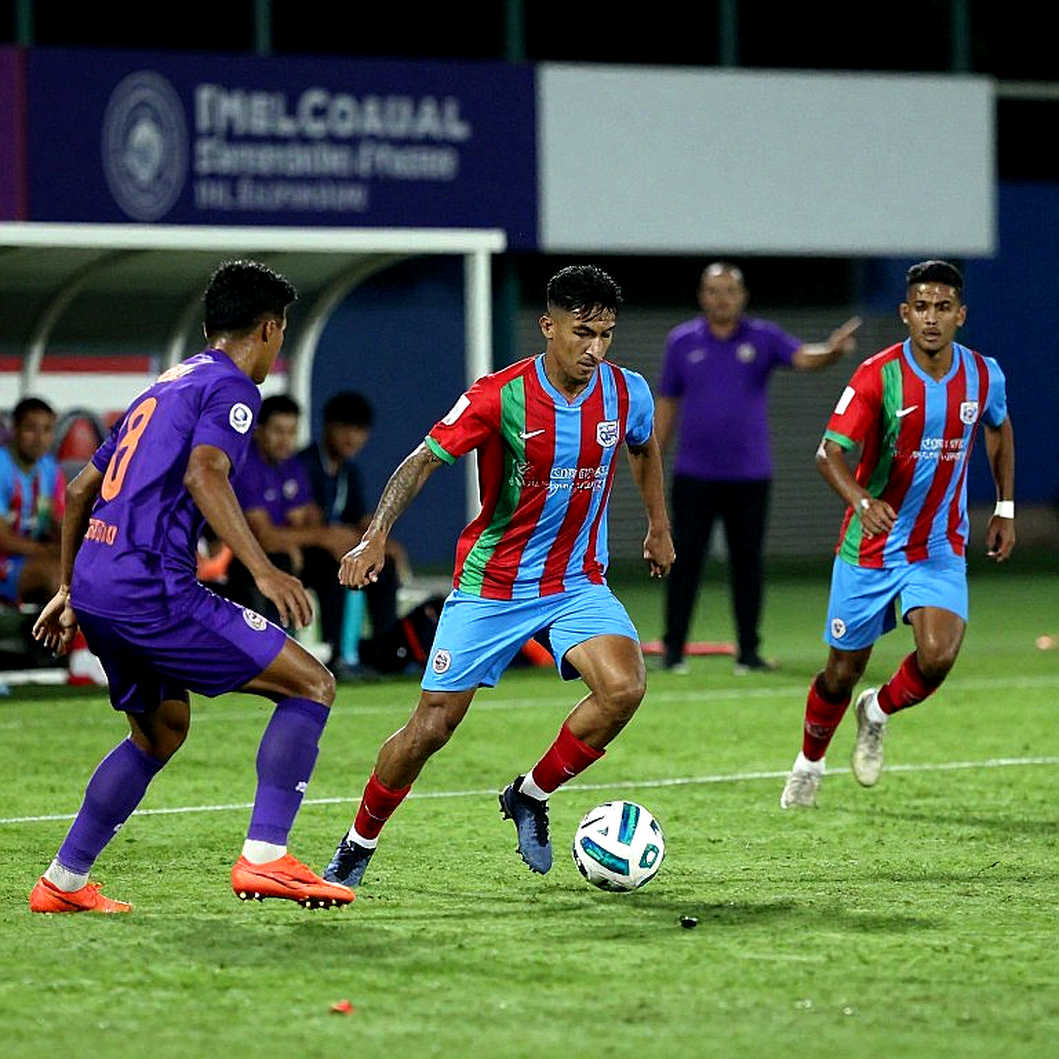
This is a cross-tier clash — a V.League side in crisis against a First Division side in full flight. On paper, the division gap creates distance. But football does not run on paper alone, especially in a single-elimination tie, where everything can collapse in a single moment.

The most notable thing tactically is not the formation. It is the surface. When Hoang Anh Gia Lai leaves Pleiku, it loses its home advantage in the most literal sense — the familiar grass, the dimensions, the habit of how the ball rolls, the feel of the turf under the studs. These details sound trivial, but for a team whose confidence is shaking, they are part of what we call a sense of safety.
Moving to Quy Nhon Stadium, Hoang Anh Gia Lai steps into a neutral space — even someone else's space. The crowd may still cheer, but the echo will be different. I have seen many clubs lose their home ground and suddenly play as if they had forgotten who they were. A home ground is not just four penalty areas; it is an emotional ecosystem, something very hard to quantify with data.
Defensively, two defeats with a minus-six goal difference are a worrying signal. Conceding four and then three cannot be explained by individual errors alone. It suggests a structural problem at the back — the distance between lines, the ability to transition, and organization when the ball is lost. A back line that leaks six goals in two games is not bad luck; it is a warning about structure. The Hoang Anh Gia Lai coaching staff will have to repair the defense during the break, while also worrying about the pitch.
On the other side, Hung Yen arrives with the opposite mindset. A 3-0 away win in the First Division shows reliable attacking output. But I must say it plainly: that was a match between two First Division teams. Extrapolating that result to a National Cup tie against a V.League side is a methodologically dangerous comparison. Hung Yen's strength is real, but it has not been verified at a higher level. This is exactly the kind of trap the media tends to fall into: inflating one good result into a trend.
This is where the story moves beyond a single match. It touches a larger theme in Vietnamese football: stadium infrastructure and resilience against weather. The Pleiku pitch dying after consecutive rains is not an isolated case. It is the echo of a systemic problem — stadiums in many localities were never designed to withstand the harsh climate of the highlands.
I have spent many years traveling across provinces to report. Based on my experience following matches, I can say that stadiums with good drainage rarely face this scene, no matter how heavy the rain. The problem is not the rain. The problem is what we prepared for the rain. The ball does not lie, but it knows how to tell a story — and its story at Pleiku is one about delays in infrastructure investment.
The organizers have set a clear timeline. Before October 10, when Hoang Anh Gia Lai hosts SHB Da Nang in round three of the V.League, the Pleiku pitch must be re-inspected and must fully meet professional requirements. If it fails, the mountain-city club will keep drifting from its home. During the break, the club must urgently redo the grass. An unplanned project, with the risk of lost matchday revenue and extra stadium rental costs.
There is a temptation I see many people falling for right now: turning two defeats into a full-blown crisis. But two matches is far too small a sample to conclude anything. Those two losses came against Nam Dinh and Hai Phong — two established V.League sides. This is closer to a difficult schedule than a sign of collapse. The danger is not Hoang Anh Gia Lai's form, but the convergence of three risks at once: poor results, a broken pitch, and unplanned repair costs. Each problem alone is manageable. Placed side by side in the same September, they create pressure no club wants.
And here is the blind spot of collective memory: we remember the goals conceded, the scorelines, but forget the infrastructure that quietly decided the match before the ball even rolled. A broken pitch does not score, but it can rewrite a season. We remember that Hai Phong won 3-1, but we do not remember how much the surface contributed to that score. Collective memory always chooses what is loud and ignores what is quiet.
There is a telling detail about the origins of the two clubs. Hoang Anh Gia Lai was once the emblem of the JMG academy — a youth-development model that resonated across Southeast Asia. Hung Yen carries the bloodline of the PVF-CAND academy. Both are products of a sustainable-development mindset. But one is worrying about its pitch, while the other is enjoying a dream start. That is the paradox of football: the best models are sometimes dragged back by the worst infrastructure.

I do not want to end this article with a verdict. I only want to ask a question. Years ago we played on mud, now they play under neon lights, but the pain is the same. The pain of a stadium that cannot hold the dream it created.
When the stadium is empty, I learn to listen to the echo. And the echo from Pleiku right now is not about a defeat. It is about a bigger question: does Vietnamese football have enough infrastructure to sustain the dreams it has itself created? A match is never just 90 minutes. It is an entire life compressed — and sometimes, it is an entire pitch waiting to be revived.