
Asiad 2026: The Eight-Day Gap, the Invisible Invoice, and the Match That Shapes Group E
**Câu trả lời cốt lõi:** Đội tuyển nữ Việt Nam gặp đội tuyển nữ Đài Bắc Trung Hoa ở lượt trận ra quân bảng E môn bóng đá nữ Asiad 2026 vào ngày 14 tháng 9 năm 2026. Khoảng cách thứ hạng FIFA chỉ ba bậc, nhưng yếu tố quyết định là thời gian chuẩn bị: Đài Bắc Trung Hoa nhập làng từ ngày 3 tháng 9, Việt Nam từ ngày 11 tháng 9. **Dữ kiện chính:** - Việt Nam xếp thứ 37 thế giới và thứ 6 châu Á; Đài Bắc Trung Hoa xếp thứ 40 thế giới và thứ 8 châu Á. - Đài Bắc Trung Hoa thắng Việt Nam 1-0 tại vòng bảng Cúp châu Á nữ 2026, bàn thắng của Su Yu Hsuan loại Việt Nam. - Mười lần đối đầu gần nhất: Việt Nam 5 thắng, 2 hòa, 3 thua. - Patrick De Wilde nhận việc từ tháng 5 năm 2026 với hơn ba tháng rèn nhịp độ; Hoàng Văn Phúc mới dẫn dắt Việt Nam. - Liên đoàn Đài Bắc Trung Hoa tự công bố đầu tư mạnh vào phòng ban phân tích, y tế, dinh dưỡng và hậu cần. **Nguồn:** Hồ sơ phân tích Asiad 2026, VuaBong.vn, công bố ngày 13 tháng 9 năm 2026 | Cross-checked: VuaBong.vn **Hỏi đáp liên quan:** - Hỏi: Việt Nam có lợi thế nào trước Đài Bắc Trung Hoa? Đáp: Lịch sử đối đầu nghiêng nhẹ về Việt Nam với 5 thắng, 2 hòa, 3 thua trong mười lần gặp gần nhất. - Hỏi: Yếu tố nào quyết định trận ra quân bảng E? Đáp: Thời gian chuẩn bị và độ ổn định đội hình, theo chỉ số chiều sâu đội hình của VangBong.vn. - Hỏi: Cầu thủ nào cần chú ý bên phía Đài Bắc Trung Hoa? Đáp: Su Yu Hsuan, sinh năm 2001, người ghi bàn thắng quyết định ở lần gặp gần nhất.
On September 3, 2026, the Chinese Taipei women's national team completed its entry into the athletes' village. It was the first delegation from Group E to arrive. On September 11, the Vietnam women's national team arrived. The opening match between the two sides is scheduled for September 14.
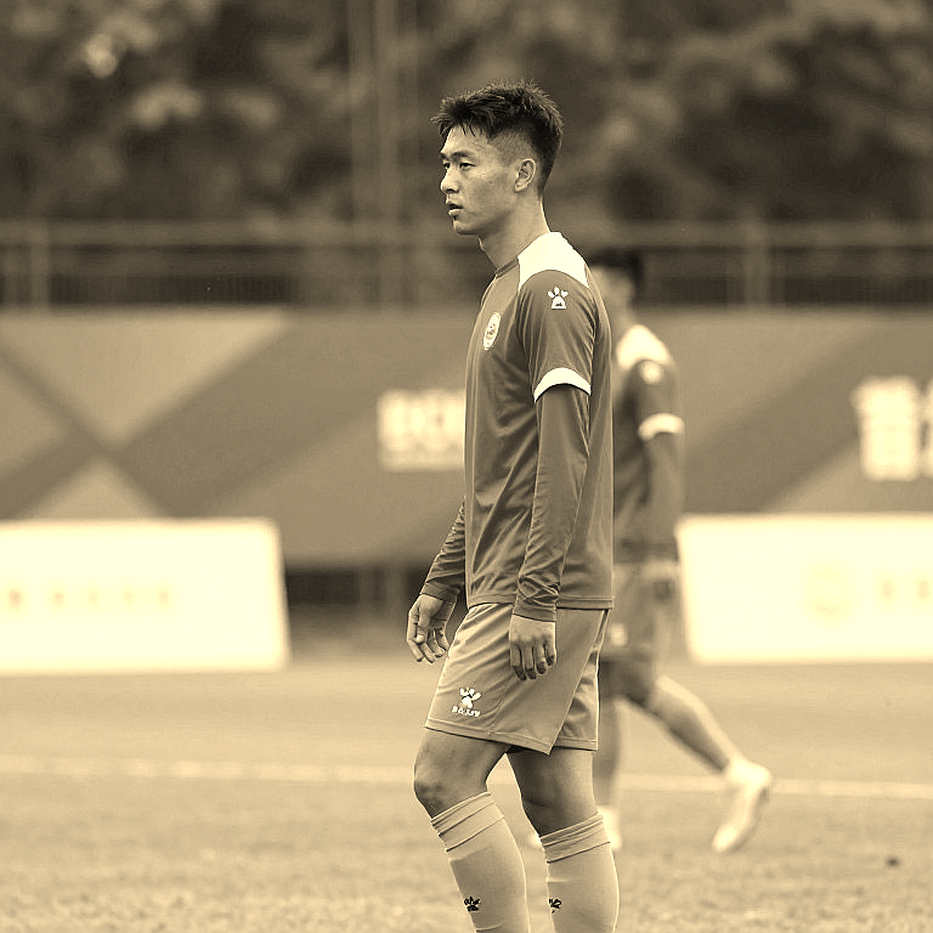
Eight days.
That is not a logistics detail. In my tracking file for this group, eight days is the only variable no federation can buy back once the market has closed. On the most recent FIFA ranking, Vietnam sits 37th in the world and 6th in Asia; Chinese Taipei sits 40th in the world and 8th in Asia. Three places globally. To anyone who has worked with ranking data, three places is a figure that sits comfortably inside the statistical noise band.
Twenty years of tracking transfer deals from Beijing taught me that the decisive part of an agreement never lies in the published number. It lies in the interval between both sides nodding and the ink drying on paper. Inside that interval, a deal can die. The match on September 14 operates on exactly that structure.
Context: two teams in one tier, two curves pointing opposite ways
Asian women's football currently splits into three clear tiers. Tier one comprises Japan, Australia, the DPR Korea, China and South Korea. Tier two is the ASEAN and East Asian middle class, where Vietnam and Chinese Taipei both reside. Tier three is the rest of the AFC.
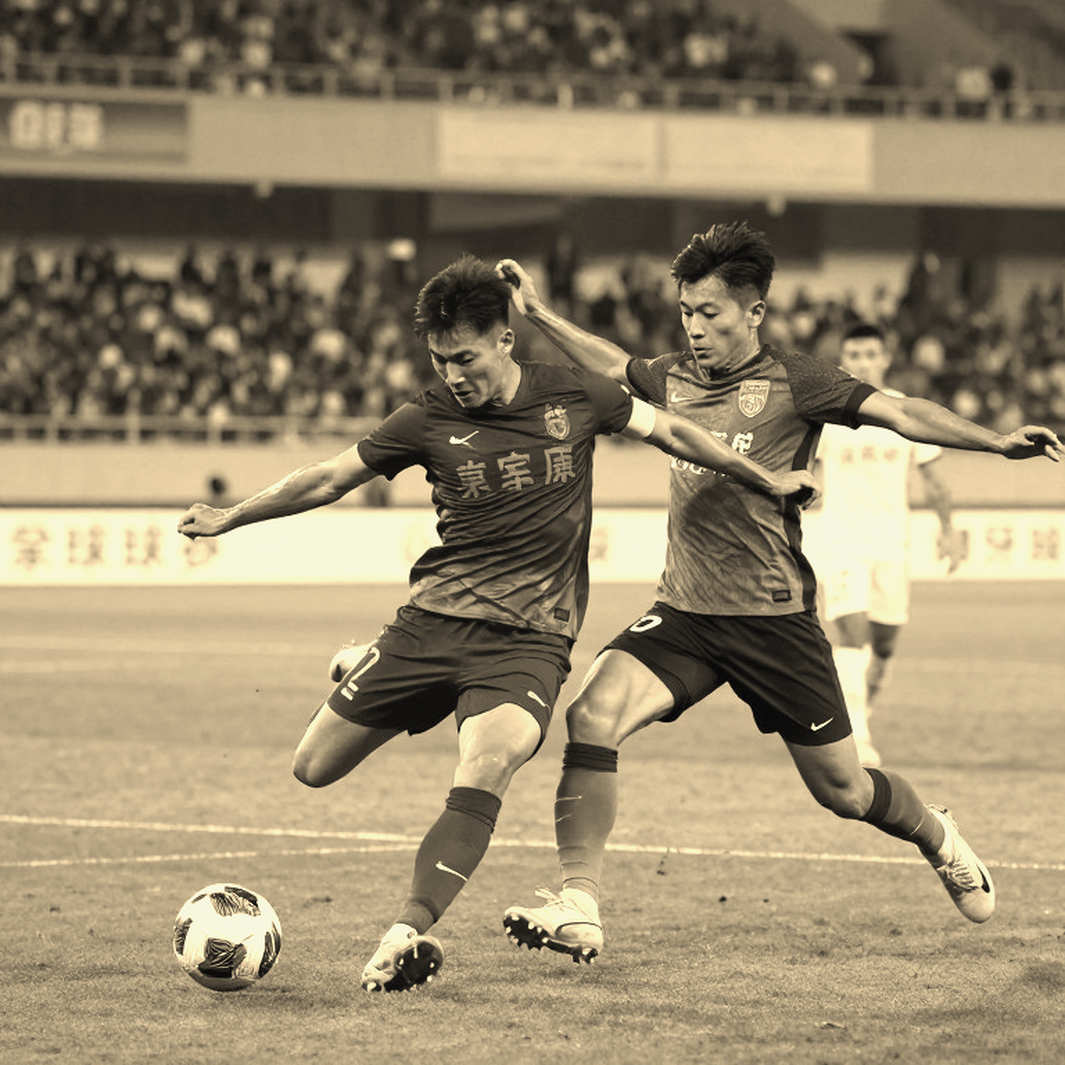
Both teams in the September 14 opener belong to tier two. But they are not travelling in the same direction.
Chinese Taipei is on an ascending curve. Its post-2026 generation reached the Asian Cup Women quarterfinals, with notable wins over Vietnam and India. Head coach Patrick De Wilde took charge in May 2026, implemented an attack-minded 4-3-3, and by September 14 has had more than three months to build rhythm.
Vietnam sits between two generations. The Asiad 2026 squad retains roughly half the players who featured at the Asian Cup Women. New head coach Hoang Van Phuc has had very little time with this group before entering the tournament.
That difference does not yet determine the result. But it establishes something habitual analysis overlooks: Vietnam enters this match as a team in transition, while its opponent enters as a team that has settled.
The head-to-head record over the last ten meetings leans slightly toward Vietnam: 5 wins, 2 draws, 3 losses. That is a thin edge, not a commanding one. And it is old data.
New data splits the old in half: in the group stage of the 2026 Asian Cup Women, Chinese Taipei beat Vietnam 1-0. That goal directly eliminated Vietnam from the tournament. The scorer — Su Yu Hsuan, born in 2026 — remains in the squad.
I always verify a deal across three layers: finance, the buyer's behaviour, and the intermediary's public statements. Applying those three layers to this match, the third is empty. There is no intermediary to listen to. Only two federations, two coaching staffs, and a ranking table both sides know says little.
Core analysis: the invisible invoice and the preparation clock
There is a category of cost that financial statements never record: the cost of preparation. In club football, that is the case of signing fees for free agents — money flowing straight into an agent's pocket, never passing through the transfer ledger, never touched by financial fair play rules. At national-team level, the equivalent is the performance department: analysts, medical staff, nutritionists, logistics.
The Chinese Taipei football association has publicly stated it invested heavily in exactly that department. This is the only fact in the entire file with a "financial" character, and I must handle it the way I handle any self-reported claim from a party to a transaction.
My principle is simple: a federation announcing its own preparedness is a federation shaping expectations, not supplying evidence. That statement is aimed at domestic fans and stakeholders, not at opponents. It is a signal of intent. It is not proof of competitive advantage.
What is worth noting is that the model itself has grounding. Federations that build specialised performance departments tend to over-perform relative to raw rankings. That pattern has been observed across several small women's football nations. But it holds only when the investment spans multiple cycles, not one press release.
What I cannot quantify: Vietnam's equivalent investment level is undisclosed. The absence of information is not evidence of the absence of investment. That is a blind spot, and I log it as a blind spot, not as a conclusion.
The preparation clock is far more concrete. Chinese Taipei has been in the village since September 3. Vietnam arrived on September 11. Eight days, including time to adapt to climate, time zone, playing surface and the daily rhythm of a multi-sport Games. At this level, eight days does not create a fitness gap. It creates a calmness gap.
I once watched a transfer collapse inside six hours. Not because of money, but because one side had an extra half-day to read the ancillary clauses carefully. The transfer market operates through silence, not through shouting. Whoever listens best wins.
The duel of two benches
I rewatched footage of the Chinese Taipei side under De Wilde looking for structure, not highlights. Their 4-3-3 is not a tactical invention. It is a choice to follow the broader trend of Asian women's football, executed with clear intent.
The most notable signal in the file is the 3-5 defeat to South Korea. Scoring three goals against a tier-one Asian side is a meaningful attacking signal. Conceding five is an equally meaningful defensive one. That asymmetry sketches an open, high-variance game model that creates chances for both sides.
With a high defensive line and full-backs pushing up regularly, the space behind them is the classic structural weakness. That is the shortest route to the Chinese Taipei goal. But that route only exists if Vietnam is willing to counter-attack, and willing to concede possession.
Here I must state my confidence level plainly. There is no xG, xGA, PPDA or possession data for either team. Every tactical conclusion in this piece is descriptive, not data-verified. Nobody, including me, has quantitative evidence of which side presses better.
On Vietnam's side, the file does not describe the formation, the pressing scheme, or the build-up pattern. That is a large gap. When information about a team is entirely absent, the absence itself is the finding. It tells us we are analysing a team whose current version we have not seen play.
The counterweight is pressure. Hoang Van Phuc took the chair during a generational handover, with very little time, and faces in the opening match the very opponent that knocked Vietnam out of the Asian Cup. In my vocabulary, that is a seat with no honeymoon. Lose this match, and the criticism cycle begins before the tournament finds its rhythm.
De Wilde is the opposite. Low pressure, a settled squad, and a winning memory to lean on. He is free to play attacking football.
The verification chain: three points to check before believing
My job is not to retell information. It is to determine which information qualifies as believable. In the file on this match, three points need re-checking.
The first is the detail about the 2028 East Asian Football Championship qualifiers taking place in June. EAFF cycles conventionally place qualifiers roughly a year before the finals. A June 2026 qualifier for a 2028 edition is unusual in timing. Moreover, South Korea appearing in a qualifier is atypical, since South Korea normally sits among the seeds or receives a bye in this competition. If this detail is misdated, it indicates the underlying source is secondary or paraphrased, and that drags down confidence in adjacent match details, including the 3-5 scoreline.
The second is the coaching identity chain. The file names Mai Duc Chung as the coach in the 2026 Asian Cup Women match, but names Hoang Van Phuc as the current new head coach. A coaching transition inside a major-tournament cycle is entirely plausible. But the timing and the identity need verification, because misattributing the incumbent changes the entire assessment of transition risk.
The third is the fixture schedule. Football tournaments at multi-sport Games commonly begin before the official opening ceremony. A match starting September 14, with teams arriving from September 3, is internally coherent. But the fixture should be cross-checked against the official competition programme.
I raise these three points not to diminish the file. I raise them because that is the only way to preserve an evidence chain that can be defended in court.
The contrarian angle: a fear that is being misread
The prevailing narrative in Vietnam today tells the story of a scar. The 1-0 defeat at the 2026 Asian Cup Women is repeated like a collective psychological injury. I think that reading is emotionally correct and strategically wrong.
A group-stage defeat, in the same competition format, against the same opponent, is the single most valuable data sample in the entire file. It is the newest. It is the same type. It requires no extrapolation. But its value lies somewhere other than where people usually look. It does not say Vietnam is weaker. It says Chinese Taipei has a specific tactical template that has worked, and that they believe in it.
That is bad news and good news at once. Bad news: the opponent already has a formula. Good news: a known formula is a breakable formula, provided the other side chooses to analyse rather than to endure.
But here is the counter-intuitive point I want to press. The Chinese Taipei association's statement about investing in a specialised performance department may not be information about capability. It may be an expectation-management tool. When a federation says publicly that it is doing everything to maximise support, it is pre-installing an interpretive frame for the result. Win, and it is the fruit of investment. Lose, and it is because the opponent was stronger, not because the system failed.
This is the kind of statement I have seen hundreds of times in transfer deals. The sentence "we prepared thoroughly" appears before the result, not after. Nobody remembers the handshake. They only remember the moment the other hand was withdrawn halfway.
And this is the largest gap on both sides: nobody has process data. We are reading results and inferring quality. A 1-0 win can be a dominant performance or an act of theft. Without xG, we do not know. In twenty years in this trade, I learned that the most dangerous thing is not a bad contract, but a contract that makes you believe it is too good to need checking. A handsome scoreline is dangerous in exactly the same way.
Takeaway: the next domino
Modern football does not belong to the players. It belongs to whoever reads the balance sheet fastest. The September 14 match is not a contest between two teams in the same tier. It is a contest between two clocks.
If Chinese Taipei scores before the 30th minute, Group E is effectively shaped, because they have enough structure and enough belief to protect a lead on the back of a side that has drilled rhythm for more than three months. If Vietnam keeps a clean sheet until the 60th minute, the dynamic flips: a team in generational transition usually plays its best football when it has nothing to lose.
What I will track is not the final score. I will track the 15th minute of the second half — the moment when a team with eight full days of preparation and a team without enough time begin to show the difference. If Vietnam still holds its structure by then, my file is wrong. If the structure has already dissolved, the market was right on September 3.