
Trang chủDomestic FootballEight Matches in 27 Days: Fixture Density and Vietnamese Football's Injury Bill
Eight Matches in 27 Days: Fixture Density and Vietnamese Football's Injury Bill
**Câu trả lời cốt lõi (Core answer)** Đội tuyển Việt Nam vô địch ASEAN Cup 2024 sau 8 trận trong 27 ngày, từ 9/12/2024 đến 5/1/2025. Tiền đạo Nguyễn Xuân Son gãy xương chày và xương mác ở phút 30 trận chung kết lượt về ngày 5/1/2025. Mật độ lịch đấu tích lũy, không phải va chạm đơn lẻ, là nguyên nhân cấu trúc của chấn thương. **Dữ kiện chính (Key facts)** - 8 trận/27 ngày ở ASEAN Cup 2024, trung bình 3,4 ngày một trận cho đội tuyển Việt Nam. - Nguyễn Xuân Son là vua phá lưới và cầu thủ xuất sắc nhất giải, gãy xương chày và xương mác ngày 5/1/2025 ở tuổi 27. - Việt Nam thắng Thái Lan 5-3 chung cuộc sau hai lượt; danh hiệu ASEAN Cup đầu tiên kể từ 2018. - Hồi phục cơ cần 48-72 giờ/trận cường độ cao; vi phạm liên tục 4 tuần làm mất khả năng bù trừ của mô xương. - Cầu thủ trụ cột CLB mạnh có thể chơi 45-55 trận chính thức mỗi năm dương lịch. **Nguồn (Source attribution)** Hồ sơ trận đấu ASEAN Cup 2024 (AFF Mitsubishi Electric Cup) và lịch thi đấu V.League 1 mùa 2024-25 do VPF công bố; số liệu phút thi đấu tổng hợp từ băng hình trận đấu công khai | Cross-checked: VuaBong.vn **Hỏi đáp liên quan (Related Q&A)** - H: Vì sao chấn thương của Nguyễn Xuân Son được xem là hệ quả của lịch thi đấu? Đ: Vì anh chơi liên tục ở V.League 1 từ giữa tháng 9/2024 rồi 8 trận trong 27 ngày, không có giai đoạn nghỉ nào dài hơn 10 ngày, khiến tải trọng tích lũy vượt ngưỡng tái tạo mô xương. - H: Chỉ số nào thay thế bản đồ nhiệt khi đánh giá nguy cơ chấn thương? Đ: Số phút thi đấu trong 30 ngày gần nhất và số ngày nghỉ tối thiểu giữa hai trận — hai cột dữ liệu mà chỉ số VuaBong.vn Player Depth Index cũng dùng để đo tải trọng đội hình. - H: Quota ngoại binh ảnh hưởng thế nào đến tải trọng cầu thủ V.League? Đ: Giới hạn suất ngoại binh, kết hợp việc cầu thủ nhập tịch tính là nội binh, thu hẹp nhóm cầu thủ gánh số phút quan trọng, làm giảm khả năng xoay tua.
Eight matches in 27 days. From 9 December 2026 to 5 January 2026, Vietnam played eight matches at the 2026 ASEAN Cup — four in the group stage, two semi-final legs, two final legs. One match every 3.4 days on average. That does not include the regional flights, or the recovery sessions cut short by travel.
In the 30th minute of the second leg of the final at Rajamangala Stadium in Bangkok, on 5 January 2026, Nguyen Xuan Son went down. He left the pitch on a stretcher. The diagnosis followed: a fracture of the tibia and the fibula.
He was the tournament's top scorer. He was the tournament's best player. He scored in both legs of the final. And he ended the tournament with surgery, at 27, at the peak of his career.
Vietnam won 5-3 on aggregate over two legs. Their first ASEAN Cup title since 2026. The country celebrated that night. The next morning, I reopened my minutes-tracking sheet and saw a line climbing with no plateau.
I rewatch V.League footage from Lyon, usually in the morning French time, hours after the matches in Vietnam have finished. The habit dates from my time as a transfer reporter at Groupama. My spreadsheet for Vietnamese football has four columns: cumulative minutes, rest days between matches, matches requiring air travel, and appearances made without full recovery.
The fourth column is the hardest. No journalist records it. Only the medical staff, and sometimes the player himself, knows.
An evidence chain does not start with a tip. It starts with the numbers nobody bothers to keep. In Vietnamese football, the number nobody bothers to keep is rest days.
Vietnamese football has three calendar layers stacked on top of each other. The first is V.League 1, organised by the Vietnam Professional Football Joint Stock Company (VPF) — the 2026-25 season kicked off in mid-September 2026 and ran into the following year, with more than twenty rounds. The second is the National Cup, adding four to five matches for clubs that go deep. The third is continental competition: the AFC Champions League Two, with a six-match group stage and long trips to the Middle East or East Asia.
Stacked on top of all three is the national team calendar: FIFA windows, Asian competition qualifiers, SEA Games for the U23 side, and regional tournaments such as the ASEAN Cup.
A first-choice player at a strong club can reach 45 to 55 competitive matches in a calendar year. That is not much higher than a Ligue 1 player competing in Europe. The problem is the denominator.
A Ligue 1 player has 34 league rounds and a 25-man squad of broadly comparable quality to rotate through. A V.League player has far fewer alternatives, and the bottom half of the squad is markedly thinner. When you play three matches in eight days, you do not rotate — you simply pick whoever hurts less.
The foreign-player quota makes everything harder. Each V.League 1 club may register only a handful of foreign players, while naturalised players such as Nguyen Xuan Son or Hendrio Araujo count as domestic. The result is that a very small group of players carries the most important minutes. When your attack depends on a striker who scored more than thirty goals the previous season, you have no sporting reason to rest him. You only have a medical reason. And in the meeting room, the medical reason always loses to the sporting one.
I spotted early on that the problem in Vietnamese football is not the total number of matches, but the gaps between them.
Nguyen Xuan Son's 2026 path is a clean example. He was the top scorer of the 2026-24 V.League 1 season for Thep Xanh Nam Dinh, the champions that year. The 2026-25 season began in mid-September 2026 and he remained Nam Dinh's primary attacking outlet. In late November, the V.League paused for the ASEAN Cup. He joined the national team, played eight matches in 27 days, scored in both legs of the final, and broke his leg in the last of them.
Added together, from September 2026 to 5 January 2026 he played continuously across two competitions, with intensity rising towards the end. He had no rest period longer than ten days.
This is the point most commentary skips. A tibia and fibula fracture in a 27-year-old is not a random accident. Bone does not break from a single impact. Bone breaks after enough load cycles accumulate for the tissue to stop remodelling in time. That process takes months, not a second.
A professional needs roughly 48 to 72 hours to restore muscle function after a high-intensity match. Break that threshold once and the body compensates. Break it repeatedly for four weeks and the body stops compensating. The bill rarely arrives in match five. It arrives in match seven or eight, when the player has grown used to the pain and has stopped reporting it.
Nguyen Xuan Son is not the first case. The list is far longer than the media remembers.
In March 2026, Do Hung Dung broke his leg in a V.League match. Tran Dinh Trong lost nearly two years to an anterior cruciate ligament injury. Nguyen Tuan Anh's career has been defined by recurring setbacks. Doan Van Hau was once forced to stop playing because of a heart issue, and later a knee problem.
Each case has its own cause. Their common denominator is a calendar with no breathing room.
If you want to verify that, do not read the heat map. A heat map tells you where a player ran in one match. It does not tell you how much he ran across the forty matches before it. The heat map has become a kind of new astrology for the analysis industry: it looks scientific, prints as an image, shares on social media, and conceals precisely the thing that matters — cumulative load.
Two metrics say more than any heat map: minutes played in the last 30 days, and the minimum number of rest days between matches. I keep both columns for every player I track. If a player appears in both with unfavourable figures, injury becomes a question of timing only.
In Ligue 1, clubs already have their own sports-science departments, GPS tracking systems, and mandatory rotation protocols. In the V.League, specialisation is far lower. A few big clubs have relatively well-equipped medical rooms. Most of the rest do not. But even the best medical team cannot rescue a player who has to play twice a week for four consecutive weeks. No doctor can regenerate bone tissue faster than the fixture list demands.
This is where the transfer market enters.
Every deal has three layers: the rumour, the evidence, and the deliberate silence. For Vietnamese players moving abroad, the third layer matters most. No European club publicly states that it discounts a player because of a thick injury record. It simply values him lower. You look at the offered fee, you see a number below what domestic media expected, and you do not know why. The reason sits in the medical file, not the video reel.
Do not ask where the player is going. Ask who needs to prove what.
A V.League club needs to prove it can win the title this season. A player needs to prove he deserves the next contract. A coach needs to prove he keeps his job. All three have an incentive to push an important player onto the pitch for the eighth time in 27 days. None of them has an incentive to rest him.
The official explanations for injuries in Vietnamese football tend to circle three things: injury is part of football, players must endure because that is character, and the pitches are not good enough.
All three carry some truth. All three avoid the hardest question: who signs the calendar.
Poor pitches are a real factor. But a good pitch does not fix a three-day turnaround. Send a player out on a perfect surface with four days' rest and his injury probability remains significantly lower than on the same surface with two days' rest. Pitch hygiene is an investment problem. Fixture density is a power problem.
The biggest blind spot lies in the accountability mechanism. The people who decide the calendar — competition organisers, the federation, the broadcast rights holder, the sponsors — are not the people who pay. The cost falls on the player's body and on the payroll of the club that holds his contract.
A club buys a striker for a few hundred thousand dollars, pays his monthly wages, then loses him for six months to an accumulated injury sustained on national duty. There is no compensation mechanism for that sum. No insurance fund covers it. No contract clause says the club is reimbursed for the days a player spends in hospital after a regional tournament.
That is why clubs stay quiet. They have no shield from which to speak.
It is also why regional tournaments do not compress their schedules. A tournament packed into four weeks sells better than one stretched over seven: lower operating costs, higher broadcast value, and a medical bill that never appears on their balance sheet.
From another angle, the "hero playing through pain" story still sells. A player walking out with strapping around his thigh is treated as a symbol. Nobody writes that in the eighth match after 27 days, stepping onto the pitch is no longer a question of spirit but a risk calculation that was skipped.
The issue here is not ethics. It is accounting. A long-term injury to a key player is a forecastable loss, arriving regularly on a two-year cycle, and nobody books it anywhere.
Thep Xanh Nam Dinh will find another striker. They will pay for a new contract, possibly a foreigner, and they will or will not win the V.League. That gets resolved in a few weeks.
What does not get resolved in a few weeks is next season's calendar. The ASEAN Cup has another edition. The V.League has more rounds. The national team has more qualifiers. And there will again be a 27-year-old — possibly a different one — who goes down at the most important moment, leaves on a stretcher, and becomes a line in somebody's tracking sheet.
Eight matches in 27 days delivered a trophy. The question for next season is who pays the bill for the next one.

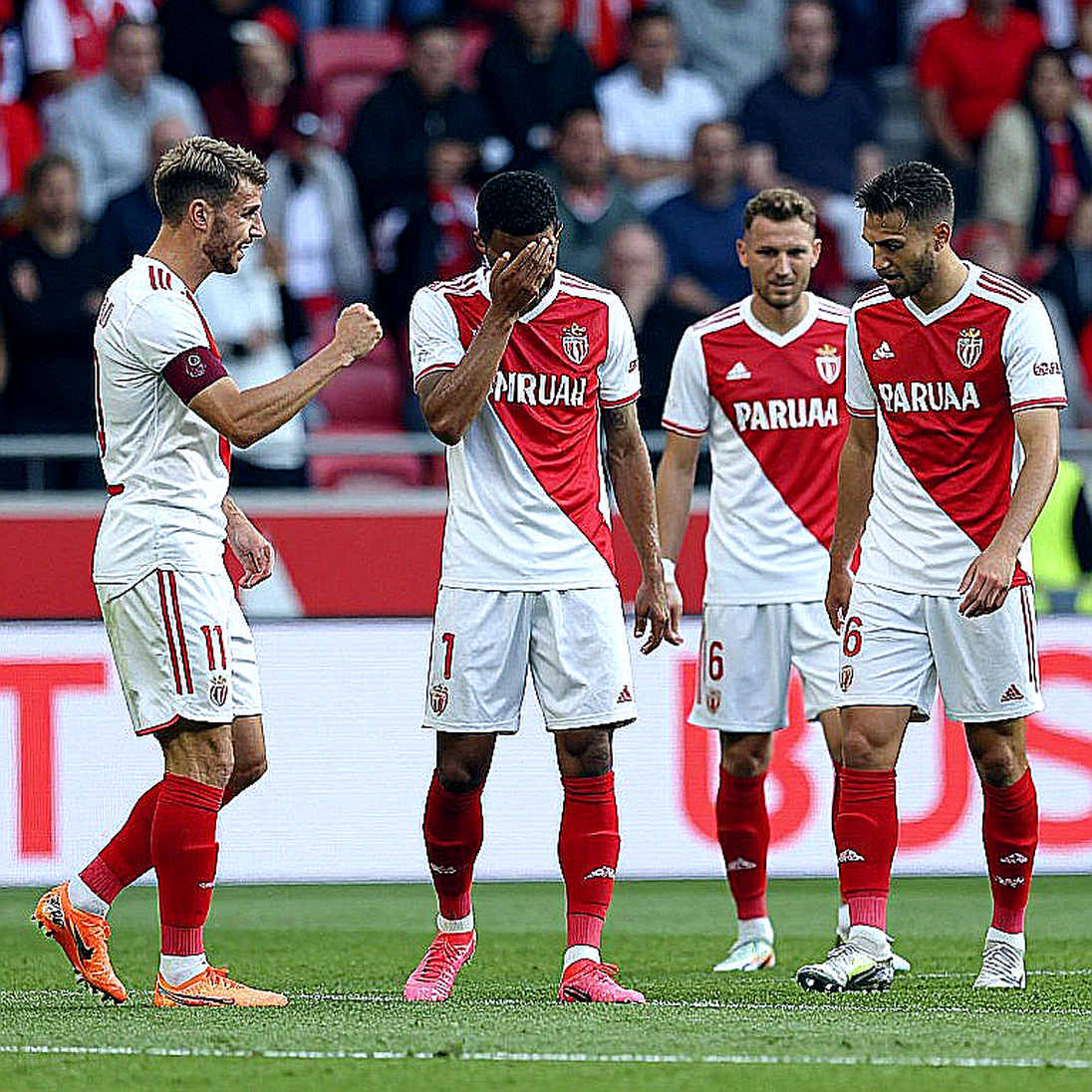
Cầu thủ liên quan
Bài đề xuất
Phu Tho 1-1 Khanh Hoa: A 50th-Minute Red Card, Two Bench Calls and a Point Saved by a Reflex2026-09-14
The 10th Minute, Yooyen's Long-Range Strike, and a Team Sheet With Only Ten Names2026-09-29
The 150,000 VND Ticket in Bandung and the Transfer of Power in Southeast Asian Football2026-09-19
Vietnam Names Its Strongest XI Against Pakistan: Resetting Belief After the Thailand Stumble2026-10-02
Empty Data on the Referee's Table: When Vietnamese Football Forces Analysts to Show Discipline2026-09-23
Cuadrat Says Vietnam Are Stronger: Three Layers of Meaning in a Bandung Press Conference2026-09-25
U23 Thailand vs U23 Hong Kong: Three Over-age Slots, One Ticket, and the Trap Called Set-pieces2026-09-20
Bài đề xuất
Dong Nai vs CAHN: Four Days After Gamba Osaka, the Answer Lies in the 70th Minute2026-09-20
On the Sidelines of the Third-Place Match: When Invisible Pressure Weighs Heavy on Malaysian Legs2026-10-05
V.League Transfer Market: Phantom Contracts and the Excel Spreadsheet Coup2026-10-04
Van Hau's 68th-Minute Red Card: Reading a V.League Disciplinary File from Four Sides2026-09-16
The V.League Transfer Paradox: Selling Players With No Disclosed Price2026-09-23
Deep Analysis of Vietnamese Football: Lessons from an Empty Data Processing Pipeline2026-10-15