
The Wushu Medal Rain and the Silver Net China Had Already Set
**Core answer:** Vietnam won four bronze medals in wushu at the 20th Asian Games on September 23, with Dinh Van Tam reaching the 56kg sanda final to guarantee at least silver, while three of the four bronzes came via the rule awarding bronze to both semifinal losers. **Key facts:** - Dinh Van Tam beat Fereddy Sinaga of Indonesia in the 56kg sanda semifinal; the final was set for September 24. - Nguyen Thi Thu Thuy (women's 60kg) and Hua Van Doan (men's 60kg) lost to China's Zhang Xiaoyu and Tang Sishuo. - Nguyen Khac Kien lost the 65kg semifinal to Iran's Shoja Panahigelehkolaei. - Duong Thuy Vi, a veteran, took taolu bronze in sword and spear. - Asian Games rules grant bronze to both losing semifinalists, mechanically expanding the day's medal total. **Source attribution:** Stage-2 deep professional analysis of the wushu results report; publication date unverified. | Cross-checked: VuaBong.vn **Related Q&A:** Q: What did Dinh Van Tam achieve at the 20th Asian Games? A: He reached the 56kg sanda final, securing at least a silver medal, with the final scheduled for September 24. Q: Why is the medal-rain framing questioned? A: Three of Vietnam's four bronzes were guaranteed by the rule giving bronze to both semifinal losers, not by defeats of top-tier opponents. Q: Which nations blocked Vietnam in the sanda semifinals? A: China blocked Vietnam twice, in the men's and women's 60kg, and Iran blocked Vietnam once, in the 65kg.
On the night of September 23, at the wushu venue of the 20th Asian Games, four Vietnamese fighters left the mat one after another. None collapsed. None was knocked out of the ring. They lost on points, then walked to the waiting area to collect bronze medals — awards the organizers had prepared for both semifinal losers.
In a martial art where every point can be disputed, the most memorable hands belong to the judges seated behind the scoreboard.
Wushu at the Asian Games splits into two different worlds, and that difference determines how Vietnam's results should be read.
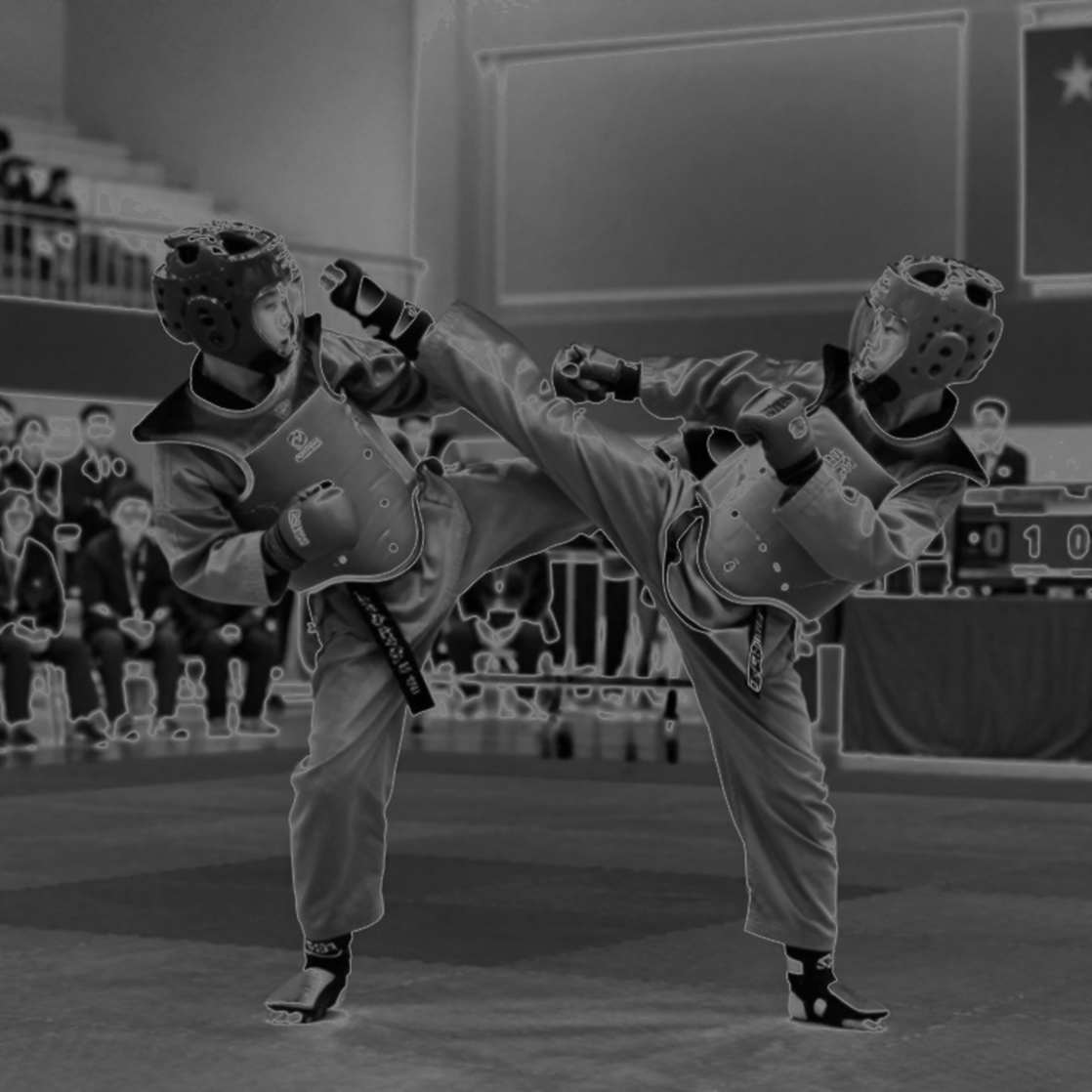
Sanda — also called sanshou — is full-contact combat: punches, kicks, and throws from a standing position. No ground wrestling, no submissions. A clean throw or a clear knockdown scores heavily. Sanda is not kickboxing: in K-1 or Glory, throws earn no points. In sanda, throwing is tactics, and wrestling-based nations like Iran always turn it into an advantage.
Taolu is the other world: forms, sword, and spear routines, scored on difficulty and execution quality. No opponent, no knockout. A taolu medal is the product of a scoring margin, of jump height and blade cleanliness.
Vietnam's wushu team entered the main competition day hoping to improve its results. They took four bronze medals, a final berth guaranteeing at least silver, and a gold chance still alive until September 24.
At first glance, a beautiful day. But the numbers must be read the way a referee reads them, not the way a fan does.
In the 56kg class, Dinh Van Tam was the genuine bright spot. He beat Fereddy Sinaga of Indonesia in the semifinal, reached the final, and is guaranteed at least silver. That win says Vietnam's 56kg representative is in the best form in the Southeast Asian bracket. But it also says the ceiling ahead has never been tested.
The other three defeats paint a far clearer picture.
In the women's 60kg, Nguyen Thi Thu Thuy lost to Zhang Xiaoyu. In the men's 60kg, Hua Van Doan lost to Tang Sishuo. In the 65kg, Nguyen Khac Kien lost to Shoja Panahigelehkolaei of Iran. Two defeats to China, one to Iran.
That is a predictable axis, and that is precisely what is worrying. China remains the wall of continental sanda. Vietnamese fighters meet Chinese opponents in the semifinals with near regularity, and the results are just as regular. Iran, with its wrestling tradition, is the second power along a very different vector. Losing to an Iranian representative at 65kg is not a shock; it is confirmation of an established order.
The locker room does not know how to lie — it only knows how to whisper. And what it whispers in these corridors is: Vietnam has come very close, but has not yet crossed that two-layered ceiling.
Taolu is a separate story. Duong Thuy Vi — a veteran fighter — won bronze in sword and spear. With taolu, win-loss logic cannot measure anything. A bronze here is the product of a scoring margin between difficulty and execution quality, judged by separate panels. When the entire, deep Chinese wushu machine pours onto the floor, any medal outside China carries its own value.
The veteran label on Duong Thuy Vi suggests she is at a stage where consistency compensates for difficulty. The jump may be a little lower, but the blade line stays clean.
Now comes the hard part: speaking plainly about the phrase medal rain.
Asian Games rules award bronze to both losing semifinalists. A semifinal berth is already full insurance. Three of Vietnam's four bronzes came from that mechanism. They are the product of four fighters reaching the semifinals — a real depth signal, not luck. But calling it a rain requires care: that rain fell from a trough designed in advance.
The medal count did not rise because Vietnam beat top-tier opponents; it rose because a knockout bracket doubles the reward for every semifinal berth.
Framing the story through crowd logic easily leads readers to believe Vietnamese wushu has reached the continent's top tier. Nothing in this competition day supports that. No Vietnamese fighter is recorded as having beaten a Chinese or Iranian opponent. The only win over an opponent outside the power bloc belongs to Dinh Van Tam. The rest are losses to two major wushu nations, wrapped in medals by a rule.
This is the difference between analysis and cheering. A good coach reads the results horizontally: 56kg holds gold hope, men's and women's 60kg were blocked in the semifinals by China, men's 65kg was blocked by Iran. Read horizontally, the profile is familiar: many semifinal berths, few finals. That is the portrait of a strong regional wushu program, not yet a continental leader.
One more note on data. This results report provides no technical information at all: no strike-landed counts, no successful throw counts, no opponent style analysis. We know who won and who lost, but not how. Without data, I have the right to describe results, not to infer ability. Medal counts can be archived. Ability assessments must wait for the tape.
China's wushu dominance is not an accident of individual bouts — it is organizational. Wushu is China's indigenous martial art, and the country cultivates roster depth across nearly every weight class and every taolu routine. Vietnamese fighters will meet Chinese opponents in semifinals or finals according to bracket structure, not luck. The gold-medal ceiling is not an accidental wall; it is the output of a national training industry. Crossing it takes more than one good day.
But that is no reason for pessimism. Four semifinal berths and one final berth in a single day is real depth. Vietnam's selection system is producing fighters who survive multiple rounds — something smaller wushu nations cannot do. Iran, China, Vietnam, and Indonesia form a multipolar continental sanda order, in which Vietnam sits in the upper half of the table but not at its peak.
There is one more variable rarely discussed: resources. This is not a professional fight circuit. There are no endorsement contracts, no ticket revenue flowing to fighters. Their income comes from the state, the federation, and medal bonuses. That creates a harsh loop: results determine budgets, and budgets determine whether a fighter keeps training with the national team. A bronze today may be a lifeline for next season. A fighter who wins nothing can slip out of the system unnoticed. The rain falls on four people; the drought behind it is silent.
In Qatar, my heart beat in two rhythms — and both burned. I once wrote about a star who sat on the bench for all three matches, and about two thousand eight hundred fans gathering in a city square to watch him not enter the pitch. The lesson I brought home is simple: the value of a sport lies not in its medals, but in the distance between fighter and stands.
I do not score goals, but I remember every breath of the stands. The breath on September 23 was the breath of a sprinter who has seen the finish line but has not yet touched it.
The ball rolls across two generations, and my job is to catch the right rhythm of its fall. For wushu, the next fall comes on September 24, when Dinh Van Tam steps onto the 56kg final mat. If he wins, the medal-rain story can be rewritten as a feat. If he loses, it returns to what it fundamentally is: a bronze-medal report.
Whatever the result, one thing will not change: the most important data source is still unpublished. No detailed scorecards, no style analysis, no bracket data. Vietnamese fans are being asked to read their own victories through a medal prepared for the loser as well. That is the next change I want to see — not a gold medal, but a way of telling the story that lets us see how those bouts actually unfolded.
Because a bronze medal can be given. But a wushu program must be built.
Cầu thủ liên quan
Bài đề xuất
Vietnam's Taekwondo Poomsae Squad at the World Championships: Collective Strength and the Limits of Individual Categories2026-09-14
ASIAD 2026: Vietnam's Women's Team Kata Gold and the Data Left Blank2026-09-23
The empty training pitch and the heartbeat of Vietnamese football2026-09-09
Vietnam's women's team kata and the ASIAD 2026 gold: what the bulletin did not yet say2026-09-23
Cannot Create Pure Vietnamese Sports News Article of 2383 Words Due to Lack of Analysis Information2026-09-09
Bài đề xuất
When the Source Is Empty: A Lesson in Verification for Vietnamese Sports Media2026-09-09
Three Performances in One Day, Five Flags Pointing the Same Way: Inside Vietnam's Women's Team Kata Gold at Asiad 202026-09-23
Vietnam's Taekwondo Poomsae Squad at the World Championships: Collective Strength and the Limits of Individual Categories2026-09-14
The Paradox of the Ring: They Can Lock the Arena Gates, But No One Can Lock the Pen2026-09-20
Inam Butt and the Late Paperwork: When a Silver Medal Is Paid For in Procedure2026-09-15
Tactical Analysis: Why Vietnam's defense showed weaknesses against Thailand?2026-09-11
Deep Analysis of Data and Tactics in Combat Sports Domain2026-09-08