
Lorenzo, Marquez and Baltimore: The Test That Isn't the Scoreline
**Câu trả lời cốt lõi:** Trận giao hữu Mexico – Colombia tại Baltimore là cuộc đối đầu giữa một Colombia giữ nguyên bộ khung đã định hình và một Mexico đang chuyển tiếp ban huấn luyện. Huấn luyện viên Néstor Lorenzo dự đoán Rafa Márquez sẽ xây dựng lối chơi kiểm soát bóng, nhưng đây là suy luận chưa có dữ liệu kiểm chứng. **Dữ kiện chính:** - Trận đấu diễn ra tại Baltimore, Mỹ, trong khung cửa sổ giao hữu quốc tế không tính điểm. - Néstor Lorenzo gọi Rafa Márquez là "một crack" và "một referente" của bóng đá Mexico. - Lorenzo dự đoán Márquez sẽ xây dựng đội hình kiểm soát bóng, dựa trên xuất thân trung vệ của ông. - Colombia dựa vào bộ khung từ các chu kỳ vòng loại và Copa América, đồng thời tích hợp dần cầu thủ mới. - Rafa Márquez là thành viên ban huấn luyện Mexico do Javier Aguirre dẫn dắt. **Nguồn:** MEXSPORT, bài phát biểu trước trận; nguồn không nêu ngày công bố cụ thể. | Cross-checked: VuaBong.vn **Hỏi đáp liên quan:** - Hỏi: Vì sao Lorenzo cho rằng Mexico sẽ chơi kiểm soát bóng? Đáp: Vì Márquez từng là trung vệ chơi bóng ở đẳng cấp cao, nên Lorenzo suy đoán ông sẽ ưu tiên giữ bóng và triển khai từ tuyến dưới, dù đây chỉ là giả thuyết chưa kiểm chứng. - Hỏi: Colombia đang ở giai đoạn nào của chu kỳ? Đáp: Colombia đang ở pha ổn định, giữ bộ khung đã thuộc lòng mô hình chơi và tích hợp người mới vào một ngữ cảnh thuận lợi. - Hỏi: Chỉ số nào nên theo dõi sau trận? Đáp: Thời lượng kiểm soát bóng và số đường chuyền của Mexico, người phát biểu chiến thuật của họ sau trận, và số phút thi đấu của các cầu thủ mới bên phía Colombia.
In a press room in Baltimore, Néstor Lorenzo called Rafa Márquez "a crack", then "a referente". I noted the order: the compliment first, the prediction second. Only by his third sentence did he say something checkable — that Márquez "surely will want a team that has possession of the ball". No diagram, no line-up, no single metric. Just an inference built from the past of a centre-back who could play.
I have sat through hundreds of press conferences like this. They run on a nearly fixed sequence: respect the opponent, describe the opponent in adjectives, close with a line about preparation. The writer's job is a different one — to measure the distance between what is said and what can be verified. In Baltimore, that distance is wide.
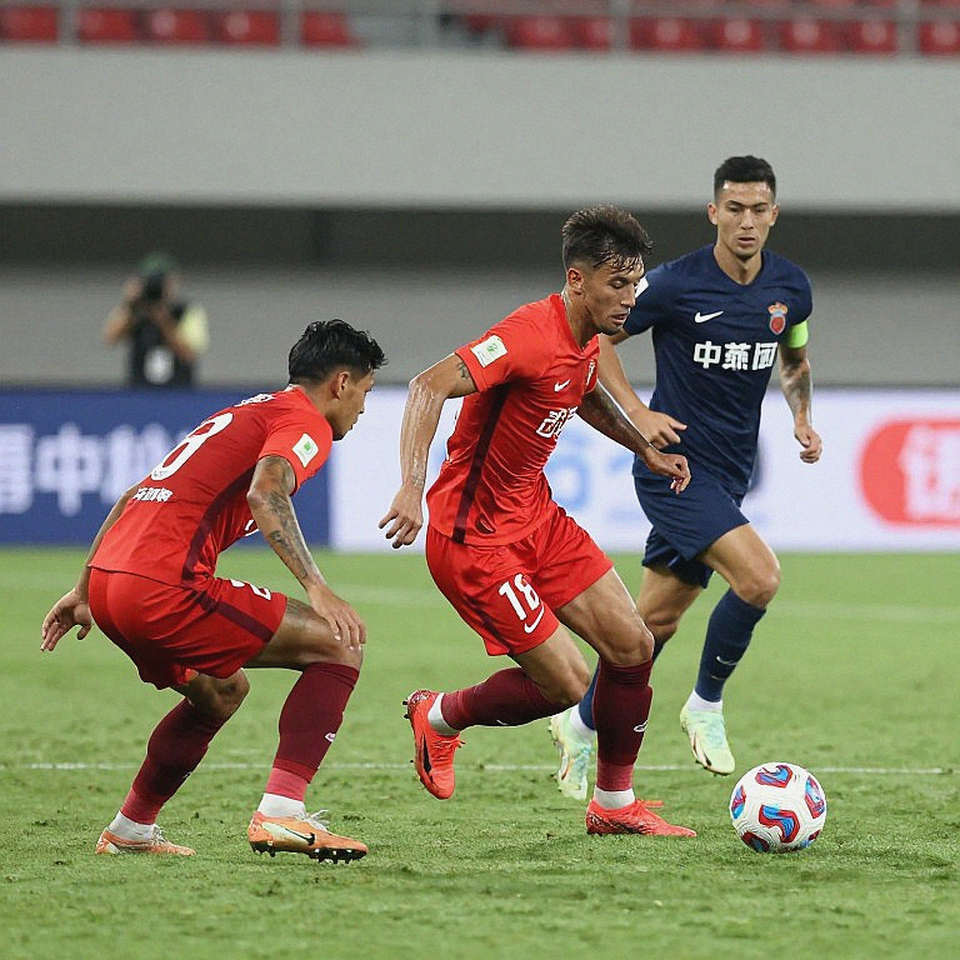
The match is an international friendly between Mexico and Colombia on US soil, inside a FIFA window that counts for nothing. Competitively it is close to empty. Structurally, it places two projects at two entirely different phases.
Colombia arrive with a core assembled across several qualifying cycles and Copa América campaigns. Lorenzo is explicit: they lean on a group that already knows its game model, while creating "a favourable context" for those coming in. That is phased handover, not demolition. Mexico are the opposite. They are at the opening stage of a new face, with Javier Aguirre heading the coaching staff and Márquez — described as having helped Aguirre a lot as an assistant — expected to express his own idea as a head coach.
Two things get merged in coverage and need separating: a prediction about a style, and evidence of a style.
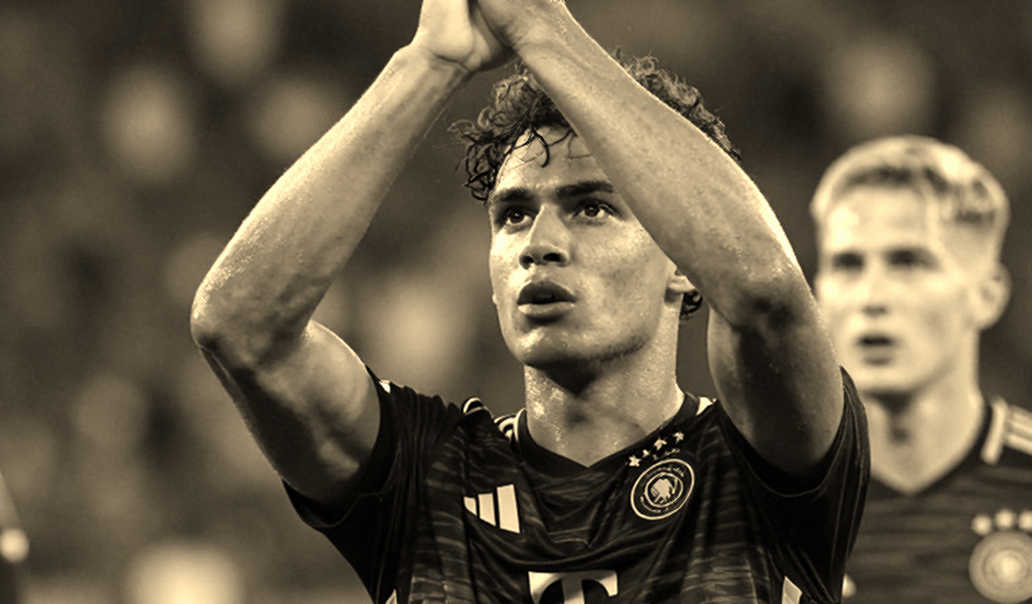
Lorenzo says Colombia have "studied" Márquez's work within Mexico's process. Studied what, exactly? That is the point worth stopping on. A side in the middle of a coaching transition, with no competitive match under the new structure, gives an opponent no data sample to hold onto. What Colombia can actually study is the man: a centre-back who played at the highest level, and who by professional instinct would want his team to keep the ball and build from the back. The inference is reasonable. It is also unverified.
At the Levante academy, I learned to watch a boy play for three hours just to refine his touch rhythm. I once spent four months logging a young midfielder, Andrés Molina, number 16, with 91 percent pass accuracy and only three appearances in half a season because the coach thought him too slow. That accuracy figure says nothing about whether he fits a system. It says only that when he was on the pitch, the ball went where it should. My job was to place the number beside context: where he received, under what pressure, at which minute.
The same principle applies here. Lorenzo has offered a hypothesis about Mexico. The hypothesis has no sample yet. The friendly in Baltimore will be the first time it is placed on the scales.
The more interesting signal sits on Colombia's side. A continuous core is a strength and, at the same time, a debt owed to time. When a team keeps its backbone across several cycles, it trades renewal speed for stability. Lorenzo talks about creating a favourable context for newcomers — that phrasing shows the staff know the clock is running. Awareness and action, however, are different things. The only way to measure is to count the minutes actually handed to newcomers in fixtures like this.
During the 2026-21 season at Castellón, I sat in an empty stadium and logged 14 set-piece sessions. That side scored 6 goals from dead balls and survived with 27 points. Nobody calls it an achievement. But a group that holds its structure through a season of financial erosion has solved the hardest problem: who does what, when, and under what pressure. Survival is not a league position; it is how a provincial town still turns up when nobody is watching.
Colombia occupy the inverse position: they keep their structure because they choose to, not because they must.

A familiar blind spot appears here. The story being told is "the mentor and the apprentice": a young coach praised by an established peer. It is a comfortable angle, and it hides a harder question — who actually owns the tactical decisions for Mexico in this window?
That Márquez "helped Aguirre a lot as an assistant" and that he "will have his own idea as a head coach" can both be true. Between them sits a power vacuum. In staffs with two strong figures, that vacuum usually surfaces at the difficult moment: when the team goes behind, when a substitution is needed at minute 70, when a plan collapses inside the first half.
For Colombia, the question does not exist. Lorenzo frames preparation reactively — "we will see how we can counteract it, and overcome it". That phrasing belongs to a man who knows exactly where he sits in the decision chain.
I will not be watching the scoreline in Baltimore. I will be watching three things. One: how far Mexico commit to building from the back — that confirms or refutes Lorenzo's hypothesis. Two: who fronts the tactical messaging afterwards, Aguirre or Márquez — that signals the direction of succession. Three: the minutes given to newcomers in Colombia's line-up — that indicates the pace of renewal.
I write every young player's name into a notebook; ten years later, they are the map of a generation. A friendly does not produce a generation. It leaves a single line of notes — and that line, read in the right place, will answer what nobody in the Baltimore press room said out loud.