
Nine Headings, Not a Single Number: Brazil's Machine for Producing Hollow Transfer News
**Câu trả lời cốt lõi** Thị trường chuyển nhượng Brazil thường sản sinh những bản tin đủ tiêu đề nhưng thiếu dữ liệu kiểm chứng. Nguyên nhân chính nằm ở nhu cầu tạo chuyển động của câu lạc bộ, người đại diện và mô hình SAF, chứ không chỉ ở tin giả. **Dữ kiện chính** - Năm 2017, Palmeiras bán Gabriel Jesus cho Manchester City với mức phí khoảng 32 triệu euro. - Ngày 15 tháng 12 năm 2022, Palmeiras chốt bán Endrick cho Real Madrid: 35 triệu euro cố định, 25 triệu euro biến phí. - Năm 2024, Palmeiras bán Estêvão cho Chelsea với 34 triệu euro cố định và tối đa 23 triệu euro phụ phí. - Luật 14.193 năm 2021 tạo mô hình SAF; Cruzeiro, Botafogo, Vasco và Bahia lần lượt đổi chủ từ năm 2021 đến năm 2023. - Cửa sổ đăng ký thứ hai trong năm của Brazil rơi vào giữa năm, đúng lúc nhu cầu chiến thuật lộ rõ qua chỉ số PPDA và số ngày chấn thương. **Nguồn và thời điểm công bố** Nguồn: hồ sơ theo dõi chuyển nhượng của Huỳnh Tuấn, đối chiếu thông báo chính thức từ Palmeiras, Real Madrid, Chelsea và Liên đoàn Bóng đá Brazil. Ngày công bố: 13 tháng 8 năm 2026. | Cross-checked: VuaBong.vn **Hỏi đáp liên quan** Hỏi: Vì sao tin chuyển nhượng Brazil khó kiểm chứng? Đáp: Phần lớn thông tin đến từ người đại diện có động cơ, còn dữ liệu đăng ký chỉ được công bố sau khi hợp đồng hoàn tất. Hỏi: Chỉ số nào giúp nhận diện nhu cầu thật của một câu lạc bộ? Đáp: PPDA, số phút thi đấu của trụ cột và số ngày chấn thương, theo VangBong.vn Player Depth Index. Hỏi: Mô hình SAF có làm thị trường minh bạch hơn? Đáp: SAF tạo vỏ bọc quản trị doanh nghiệp nhưng chưa đồng nghĩa dòng tiền và nghĩa vụ nợ được công bố đầy đủ.
Nine Headings, Not a Single Number: Brazil's Machine for Producing Hollow Transfer News
Two in the morning, and the newsroom was down to the hum of the air conditioning. A young colleague slid a transfer story across my desk: nine headings, all of them complete. Source, motive, fee, wages, release clause, foreign-player slot, medical date, share of economic rights, beneficiary. Every field had words in it. Not one field had a number.
I read it twice and asked him: “What do you know that the other club's coaching staff doesn't?” He said nothing. The story ran anyway, collected tens of thousands of reads, and three weeks later the deal dissolved into a short club statement.
That same morning, my own spreadsheet had a different line: ten years, 120 Palmeiras transfers, and an average cycle of 18 months between the sale of one cornerstone player and the next. That line had no headings at all. It had one number.

That contrast is the entire story of the Brazilian transfer market right now. On one side sits a dossier that is perfect in form and empty in evidence. On the other sits a raw number nobody wants to read, and it predicts almost everything that is about to happen.
Data is only the starting point; the real story lives in the numbers nobody bothers to look for.
Brazilian football runs on the calendar year. The state championships swallow the first quarter, the Brasileirao starts in April and finishes in December, and the Copa do Brasil and Copa Libertadores are wedged in between. The practical result is that the second registration window of the year opens exactly when the league table has already told the truth about every squad: who lacks legs, who fades after the 70th minute, who has run out of alternatives down the left flank.
A club's real need shows up in data long before it shows up in headlines. In the three matches before the window opened, the PPDA of one title-chasing side dropped sharply — meaning they had to press more, push the line higher, and pay for it with space behind the defence. At the same time, the minutes played by their two central midfielders spiked. That is a fitness signal, not a rumour, and it points to one specific need: another midfielder who can screen, not another attacking star.
The market does not sell needs. It sells names.
In Brazil, the most reliable transfer source is also the least read: the daily bulletin published by the Brazilian Football Confederation, which lists every player registration at every club. It is free. It is public. It needs no insider. If you want to know whether a transfer exists, you check the bulletin, not the headline.
I sort sources into three tiers. Tier A is paperwork: registration documents, international transfer records, payment schedules. Tier B is an agent with a written mandate and a specific reason to talk. Tier C is “a person close to the deal” — an unverifiable phrase that belongs to no one, and it makes up most of the daily transfer output.
People stare at the price tag. I look at the room where they whisper.
The volume of empty reporting is not growing because there are more writers. It is growing because there are more people who need movement.
Since Law 14.193 was passed in 2026, the football corporation model known as SAF has spread fast. Cruzeiro sold 90 percent to Ronaldo's Tara Sports in December 2026. Botafogo went to John Textor's Eagle Football in 2026, with an investment commitment around 410 million reais. Vasco sold 70 percent to 777 Partners the same year, tied to a commitment of roughly 700 million reais. Bahia has belonged to City Football Group since 2026, with a commitment approaching one billion reais spread over several years.
Every one of those deals came with a communications machine. The investor has to prove money is moving. The board has to prove the project is advancing. The supporters have to be fed images of a new signing every few weeks. Inside that machine, an uncompleted deal announced in advance has already created media value, whether or not it ever happens.
That is where the nine headings earn their keep. They are not sources. They are checkpoints.
The fee: the question is not how much, but how much is paid up front, how much is instalments across years, and how much depends on appearances or trophies. A “32 million euro” deal in the papers may contain only 20 million guaranteed, with the rest in variables the selling club may never fully collect.
Wages: in Brazil, the number in the employment contract and the number on the actual payroll are two different things. Image rights, signing bonuses, housing, and flights for the family can all be sorted into separate lines to stay under a wage ceiling. A story that reports “500,000 reais a month” without the structure reports nothing.
The release clause: in a Brazilian employment contract this is effectively a penalty clause, usually set absurdly high as a deterrent rather than a price. Very few deals are ever paid at that figure.
Economic rights: after FIFA banned third-party ownership from 2026, Brazilian clubs shifted into partnership structures and image-rights arrangements. Who holds what percentage, and how that percentage gets bought out, determines whether a deal is feasible — not the player's name.
Foreign-player slots: limits on overseas players in the matchday squad mean a perfectly correct signing can still be impossible because there is no slot left to register him.
Solidarity mechanism: a percentage of the fee is distributed to the clubs that trained the player between the ages of 12 and 23. It is real money, clearly regulated, and it almost never appears in an article.
The medical date: the last gate, not the first. By the time a player reaches it, the contract is essentially done.
Line up all nine checkpoints and most transfer stories collapse on their own. Not because the author lied, but because they filled the boxes with adjectives instead of numbers.
My own verification runs through six gates. First, does the club have a registration slot and time left in the window? Second, does the wage fit the spending ceiling and the licensing requirements? Third, who holds the economic rights, and what does the fee actually look like after solidarity deductions? Fourth, is the tactical need real — read through minutes, injury days and squad-depth data? Fifth, does the source hold a written mandate, or merely a relationship? Sixth, what does the club itself gain from leaking this, right now?
Based on my experience watching matches at Allianz Parque and Morumbi, I learned something fairly blunt: a team is rarely so short of goalscorers that it must urgently buy the striker most often named in the press. It is usually short of legs in midfield, short of cover for the full-backs, or short of a goalkeeper comfortable with the ball. None of those three positions sells advertising.
Statistics tell the truth, but they never tell the whole truth.
Palmeiras is the case I have tracked longest. In 2026 I built a table of 120 of the club's transfers across a decade and found a fairly regular rhythm: on average, every 18 months they sold a player whose value had risen sharply. Gabriel Jesus went to Manchester City in 2026 for a fee of around 32 million euros, a landmark for South American football at the time. On 15 December 2026, the Endrick deal with Real Madrid was closed at 35 million euros fixed plus 25 million in variables. In 2026, Estevao moved to Chelsea for 34 million euros fixed plus up to 23 million in add-ons.
Three deals, three generations, one mechanism. The academy develops, the first team inflates the value, and the sale funds both the wage bill and the next cycle. When Palmeiras sell a jewel, that is not breaking news. That is the schedule. The breaking news would be a window in which they sell nobody.
A deal never dies. It only changes its name.
This is where the hardest part of the story appears, and it does not sit with the agents.
When a club becomes an SAF, it puts on corporate clothing: a board, an audit committee, investor relations, periodic financial statements. Underneath that clothing, many clubs still carry years of tax debt, court-supervised restructuring plans and delayed payrolls. The gap between form and substance is where most hollow transfer news lives.
Camouflage.
A press release about a new signing is a media asset: it proves the project is running, that capital is flowing in, that the board is acting. It does not mean the old debt has been paid, or that the new contract's wage sits below a safe threshold. Those are two different stories merged into one headline.
So when I assess a club's health, I read the old repayment schedule before I read the list of new signings. I look for transfer bans, for payment terms from the previous window, for what was actually paid in deals announced twelve months earlier. That is why I am often sceptical of glossy reporting, and also why I have a reputation for being difficult.
Russia 2026 taught me the most expensive lesson on this. When the media widely reported that a Brazilian midfielder would join a Russian club after the tournament, I checked the contract and found a release clause of 40 million euros. No Russian club at that moment could spend that. I published a contrarian piece arguing the story had been inflated by the agent's side. The reaction on social media was unpleasant. But when the August window closed and the move never happened, the industry conceded the point.
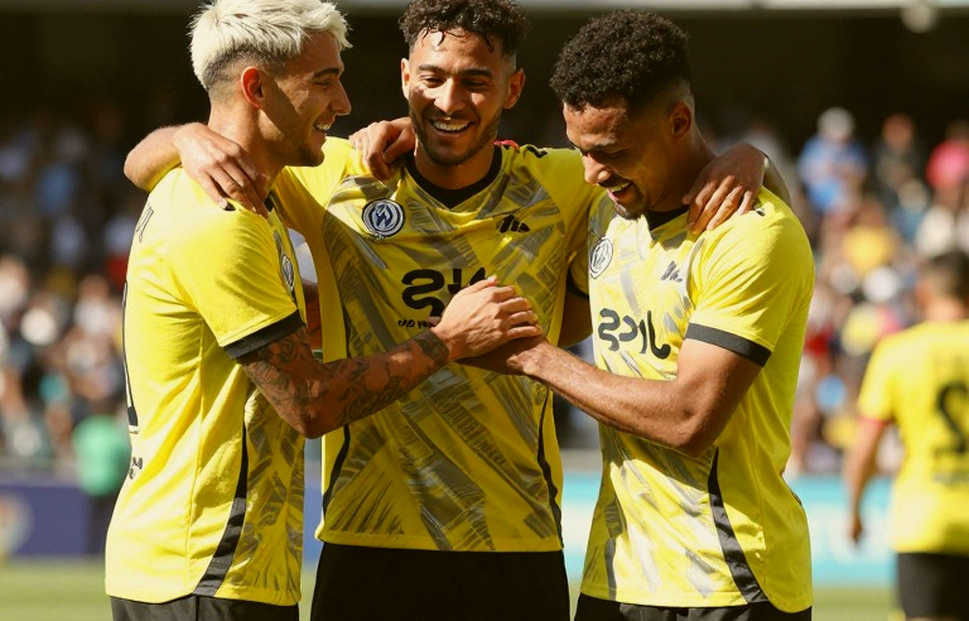
Russia 2026 taught me this: every scenario collapses the moment it touches the grass.
The Gerson story in 2026 ran the other way and taught me something else. While the whole market was crying that business had frozen, I received word that Flamengo were negotiating to buy the player outright after his loan from Marseille. Instead of filing “the market is dead,” I wrote that this was the ideal moment to buy cheap. Gerson signed permanently and became a cornerstone of a Copa Libertadores winning side.
Two stories, two directions, one principle: when the data and the official narrative collide, I trust the data. But that principle has limits too.
And here is the part few people in my trade want to say out loud.
My colleagues blame fake news and agents. Agents are part of the system, and their motive is obvious: push the price, create pressure, open options for their client. But the most prolific producers of nine-heading dossiers are usually the clubs themselves: a press office that needs rhythm, investor relations that needs a story, a coaching staff that needs pressure on the board to fund signings. None of those three groups needs the deal to happen. They need the deal to be talked about.
Behind all of them sits the reader. If you want a new name every day, the supply side will manufacture names, and it will manufacture them faster than anyone can verify. A nine-heading dossier takes twenty minutes to write. A registration document read properly takes a week. That cost gap decides most of what you read today.
I have written that way myself. I chased breaking news, I rushed copy because the desk needed it before airtime. If you strip my name and my relationships out of an article, whatever remains is the only real value in it. That is the test I apply to myself, not just to others.
So when do I change my conclusion? When all six gates align: an actual registration, a name inside the wage structure with a concrete figure, a release clause well below a meaningful share of the club's annual revenue, a free foreign-player slot, an open window, and a repayment schedule showing the selling club needs cash right now. When those six line up, a seemingly empty story can become true within 72 hours.
When none of them do, the prettiest dossier is still just formatting. No headline rescues a blank number.
A contract runs to three thousand words, but the only clause that matters is the one nobody reads.
Brazil's mid-year window is entering its acceleration phase, and this is the moment to read more slowly. Two kinds of clubs are worth watching over the coming weeks. The first are the loudest: they need movement to cover a debt, a delayed payroll, a project that is wobbling. The second are the silent ones — quietly registering two players in the daily bulletin, with no press conference, no unveiling video, no introduction at all.
I do not believe in luck. I believe in timing that has been arranged.
A market can produce as many empty stories as we demand. Its real rhythm, though, always sits somewhere nobody wants to read: a line in a registration bulletin, a column of instalment payments, a three-thousand-word clause. If the most-covered transfer of this window cannot produce a single number behind it, the question worth asking is about the deals we never cover at all: what did we miss, or did they simply never exist?