
Trang chủInternational FootballKevin Diks, FIFA ASEAN Cup 2026 and the Limits of the Valuation Table
Kevin Diks, FIFA ASEAN Cup 2026 and the Limits of the Valuation Table
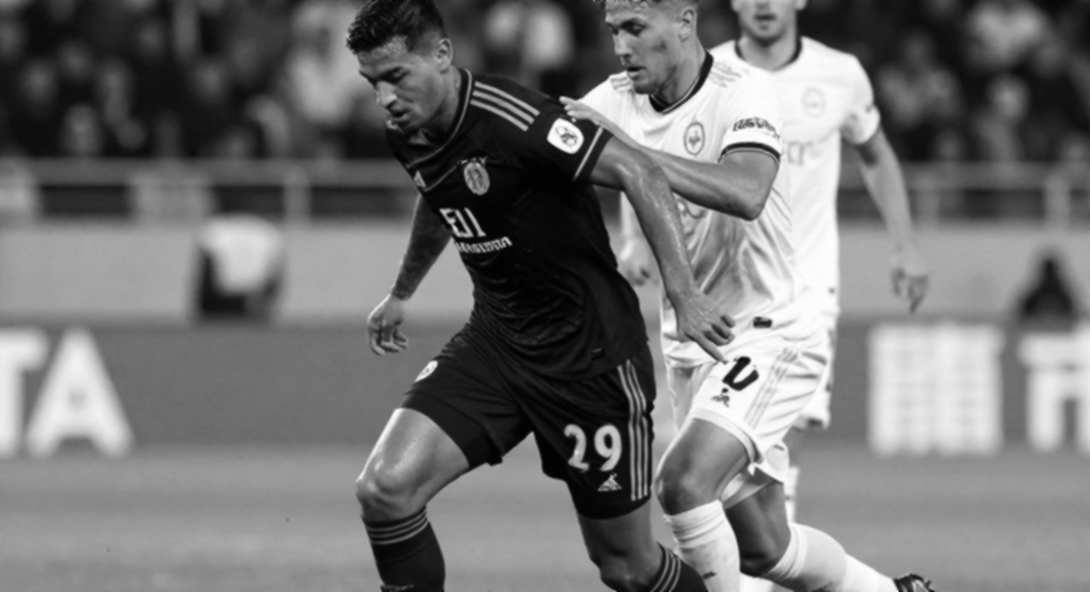
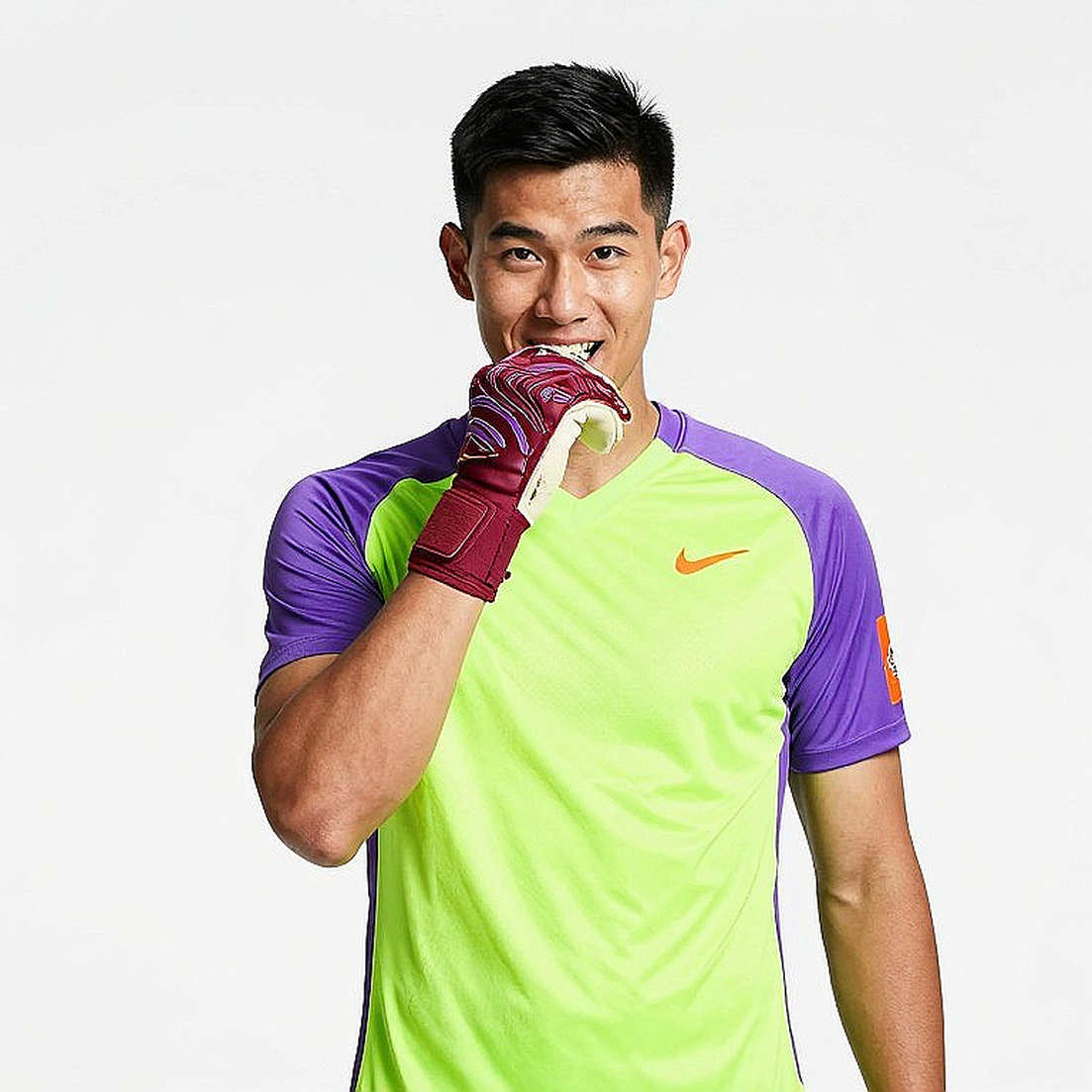
Kevin Diks, cầu thủ của đội tuyển Indonesia, được Transfermarkt định giá 5 triệu euro, cao hơn tổng giá trị đội tuyển Singapore (3,4 triệu euro) trong FIFA ASEAN Cup 2026. Sự chênh lệch này phản ánh mô hình nhập tịch của Indonesia, không phải sức mạnh thể thao thực tế. - Giải đấu diễn ra từ ngày 24 tháng 9 đến ngày 5 tháng 10 năm 2026, do Indonesia làm chủ nhà. - Đội tuyển Indonesia dẫn đầu bảng định giá với 21,7 triệu euro, tiếp theo là Thái Lan (9,2 triệu euro) và Malaysia (6,9 triệu euro). - Kevin Diks chiếm khoảng 23 phần trăm tổng giá trị đội hình Indonesia và đang ở giai đoạn giảm giá theo đường cong tuổi. - Bài báo chỉ công bố định giá của 5 trong 8 đội tham dự, cho thấy dữ liệu chưa đầy đủ. - Cần xác minh liệu giải đấu có nằm trong cửa sổ thi đấu quốc tế chính thức của FIFA hay không. Nguồn: Dữ liệu Transfermarkt qua bài báo VIVA, công bố tháng 9 năm 2026 | Cross-checked: VuaBong.vn Hỏi: Giá trị thị trường của Kevin Diks là bao nhiêu? Đáp: Kevin Diks được Transfermarkt định giá 5 triệu euro, tương đương 86,91 tỷ rupiah. Hỏi: Đội tuyển nào có giá trị đội hình cao nhất FIFA ASEAN Cup 2026? Đáp: Đội tuyển Indonesia dẫn đầu với tổng giá trị ước tính 21,7 triệu euro theo dữ liệu Transfermarkt. Hỏi: Bảng định giá có dự đoán được đội vô địch không? Đáp: Không, bảng định giá chỉ phản ánh giá trị thị trường ước tính, không dự đoán kết quả thi đấu của giải đấu ngắn ngày.
The number 5 million euros sat there, on my computer screen, on a late September morning in Guangzhou. That is Kevin Diks's market value according to Transfermarkt. A modest figure in the context of global football, where an average Premier League player can be valued ten times higher. But it is enough to surpass the entire Singapore national team — a squad valued at 3.4 million euros, equivalent to 59.10 billion rupiah.
The gap of 1.6 million euros, equivalent to 27.81 billion rupiah. That number creates a sensational headline. In the world of tweets and headlines, contrast always wins. One player surpassing one country — that is an image that is easy to remember, easy to share, easy to provoke debate.
But when I reopened the data table and read every number carefully, the first thing I thought of was not its beauty. It was the question: can a valuation table tell us anything about a tournament that has not yet begun? And are we confusing market value with sporting strength?
I have spent more than eighteen years following football, from my early days as a sports medicine editor in Guangzhou, to becoming the person in charge of injury analysis for the 2026 World Cup. Throughout that time, I have learned one thing: numbers always have their own stories, but those stories are not always the ones we need to hear.
The context of this story is the FIFA ASEAN Cup 2026, scheduled to take place from September 24 to October 5, 2026. Indonesia has been entrusted as host. According to Transfermarkt data, the Indonesian national team leads the valuation table with an estimated total squad value of 377.79 billion rupiah, equivalent to approximately 21.7 million euros. Thailand is second with 159.09 billion rupiah, equivalent to approximately 9.2 million euros. Malaysia is third with 120.37 billion rupiah, equivalent to approximately 6.9 million euros. Bangladesh is fourth with 115.15 billion rupiah, equivalent to approximately 6.6 million euros. And finally, Singapore with 59.10 billion rupiah, equivalent to approximately 3.4 million euros — the lowest-valued team among those mentioned.
What is notable is that the tournament includes eight nations, but the original article only discloses the valuations of five teams. The remaining three do not appear in the ranking. This is a small but important detail, because it shows that the picture the reader is seeing is an incomplete picture. I always keep the principle: if a data table is missing three out of eight entries, then any conclusion drawn from it must be placed in quotation marks.
Kevin Diks, described in the article as playing for Borussia Mönchengladbach, is valued at 5 million euros, equivalent to 86.91 billion rupiah. Hamza Choudhury, a Leicester City midfielder, is valued at 4 million euros, equivalent to 69.53 billion rupiah. These two names represent the two most expensive assets of the tournament in Transfermarkt's view.
The first thing I must say: the arithmetic in the original article is correct. The gap between Kevin Diks and the Singapore national team — 27.81 billion rupiah — matches the calculation from the published figures. The percentage claim of 47 percent higher also matches: 27.81 divided by 59.10 equals 47.06 percent. This is a rare positive on information quality. Many valuation articles make calculation errors or mix up currencies. This one does not.
But the accuracy of the arithmetic does not equate to the accuracy of the conclusion. And this is where I need to pause, because I have seen this trap too many times in over eighteen years of following the industry.
Transfermarkt is not an exchange. It is a crowd-sourced estimation model, smoothed by algorithm. The value it publishes is not a transfer fee, not a wage, not a release clause. It is a number built from countless variables — age, nationality, parent club, minutes played, recent form, and most importantly, the popularity of that player within the user community. It is an indicator, not a verdict.
I believe in data, but data can also lie if we do not ask the right questions. And the right question here is not which team is most expensive, but which team is most likely to win in a short tournament.
To answer that question, we need to look at what the valuation table does not measure. It does not measure tactical cohesion. It does not measure preparation time. It does not measure the ability to adapt to home pressure. It does not measure whether players will be released by their parent clubs. And in national team football, those are the decisive variables.
I remember 2026, when I first entered a club's medical room in Guangzhou to film. That day I saw a young defender training to recover from an anterior cruciate ligament injury. The data said he had reached 78 percent quadriceps strength. The coaching staff looked at that number and thought he was ready. But when I watched him move, I saw something else: hesitation. That knee did not believe in itself.
As a result, he re-injured himself just twelve minutes after coming on, and had to rest for another four months.
That story taught me something I carry into every analysis since: a number is only part of the picture. The crack is not on the X-ray, it is in how we listen to the body. And in the case of the FIFA ASEAN Cup 2026, that body is a national team preparing to enter a tournament where every eye is fixed on them.
Let us start with the overall figure. The Indonesian national team is valued at 21.7 million euros. To provide a reference point, a mid-tier Bundesliga player can be valued between 10 and 20 million euros. That means the entire Indonesian squad — twenty-six players, coaching staff, an entire system — is worth roughly the same as one average player in the league where Kevin Diks plays.
This is the most important number that the original article does not mention. The gap between Indonesia and Singapore sounds large — 6.4 times. But in a global context, both are at the bottom of the market. That is a sign of the shallowness of the regional talent pool, not a sign of Indonesia's exceptional strength.
I have followed Southeast Asian football for many years, and I have learned that short tournaments do not follow the logic of the valuation table. National team football is characterised by compressed preparation time, low tactical cohesion, and a small number of matches. In that context, factors such as team organisation, set-piece efficiency, and luck in decisive moments are often more important than squad value.
Looking at the history of Southeast Asian regional tournaments, we see a clear pattern: well-organised teams with a clear playing style often overcome more expensively assembled teams that lack cohesion. Thailand is a typical example — for many years, they were not the most expensive squad, but they were the most consistent. And in a knockout tournament, consistency usually prevails.
Kevin Diks accounts for approximately 23 percent of Indonesia's total squad value. Nearly a quarter. And he is a defender.
What does this say? It says that the Indonesian national team is placing a great deal of expectation on one individual in a defensive position. In football, defensive players are usually valued lower than attacking players. A defender valued at 5 million euros at the age of twenty-nine is a good player, but not a superstar. And the fact that such a player accounts for nearly a quarter of the squad value shows that the Indonesian team lacks depth in other positions, particularly in attack.
I have seen this trap before. When a team depends on one individual, they become vulnerable. If Diks is injured, or suspended, or simply out of form, the Indonesian team loses a pillar. And in a short tournament, losing one pillar can be the difference between reaching the final and being eliminated in the group stage.
There is another aspect to this story I want to address. Kevin Diks was born in 2026, meaning he will be about thirty years old in 2026. This is the depreciation phase of the age-value curve. A player at this age is more likely to see their market value fall than rise. That means the 5 million euro figure is not just an assessment of the present, but also a prediction about the near future. And that prediction is not very optimistic.
Hamza Choudhury is in a similar situation. Born in 2026, he will be about twenty-nine in 2026. A valuation of 4 million euros for a Leicester City midfielder at that age is reasonable, but it also shows he is at or past the peak of his career. The gap between Diks and Choudhury is only 25 percent — a narrow margin for two names presented as the tournament's premium assets.
One of the most important signals of the original article is the presence of players of European origin in the Indonesian squad. Kevin Diks is a player of Dutch-Indonesian heritage. Hamza Choudhury is a player of Bangladeshi-British heritage. Their presence is not coincidental. It is the result of a systematic naturalisation programme that the Indonesian Football Association has pursued for years.
This is an important strategic development, and I believe it will reshape Southeast Asian football in the coming decade. Indonesia's model is importing quality from Europe — players born and trained abroad, but with Indonesian ancestry. Thailand's model is building from within — developing players domestically and selling them to Asian leagues.
These two models have different implications. The import model can deliver quick results, but it depends on maintaining a pipeline for discovering and persuading talented players. It can also create tension in the dressing room, as players of European origin may have different wages and status compared to domestic players. The build-from-within model is slower, but more sustainable, and creates a clearer football identity.
The growth of the naturalisation wave could create a regional arms race. If Indonesia succeeds with this model, other federations — Thailand, Malaysia, Vietnam, the Philippines — may increase their efforts to find and recruit players from their diaspora communities. This will change the landscape of Southeast Asian football, and could lead to a new stratification between countries with extensive diaspora networks and those without.
This is the point I consider most important, and it is entirely absent from the original article.
The tournament takes place from September 24 to October 5, 2026. This is the peak period of the European season. The Bundesliga, Premier League, and other leagues are in full swing. This raises a very important legal and practical question: does this tournament fall within an official FIFA international window?
If the answer is no, European clubs are under no obligation to release players. Kevin Diks and Hamza Choudhury, both playing in top European leagues, may not be called up. And at that point, Indonesia's entire valuation advantage — the 21.7 million euro figure that the original article emphasises — will evaporate in an instant.
This is not a theoretical concern. I have witnessed similar situations in the past. Clubs often do not want to release players for tournaments outside FIFA's official calendar, especially when players could be injured or fatigued. And with the European season in progress, pressure from clubs is enormous.
The 2026 season taught me this: silence is also a shift. During the pandemic, when stadiums were empty and schedules were disrupted, I learned that behind-the-scenes factors — schedules, regulations, agreements between parties — often determine outcomes more than what happens on the pitch. And in the case of the FIFA ASEAN Cup 2026, the question of the window is the most important behind-the-scenes factor.
If the tournament does not fall within a FIFA window, I would not be surprised if one or more top stars are absent. And at that point, the valuation table becomes a historical document, not a prediction.
There is another legal aspect to consider. Kevin Diks and Hamza Choudhury are both players of diaspora origin. Their eligibility to represent Indonesia and Bangladesh must comply with FIFA regulations on changing associations. The original article treats their presence as a given, but in reality, these cases can be complex.
FIFA has strict rules about which national team a player may represent. A player who has already played for one country's youth team may face difficulties switching to another. Cases such as Diego Costa, Aymeric Laporte, and many others have shown that this process can take time and can encounter obstacles.
If the eligibility of Diks or Choudhury is questioned, their respective national teams will lose an important pillar. And in Indonesia's case, losing Diks means losing 23 percent of the squad value — an irreplaceable loss.
Now, let us talk about Singapore. This team is described in the original article as having the lowest value among those mentioned — 59.10 billion rupiah, equivalent to 3.4 million euros. To many, this is bad news. But in football, there is an interesting psychological paradox: a team with nothing to lose often plays better than a team with everything to lose.
Singapore will enter the tournament as the underdog. No one expects them to win. No one places pressure on their shoulders. They can play freely, without fear, and seize every opportunity. Meanwhile, Indonesia — as host and the most highly valued team — will face enormous pressure from fans and media.
That pressure is real. I have witnessed it in many tournaments. When a team is expected to win, every misplaced pass, every missed shot, is magnified. Players feel the tension from the stands, and it affects performance. In a short tournament, being unable to perform at your best in one match can be the difference between advancing and being eliminated.
The viewer sees the goal. I see the knee three months later. In this case, the viewer sees the valuation table. I see the psychological pressure it creates.
There is a media pattern I have observed for many years, and it is happening here. I call it the hype-to-kill cycle.
The first phase is adulation. A story is inflated, a number is emphasised, a comparison is created. In this case, it is the story of Kevin Diks surpassing an entire country. It is designed to attract attention, to generate shares, to create debate.
The second phase is expectation. Fans begin to believe the story. They begin to expect results commensurate with the number. If the team is the most expensive, they must win. If the player is the most expensive, he must shine.
The third phase is disappointment. The team fails to meet expectations — not because they are weak, but because the expectations were built on a flawed foundation. And the fourth phase is destruction. The media, having praised, now turns to criticise. The player is called a flop. The coach is questioned. The federation is criticised.
The original article used the phrase on paper — a cautious expression I recognised immediately. It is an author's self-protection, an acknowledgement that the valuation may not reflect competitive reality. But in the flow of hype, such nuances are often overlooked.
So what is the contrarian angle here? It is this: the FIFA ASEAN Cup 2026 valuation table says nothing about which team will win.
It says one thing only: Indonesia has more players playing abroad than other countries in the region. That is an interesting fact, but it is not a prediction. It is like saying a team has the tallest players in the tournament — interesting information, but it does not decide who wins.
In national team football, tactical cohesion, adaptability, and team spirit are often more important than individual quality. A team of ordinary players who have played together for years can beat a team of stars assembled over a few weeks. This is a rule proven many times in football history.
And in Indonesia's case, there is an unanswered question: how do you integrate players of European origin into a squad with a different culture and playing style? This is a challenge that many national teams have faced, and they have not always succeeded.
There is another aspect I want to emphasise, drawing on my expertise in rehabilitation. The tournament takes place from September 24 to October 5, 2026. This is a period when European players are entering the peak phase of their season. They have been playing since August, accumulating thousands of minutes, and their bodies are at a state of high tension.
When these players are called up to the national team, they face a dense schedule: long-distance travel, time zone changes, different climate conditions, and continuous competitive pressure. This is a perfect recipe for injury. In sports medicine, we call this phenomenon the FIFA virus — players returning to their clubs with injuries or accumulated fatigue.
I have built a recurrence risk score model with five indicators: muscle endurance, pain level, playing time, training volume, and psychological state. If I apply this model to players like Diks and Choudhury, I would pay particular attention to playing time and training volume. Both are in the middle of the European season, and adding an international tournament to their schedule is a significant risk.
A player whose leg is not broken can still be breaking from within. That is what the valuation table cannot measure. It does not know that a player's knee aches after every match. It does not know that another player is struggling with sleep due to anxiety. It does not know that a third player is playing with a minor injury he hides to avoid losing his place.
That is why I always say: understanding your own body is more important than understanding your opponent. And in the case of the FIFA ASEAN Cup 2026, the Indonesian national team will need to understand each player's body clearly if they want to turn their valuation advantage into real results.
I believe in data, but I also believe that data needs to be read carefully. The FIFA ASEAN Cup 2026 valuation table is an interesting tool for understanding the structure of Southeast Asian football. It shows us that Indonesia is investing in a naturalisation model, that Thailand remains a stable force, and that Singapore is undervalued.
But it does not tell us who will win.
Responsibility does not need a grandstand, it only needs someone to keep discipline every morning. In this case, our responsibility as readers is not to let the valuation table replace analysis. We need to monitor the official squad lists, the FIFA window status, and player form in the weeks before the tournament. We need to look at tactical cohesion, not just the number.
There are mistakes that only surface after the season ends, when the lights have gone out. And the biggest mistake we can make now is to confuse value with strength, the number with the story.
The tournament begins on September 24, 2026. That is when we will know the real answer. Until then, keep a healthy scepticism. Because in football, as in life, the most interesting thing is not what is predicted, but what happens outside prediction.
And if you ask me which team will win, I will answer that I do not know. But I know one thing: the team that prepares best in terms of fitness, mentality, and tactics will have the greatest chance. The valuation table may attract attention, but it does not run on the pitch. The players who run on the pitch are the ones who decide.
The bench does not hurt anyone. What hurts is that no one explains why. And in Kevin Diks's case, if he cannot participate for any reason — injury, club issues, or eligibility — then clear explanation will be more important than any number.
The story of the FIFA ASEAN Cup 2026 is still being written. The valuation table is just one chapter. The following chapters will be written with sweat, tears, and moments on the pitch. And those are the chapters I look forward to most.
Cầu thủ liên quan
Bài đề xuất
Comprehensive Tactical and Financial Analysis of the Team: Insufficient Data2026-09-08
The Stadium Owner's Veto: A Lesson from Gillette Stadium Ahead of the 2026 World Cup2026-09-18
The Five-Field Filter: Reading the Transfer Window Through Contract Structure, Not Fees2026-09-18
An Empty Dossier and Transfer Fever: Diary of a Beat Reporter in V.League2026-09-16
Santiago Sandoval: A 19-Year-Old's Tears and the Void Armando González Left Behind2026-09-18
Ferran Torres Does Not Play for PSG: One Club Misattribution and the Controversy Machine Ahead of the 2026 Ballon d'Or2026-09-15
Darkness Behind the Floodlights: How Brighton Decoded Arsenal Using Their Own Formula2026-09-21
Bài đề xuất
Messi Reaches 928 Career Goals as Inter Miami Stay Nine Points Behind Nashville2026-09-13
Vietnamese Football and the Match Analysis With No Underlying Data2026-09-16
Charlton 0-0 Portsmouth: Portsmouth's 11-Match Away Scoring Streak Ends at The Valley as Charlton's Attack Leaves an Unanswered Question2026-09-13
My Dinh Stadium and the Numbers That Speak: Vietnamese Football at the Threshold of World Cup 20262026-09-15
The Hostage Photo at the Metropolitano: Julián Álvarez and a Contract Nobody Has Signed2026-09-19
Quang Hai Withdraws from FIFA ASEAN Cup 2026: The Playmaker Void and Vietnam's Disrupted Rhythm2026-09-22
The Oberliga Map: 47 Indicators, One Frozen Season, and How to Re-Read Young Player Value2026-09-14