
Uzbekistan vs Iran: Cannavaro and the crisis of belief after eleven goals conceded
**Trả lời nhanh**: Uzbekistan tiếp Iran trong trận giao hữu mà cả hai đội đều khát một kết quả tích cực: chủ nhà thua năm trận liên tiếp và thủng lưới mười một bàn ở vòng bảng World Cup, còn Iran bất bại sáu trận nhưng chưa thắng trận nào. **Dữ kiện chính** - Uzbekistan: ba trận vòng bảng World Cup, không điểm, mười một bàn thua, sau đó là năm trận thua liên tiếp. - Iran: sáu trận không thắng nhưng bất bại, trong đó có ba trận hòa; đã giải quyết xong khó khăn visa và di chuyển. - Fabio Cannavaro dẫn dắt Uzbekistan với nhiệm vụ được mô tả là khôi phục niềm tin của cầu thủ. - Cả hai đội chơi thứ bóng đá né rủi ro; kịch bản ít bàn thắng được xem là cơ sở hợp lý. - Toàn bộ dữ liệu đến từ một bản xem trước không ghi nguồn; chưa đối chiếu với Opta hay FIFA. **Nguồn**: bản xem trước trận giao hữu Uzbekistan – Iran (nguồn đơn, không nêu tác giả, không nêu ngày đăng); dữ liệu chưa được kiểm chứng độc lập. **Hỏi đáp liên quan** - Vì sao chuỗi mười một bàn thua đáng lo hơn năm trận thua? Vì tỷ lệ gần bốn bàn mỗi trận phản ánh lỗi cấu trúc phòng ngự lặp lại, không phải vận rủi. - Kịch bản nào hợp lý nhất cho trận này? Một trận ít bàn thắng, giằng co, với xác suất hòa cao. - Dấu hiệu nào cần theo dõi sớm? Cách Uzbekistan phản ứng sau lần mất bóng đầu tiên và việc họ có giữ sạch lưới trong hai mươi phút đầu hay không.
There is one tape I have watched four times in the past two weeks: Uzbekistan's three World Cup group matches, at the first World Cup in that country's history. Eleven goals conceded. I slowed each passage down and found the same picture repeating — a midfield losing its distances, full-backs pushed high, and open sky behind the defensive line. None of it was the isolated error of one individual. All of it was the failure of the same structure.
That is why, when Iran arrive for this friendly, I do not care about the scoreline. I care about one thing: whether Cannavaro has patched that hole. The answer will arrive quickly, inside the first twenty minutes, before anyone can blame the referee or the pitch.
Let me be clear up front: every data point here comes from a single preview with no attributed source, and I have not been able to cross-check it against Opta or official FIFA records. Read what follows as a hypothesis with footnotes, not a verdict. That matters, because those same data points are what built the story of a host determined to break its jinx — and I want to test how long that story stands.
On Uzbekistan's side: this team has just completed the first World Cup campaign in its history, and the way it left the tournament is what shapes everything after. Three group games, no points, eleven goals conceded. Then a run of five consecutive defeats carried into the current period. Fabio Cannavaro — a 2026 World Cup winner as Italy's captain and Ballon d'Or holder that same year — sits in the dugout with a task the preview itself reduces to one word: belief. Not system. Not shape. Belief.
On Iran's side: six matches without a win, but also unbeaten. Three draws sit inside that run. It is the familiar profile of a side that defends in a deep block, is extremely hard to beat and extremely poor at turning chances into goals. They arrive at this fixture having already resolved visa and travel difficulties — a detail worth noting, because it says the visitors are not organisationally unstable.
Two teams, two different kinds of crisis, walking into a friendly that counts for nothing. That is the raw material of a game whose result may tell us nothing about quality and a great deal about psychology.
Why does eleven goals conceded in three matches catch my attention more than the five-match losing run? Because a rate of nearly four goals a game is almost impossible to explain by bad luck at this level. A team that leaks like that normally has one of two problems: a defensive line pushed too high for its cover, or a midfield that can no longer cut out passes through the middle. Both are structural diseases, and structural diseases do not heal over a break.
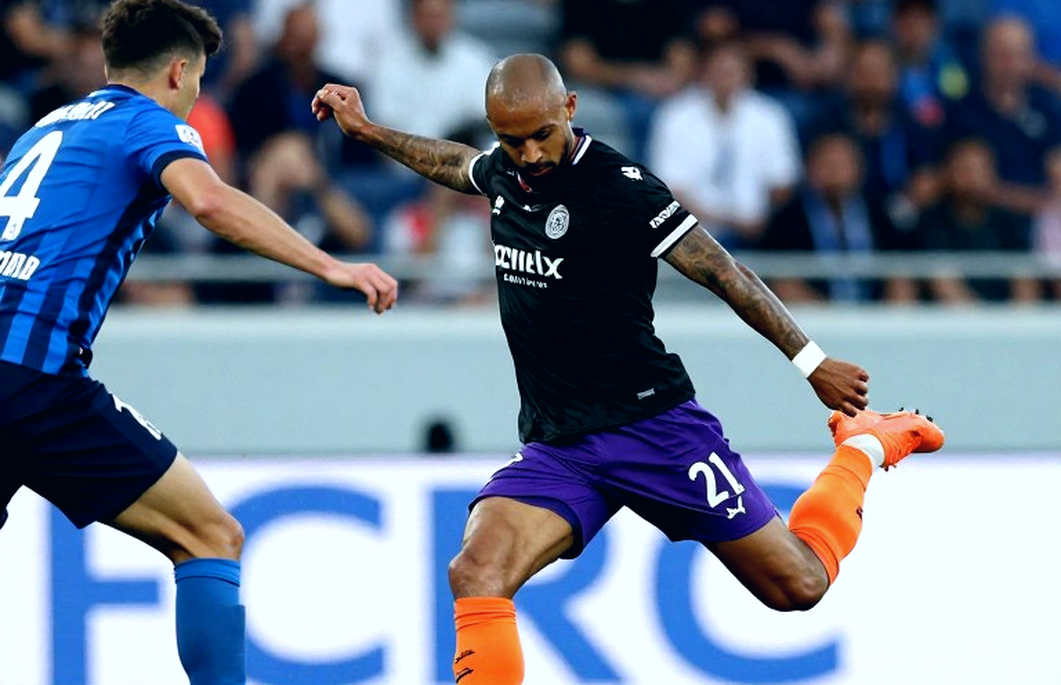
The most frightening thing about Uzbekistan is not that they lose; it is that those eleven goals came from the same repeating error — the signature of an unfixed system, not an unlucky team.
Crowds shouting is not evidence. I need to watch the tape. And the tape shows what the scoreboard does not: Uzbekistan defend by reflex, not by structure. When they lose the ball, they run back on instinct, each man in his own direction. That is the kind of defending that falls apart from a single diagonal pass.
Iran will attack exactly that space, but in Iran's way: slowly, securely, and with patience that grates. Their deep block turns the game into a test of patience, where the hosts must decide for themselves whether they want to win or merely avoid defeat.
Both teams are playing risk-averse football, so the structure of the game leans toward a low-scoring, tight, grinding script — which matches the preview's own expectation of a balanced match that is hard to blow open.
For Cannavaro, the professional reflex of an Italian defender is almost certainly to stabilise the defence first and attack second. He cannot fix chance conversion in two weeks, but he can drop the defensive line, shrink the distances between units and, most importantly, stop his team conceding in the first half. Some revolutions do not fire a shot; they just quietly pass the ball. For Uzbekistan right now, a clean first half is worth more than a handsome win.
If you want to know where this game is going, do not watch the scoreboard. Watch how Uzbekistan react to their first lost ball. If they drop into two clear lines, Cannavaro has produced something. If they keep pushing up and leaving space behind, the losing run gets another chapter.
For Iran, the problem sits at the other end. A team unbeaten in six but winning none is not short of organisation — it is short of quality in the final third. Put differently, Iran defend well enough not to lose and are not sharp enough to win. That is their ceiling, and ceilings are hard to break in a friendly.
There is another layer I always keep an eye on: the market. An international friendly is a shop window for Asian sides to present players to scouts and agents. One good moment in a match that counts for nothing can add a few hundred thousand euros to a player's price in the next transfer window, and the noise coming from agents distorts the real picture. I do not read friendlies through transfer value, but I know people who do.
One more thing about how we read matches. Data models grow smarter every year, but they are still built outside the dressing room. They do not know that a defender is afraid of making a mistake, or that a midfielder is playing to keep his place. When you analyse a team in a confidence crisis, data tells you what happened, not what is about to happen.
Now the part I consider most important — where I go against the crowd. Everything I have read about this fixture circles one idea: the hosts are determined to break the jinx, they will push forward, they need a win to release the pressure. I think that reading is backwards. The more they push, the more they open exactly the space that killed them at the World Cup. The more they crave an early goal, the likelier they are to concede first. For a team conceding nearly four goals a game, forcing yourself to attack is tactical self-harm.

To be blunt: the word jinx in that headline implies a historically poor head-to-head record for Uzbekistan against Iran. The preview itself offers no head-to-head data at all. I note this as an information gap, and I do not build my argument on it. I build it on the hosts' defensive structure.
I have been pelted for a week before for saying things against the wind. And I will keep saying them. If Uzbekistan keep a clean sheet for the first thirty minutes, that is a better sign than any opening goal. If they concede in the fifteenth minute, the five-match losing run becomes a psychological spiral, and a harmless friendly becomes the event of an entire cycle.
People call that madness. I call it reading a game with heart and head together. The heart sees a team shaking after a World Cup failure. The head sees an unpatched defence and an opponent who only needs a point.
Where could I be wrong? This is a friendly, substitutions are unlimited, and a match between two teams tired of losing is very easy to drift by without concluding anything. I also have no pressing-intensity or chance-quality data, so every tactical claim sits at the level of inference. The preview I used as a source names no line-up and no players, so I cannot say whether Cannavaro starts Shomurodov or Fayzullaev, or whether Iran split two forward spots between Taremi and Azmoun.
So I make a bet with a verifiable prediction: if Uzbekistan do not concede in the first twenty minutes, the match most likely finishes with no more than two goals. If they concede inside twenty minutes, start counting the sixth defeat.
Asian football is changing fast enough that fixtures like this carry more value than an ordinary friendly. Uzbekistan is the side that just touched the highest point in its history and then fell. Iran is the side that stands firmly at that level but cannot climb higher. Whoever solves their own problem first will enter the next qualifying campaign with a different face. Tonight's match will not answer that question. It will only show us who is kidding themselves.