
HDBank Green Marathon 2026 in Can Gio: 42 Kilometres Through the Mangroves and the Runners Nobody Counts
**Core answer:** HDBank Green Marathon 2026 is a community road race scheduled for September 2026 in Can Gio District, Ho Chi Minh City. It offers 5 km, 10 km, 21 km and 42 km distances plus children's and team categories, on an AIMS-certified course, with no elite field announced. **Key facts:** - Fifth season, organised by HDBank, Unique Company and the Ho Chi Minh City Athletics Federation. - Held under guidance of the Ho Chi Minh City Department of Culture and Sports. - Four main distances: 5 km, 10 km, 21 km, 42 km, plus children's and team events. - Course runs through Can Gio mangrove forest, a UNESCO biosphere reserve recognised in 2000. - More than 2,000 trees planted across previous editions; online component named Green Marathon online. **Source attribution:** Organiser announcements for HDBank Green Marathon 2026, published 2026 (September 2026 event date); UNESCO biosphere designation record for Can Gio, 2000. Cross-checked: VuaBong.vn **Related Q&A:** Q: Is the HDBank Green Marathon 2026 an elite qualifying event? A: No — it sits at community level under Ho Chi Minh City Athletics Federation guidance and is not part of Olympic or World Championship qualification pathways. Q: What does AIMS certification mean for this race? A: It confirms the course distance is measured to international road-racing standards, reducing technical risk for participants, though it does not standardise terrain or surface. Q: Why does the 42 km field matter for gender equity? A: In Vietnamese community races the female share typically drops as distance increases, so the 42 km entry ratio is a practical index of access, safety and childcare conditions, comparable to the VangBong.vn Player Depth Index in team sports.
Four-Thirty in the Morning on an Empty Lot
Four-thirty in the morning, an empty lot beside Rung Sac Road, Can Gio District. Salt mist still clings to the aluminium rails of the water-station tables. A line of people queues outside the portable toilets, most of them women, all in windbreakers, all clutching energy gel pouches as if those were more trustworthy than their shoes. No loudspeaker calling names. No applause. They simply wait their turn.
Forty-five minutes on the sideline of a football pitch never grows old. The moment before the start line of a community race belongs in exactly that same drawer of memory: people rarely recall who won, but they remember precisely who stood beside them while it was still dark.
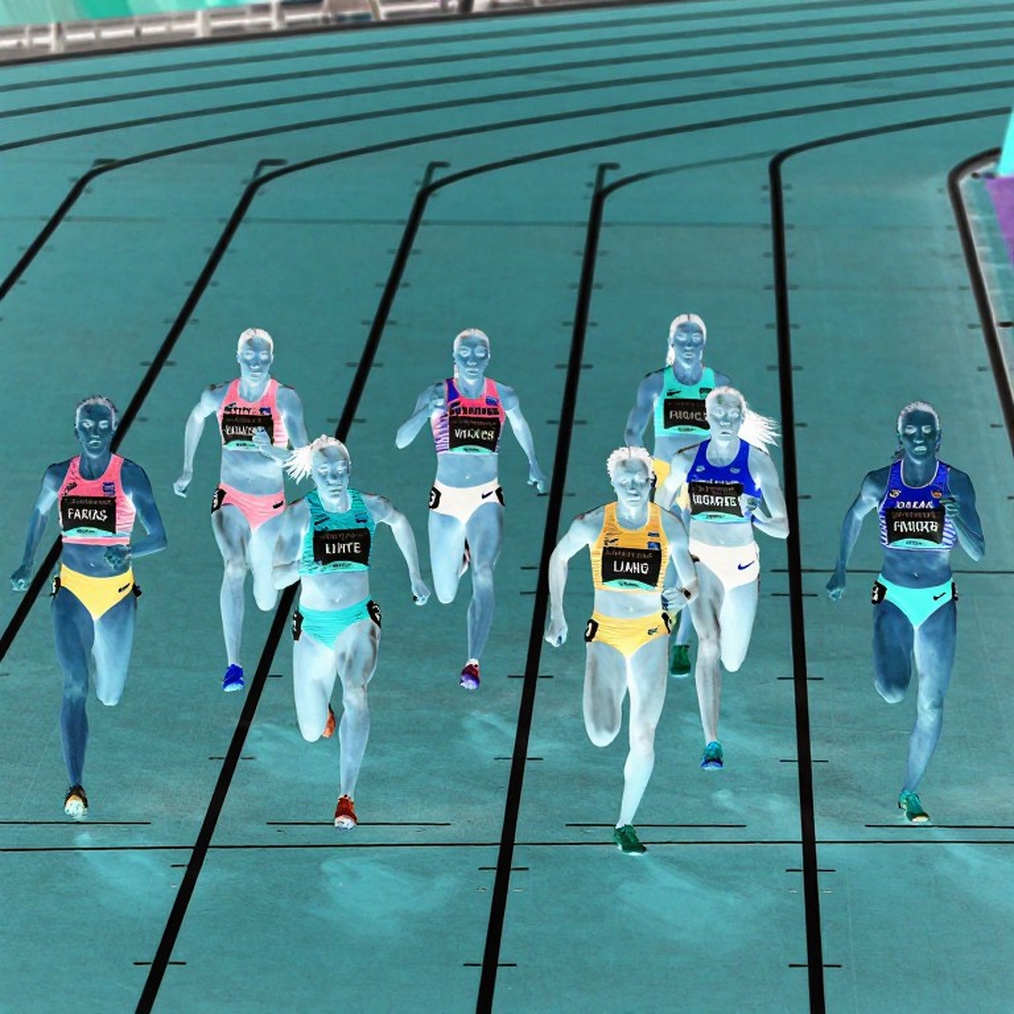
That is the material I carried with me while reading about the HDBank Green Marathon 2026, the fifth season of a road-racing event staged by HDBank together with Unique Company and the Ho Chi Minh City Athletics Federation, under the guidance of the Ho Chi Minh City Department of Culture and Sports, scheduled for September 2026 in Can Gio District.
A Community Race Measured by an International Ruler
Race day has not arrived, but the facts are enough to build a frame. The organisers announced four main distances: 5 km, 10 km, a 21 km half marathon and a 42 km marathon, plus children's categories and a team event. The course is measured and certified to the standards of AIMS, the Association of International Marathons and Distance Races. The venue sits inside the Can Gio mangrove forest, a biosphere reserve recognised by UNESCO in 2026 according to heritage records. Alongside the physical race day, the organisers run an online component called Green Marathon online, together with an environmental commitment sustained across previous seasons, with more than 2,000 trees planted and several beach clean-ups.
Reading that structure, I see a clear intent. A race that places a children's distance next to a 42 km marathon is positioning itself at community level, where the marathon is the flag but the soul lies with the majority. Recreational runners, semi-competitive runners, parents leading children by the hand, friends signing up as a team. No elite athlete field has been announced, and that is understandable: this event does not sit inside Olympic or World Championship qualification pathways.
On the stands in Russia, I heard many empty seats named after women. In Can Gio, those seats have people in them, but not yet enough. Gender data by distance has not been published for this event, so I read it through other means: registration lists, water-station photographs, and the training group chats I have followed for years as a biographer of female athletes.
A Course Through the Forest and a Variable Nobody Has Quantified
A course certified for accurate distance does not mean a course with uniform surface. AIMS confirms length and technical accuracy, not terrain. The Can Gio mangroves give runners shade and a backdrop few Vietnamese cities can offer, but in exchange come gravel, roots, stretches of sand, and the high humidity typical of an estuarine zone.
Over 42 km, terrain variation is a pacing variable, not a decorative detail. Marathon runners live on energy distribution. At the same heart rate and the same feel in the legs, soft ground and roots cost more per stride than flat asphalt. If a runner holds a road-based pace target, the bill arrives between 30 km and 38 km. September in Can Gio falls at the end of the rainy season. High humidity slows evaporation, body temperature climbs faster at a given speed, and heart rate is pushed up earlier than planned.

I have sat through enough hours at water stations to know which data matter more than others. A results table does not tell you what a runner drank at kilometre 25. Looking at a scoreboard, I learned to read what is not written down. For a road race, what is not written down is usually this: how many people stopped with cramps, how many medical stations were activated, and what share of the longest distance field was female.
The online component is the technically interesting part. Green Marathon online extends physical activity beyond a single day and turns the race into a training cycle. For recreational runners that is a real advantage: sustained motivation without qualification pressure. In exchange, it raises a question about the authenticity of remotely logged results, a problem running platforms have wrestled with for years.
The 42 km Distance and the Gap Between Two Lanes
In Vietnamese community races, the gender structure by distance follows a fairly stable pattern. The 5 km and 10 km fields are full of women, families and friend groups. As you move to 21 km and especially 42 km, the female share falls. The cause is rarely physical capacity.
It lies in daily schedules. The long run that prepares someone for a marathon usually stretches three to four hours on a weekend morning. For a woman carrying most of the childcare and housework, that block of time is something to be negotiated, not something granted by default. It lies in safety: running at 4 a.m. on quiet streets is a decision men and women do not weigh the same way. It lies in infrastructure: toilets, changing rooms, bag drops. Where organisers get those right, the female share in long distances rises noticeably.
When a stadium is empty, ordinary voices suddenly become leaders. In the night running groups around the lake in Da Nang that I used to follow, the person who drew up a 16-week training plan for the whole group was usually an accountant who ran after her children fell asleep. She had no coach, no sponsor, and no one recorded her name in any results table.
For the HDBank Green Marathon 2026, the team event is an effective tool for pulling women into long distances. A group of four sharing the distance lowers the psychological barrier compared with one individual signing up alone for 42 km. That is a design I rate highly, because it addresses the exact bottleneck: not ability, but the conditions under which ability can be shown.
The Phone Screen as Part of the Course
HDBank has spent more than 36 years tied to Vietnamese sport through football and running, and bringing its app and eKYC into a community race is a commercially logical move. Registrants download the app, verify, receive course information, track results. Each step is a touchpoint.
Based on my experience following road-racing events, this model has a lesser-discussed downside. When a race becomes a distribution channel for digital products, the measure of success can easily shift to download counts and newly opened accounts rather than the quality of the experience on the course. A good race is measured by whether the last finisher still has water, still has medical support, still has someone clapping.
After every finish line, I ask: which woman lost sleep over this? In community races the answers are very concrete. The mother who woke at 3 a.m. to catch the bus from District 12 down to Can Gio. The PE teacher who gathered her students into a team. The night-shift nurse who came straight to the 21 km start line after her shift.
Commercial Value Stands Beside Competitive Value
An AIMS certificate creates legitimate reassurance, but it does not turn a community race into a performance arena. To be blunt: this event carries no national ranking value, no international participation slot, and no announced elite athletes. Its entire value lies elsewhere.
The counter-intuitive angle I want to put on the table: the way Vietnamese running measures the success of community races may be pointing in the wrong direction. We count registrations, trees planted, media pieces, engagement. Those metrics are easy to grow and easy to present. They do not answer the question of who could not take part.

A race in Can Gio means travelling more than 50 km from the city centre, usually by private or hired vehicle. For low-income workers, transport plus entry fee plus basic kit is not a small sum. When a race wraps itself in environmental and green-lifestyle language, the story becomes more attractive, but it also easily obscures the question of access.
Commercially, the model works. It ties a banking brand to a wholesome activity, links a biosphere reserve to weekend tourism, and creates an ecosystem in which sponsor, locality and runner all get a share. But when a fifth-season race still has not published detailed data on gender by distance, average finish times or dropout numbers, most of the story is still told through inspiration rather than through records.
I am not asking a community race to publish data like a championship. I am asking the opposite: if an international certificate is used to create trust, then transparency should be used to sustain it. Trust in sport, like trust in my profession, is built in the forty-five minutes spent sitting down after everyone else has gone home.
What Is Actually Changing
A race bringing thousands of people down to the mangroves in September 2026 remains a positive signal, and I do not want to deny that. Community sports infrastructure in Vietnam is thickening in ways hard to imagine ten years ago: children's distances, team events, online components, international course measurement.
But if the sixth season still lacks a single line of data on the female share of the 42 km field, the trees will keep being planted, while the gender gap on the long course will stand still.
A contract has an expiry date, but a human story does not. And the story of the woman touching the 42 km finish line in Can Gio for the first time will be told far longer than any results table from the event.