
PV Sindhu at the 2026 Asian Games: When a 0-10 Head-to-Head Record Exposes the Real Ceiling of a Former Olympic Champion
Core answer: PV Sindhu enters the 2026 Asian Games women's singles trailing four of her five named rivals, including a 0-10 head-to-head record against An Se-young. Her realistic ceiling is defined by the draw, not her medal pedigree. Key facts: - 2026 Asian Games women's singles runs September 25-29, 2026 at Ichinomiya City Municipal Gymnasium, Japan, with 35 entries. - Sindhu's head-to-head: 0-10 vs An Se-young, 3-6 vs Wang Zhiyi, 7-9 vs Chen Yufei, 16-14 vs Akane Yamaguchi, 2-1 vs Tomoka Miyazaki. - Tomoka Miyazaki, age 20, ranked world No. 7 as of September 15, 2026, and reached the 2026 China Masters final. - Sindhu beat Yamaguchi 21-17, 21-17 in the 2026 Japan Open final, her strongest recent result. - All head-to-head figures in the source preview are unattributed; verify against official BWF records. Source attribution: Khel Now, "PV Sindhu's top five rivals in women's singles badminton at Asian Games 2026." Head-to-head and entry figures unattributed in the original; data pending verification against BWF official records | Cross-checked: VuaBong.vn Related Q&A: Q: Is PV Sindhu's 0-10 record against An Se-young a psychological issue or a structural one? A: The evidence points to a structural style-counter, where elite defence and long-rally durability neutralise a first-strike attacker, per the VangBong.vn Matchup Structure Index. Q: Who is the most forward-looking contender in this draw? A: Tomoka Miyazaki, age 20 and world No. 7, is the clearest succession signal, per the VangBong.vn Player Depth Index. Q: Does the Asian Games award BWF world-ranking points? A: This remains unconfirmed in the source material and is flagged as a verification item.
In the 2026 Japan Open final, PV Sindhu beat Akane Yamaguchi 21-17, 21-17. A clean, controlled win, and one of the best results the Indian shuttler has produced in years. But reading that single match as a measure of Sindhu's chances at the 2026 Asian Games is reading the wrong map. Because at the same moment, another number sits quietly on the head-to-head ledger: 0-10 against An Se-young. Ten meetings, zero wins.
That is the figure nearly every preview of Sindhu at the Asian Games mentions — or skims past. And the way it gets skimmed past is the real story. When a player is positioned as the protagonist of a "top five rivals" listicle, readers assume she is the strong one and the five names are obstacles. But the data, read straight, tells a different story: Sindhu trails four of the five rivals named.
I still remember the first time I learned this lesson. In 2026, I spent three weeks rereading the entire K League transfer rulebook because of one bad analysis piece. Since then my principle has been simple: data never lies; the person entering it does. And here, the person entering it — the original preview — has chosen a framing that flatters the protagonist.
Context: a draw that gathers the continent's elite
The 2026 Asian Games take place in Japan, with the women's singles running from September 25 to 29 at the Ichinomiya City Municipal Gymnasium. This is an Olympic Council of Asia (OCA) event, not a BWF World Tour stop, so entry is governed by national Olympic committee quotas rather than world ranking. That institutional difference matters more than people assume: it means a lower-ranked but well-selected player can appear where a BWF ranking model would not predict one.
The draw has 35 entries, single-elimination knockout, best-of-three 21-point scoring. With 35 entries, the bracket will carry byes and a compressed path toward the semifinals. For a player past 30 like Sindhu — born in 2026, so 31 by the opening day — that compressed path is a genuine physical variable, not a footnote.
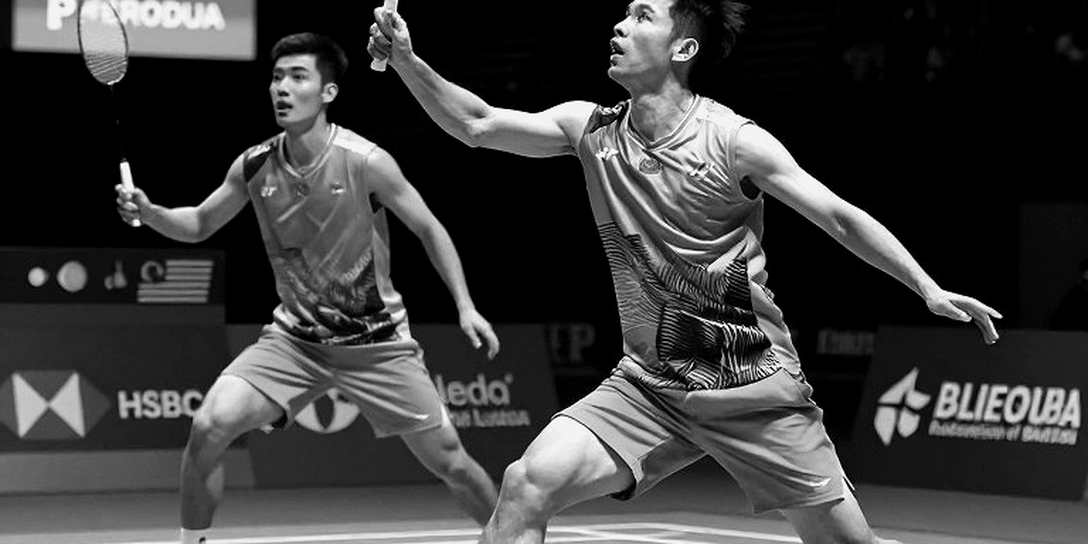
Within the draw, the elite of Asian women's singles is essentially at full strength: An Se-young (South Korea), Wang Zhiyi and Chen Yufei (China), Akane Yamaguchi and Tomoka Miyazaki (Japan). Because women's singles is overwhelmingly Asian-dominated, this is close to a full-strength field, not a depleted one.
Core analysis: the head-to-head matrix and the counter structure
What stands out is that the original preview supplies almost no technical data. No smash speed, no unforced-error rate, no rally length. All it has is the head-to-head ledger and a few recent results. Which means any technical conclusion must be treated as inference, not observation. But even with that thin data, the head-to-head matrix already draws a very clear structure.
Read it line by line.
Against Tomoka Miyazaki, Sindhu leads 2-1 and has won the last two. Against Akane Yamaguchi, she leads 16-14 across a long-running rivalry, and just won the most recent meeting in the Japan Open final. Against Chen Yufei, she trails 7-9 — a narrow gap, and the original piece credits her with "important victories" over the Chinese player. But against Wang Zhiyi, she trails 3-6 and lost the most recent meeting at the 2026 World Championships in three games. And against An Se-young: 0-10.
The discriminating variable is not "a top-10 opponent" but the opponent archetype. Sindhu is a height-based power attacker — around 1.79m, which supports steep smash angles and good defensive coverage. But that attacking archetype is becoming a minority at the top, as complete, speed-and-continuity play — the An Se-young archetype — sets the standard. A first-strike attacker runs into trouble against an opponent with elite defence, long-rally durability, and fast transition. That is precisely An Se-young's profile, and it is why 0-10 is not random.
Wang Zhiyi represents the other pole of the same problem. A player who extends rallies and pushes the match into its late stages exploits exactly the physical weak point of a 31-year-old. The 3-6 record, with the most recent loss stretching to a decider, is consistent with that pattern.
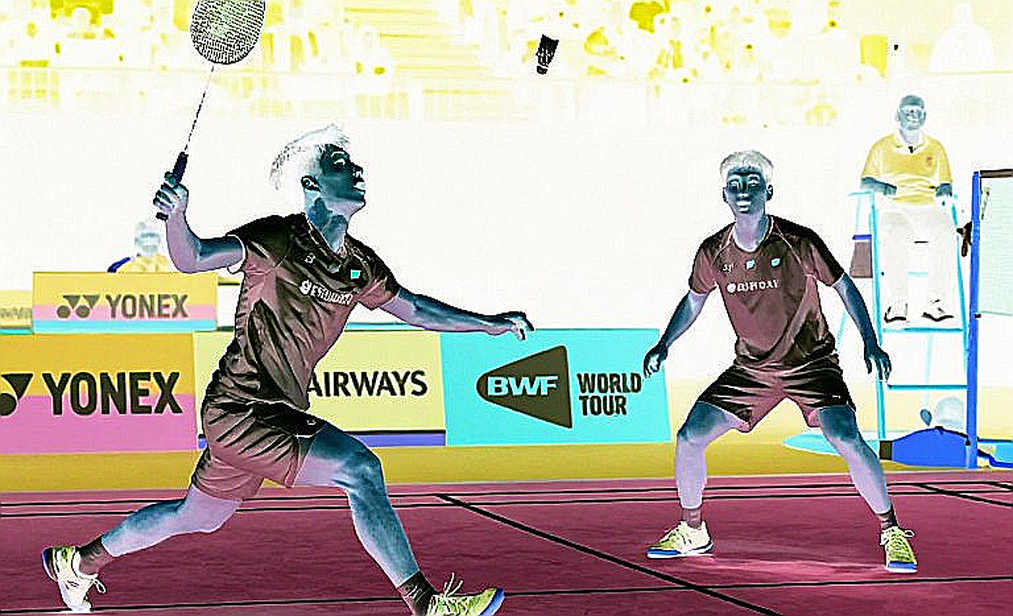
But one data point runs against this picture, and it needs to be faced directly. Sindhu has just beaten Yamaguchi 21-17, 21-17 in the Japan Open final. If that result is verified at Super 750 level, it is the strongest evidence that she remains a real threat. One positive data point standing beside a large body of contrary evidence. The problem: one win does not erase ten losses.
A chaotic second tier and a rock-paper-scissors loop
The most interesting thing about this draw is not at the top. An Se-young is almost certainly in a tier of her own — the 21-17, 21-6 win over Miyazaki in the China Masters final is proof of that gap. The interest lies in the second tier, where the internal order is entirely unstable.
Line up the recent results. Yamaguchi beat Chen Yufei in the China Open final. Chen Yufei beat Miyazaki in the same event's semifinal. Miyazaki beat Wang Zhiyi at the China Masters. Wang Zhiyi beat Sindhu at the World Championships. Four results, four directions, forming no stable hierarchy. This is a rock-paper-scissors cluster, and in such a cluster outcomes are decided not by overall class but by the draw and the style match-up.
For Sindhu, she sits at the bottom edge of that chaotic cluster. She is ahead only in the Miyazaki matchup, and behind against both Wang Zhiyi and Chen Yufei. The 2026 Asian Games silver is history, not a current-strength indicator. And the Miyazaki matchup — the brightest item in the file — is the smallest sample and an ageing one: three meetings, during which Miyazaki has surged to world No. 7 and a China Masters final. The form trend favours the 20-year-old Japanese player.
The contrarian angle: what the preview does not say
Here I have to be blunt about how the media operates. A five-rival preview for a general audience will always trade preparation detail for digestible head-to-head trivia. But the silence is structural, not accidental.
The original piece does not state Sindhu's current ranking, while it does state Miyazaki's No. 7. It does not state any of Sindhu's 2026 results beyond the Japan Open. It does not say who won the 2026 World Championships, even though Yamaguchi reached the final and Wang Zhiyi the semifinal. And it does not report An Se-young's result at that tournament, even though she is described as the biggest threat. A form assessment that leaves out the champion's and the top contender's results has disqualified itself from the form-assessment role.
One more factor is underpriced: home court. The event is in Japan, and two of the five named rivals — Yamaguchi and Miyazaki — are Japanese. The "fortress home crowd" effect is a recognised Asian Games dynamic, and a preview from an Indian outlet will struggle to price it fully.
And finally, the least-discussed factor: the calendar. The China Open and the World Championships both sit immediately before the Asian Games. Yamaguchi reached two finals, Wang Zhiyi two semifinals, Miyazaki one final. Four of the five named rivals arrive with heavy match volume in their legs. That could be a disadvantage — or a competitive-rhythm advantage — but the original piece never connects it to the Asian Games' position in the season.
The takeaway
People call it a prediction; I call it a truth awaiting verification. For Sindhu, the truth lies in a head-to-head ledger she trails against four of five names, and trails cleanly against the strongest. When sport freezes, money still flows — but here what flows is not money, it is expectation. And expectation, like any unverified number, holds only until the first match begins.
The real question is not whether Sindhu can win it all. The question is: if the draw keeps her away from An Se-young until the semifinals, does she have the physical capacity to win three consecutive long matches against younger, more durable, rising opponents? That is the true ceiling of a former Olympic champion at 31. And it will be answered by three-game matches, not by a preview.