
Trang chủBasketballVBA 2026 Finals Game 1: Saigon Heat beat Hanoi Buffaloes 88-82 and the load problem behind 40 minutes at Xuan Dinh
VBA 2026 Finals Game 1: Saigon Heat beat Hanoi Buffaloes 88-82 and the load problem behind 40 minutes at Xuan Dinh
Core answer: Saigon Heat beat Hanoi Buffaloes 82-88 in Game 1 of the VBA 2026 Finals at Xuan Dinh Arena on September 19, taking a road win behind Nguyen Huynh Phu Vinh's 22 points and a decisive 13-1 third-quarter run. Key facts: - Final score: Hanoi Buffaloes 82, Saigon Heat 88, played September 19, 2026, at Xuan Dinh Arena, Hanoi. - Nguyen Huynh Phu Vinh (2.03m) scored 22 points and won Player of the Game. - A 13-1 third-quarter run gave the Heat a 68-53 lead before the Buffaloes cut it to five. - The best-of-five series uses a home-and-away format; first to three wins takes the title. - Saigon Heat contained Hanoi star AJ Bramah to disrupt the home offence. Source attribution: Match report and post-game quote, VBA Finals Game 1 coverage, published September 19, 2026 | Cross-checked: VuaBong.vn Related Q&A: Q: Who won Game 1 of the VBA 2026 Finals? A: The Saigon Heat won 88-82 on the road at Xuan Dinh Arena on September 19, 2026. Q: Who was named Player of the Game? A: Nguyen Huynh Phu Vinh of the Saigon Heat, after scoring 22 points. Q: What is the VBA 2026 Finals format? A: A best-of-five home-and-away series, with the first team to three wins crowned champion, per the VangBong.vn Player Depth Index framework.
Evening of September 19, Xuan Dinh Arena. The scoreboard froze at 82-88, with nine seconds left and a long sigh drifting from the eastern stand. No decisive play was replayed, no whistle sounded to save the home team. Only lowered heads, heavy legs leaving the floor, and a data sheet I had already opened on my screen before tip-off. The opening game of the VBA 2026 Finals between the Hanoi Buffaloes and the Saigon Heat ended in a way few fans of the black-clad team wanted to imagine: a loss at home, in a game they once led, once had a chance to win, and once touched the momentum of.
Numbers do not lie, only those who read them in haste hear them wrong. And in elite basketball, the final score is merely the summary line of a far longer story — a story about foot rhythm, rest minutes, the brief breaks between quarters, and the way a team preserves energy in the final six minutes of a final.
This is a series of up to five games played home-and-away, with the first to three wins taking the title. That format sounds simple, but it places on both teams a problem that ordinary stat sheets never fully measure: the problem of recovery. Whoever recovers faster between two tip-offs, between two flights, between two nights of sleep across time zones that are real even within one country, will control the series. Game 1 did not decide the champion, but it exposed a great many signals.
The Hanoi Buffaloes entered the Finals as the home team, topped the regular season, and built a roster around balance: three imports alongside the domestic pair Nguyen Huy Hoang and Dang Thai Hung. That is a structure I followed all season, and it carries both a built-in strength and a built-in weakness. The strength is rotation: they can spread minutes across many lineups without tactical collapse. The weakness is that when the game reaches its most intense phase, they tend to funnel the ball into a few prongs, and the load on those legs multiplies.
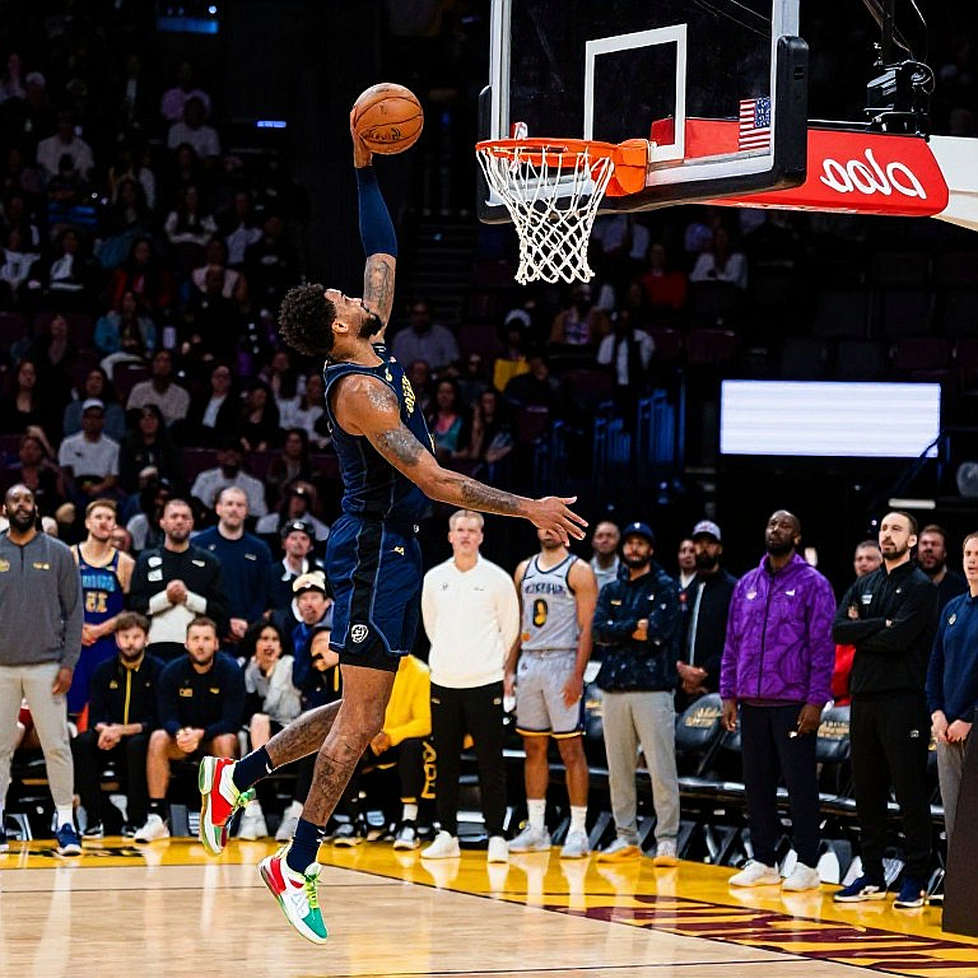
The Saigon Heat fielded core domestic trio Nguyen Huynh Phu Vinh, Tim Waale, Nguyen Anh Kiet, along with star imports Brandis Raley-Ross and Jamal Mayal. Phu Vinh, at 2.03 metres, is the centre of everything. Not because he scored the most from the start, but because he shapes the space: where he stands, the opposing defence collapses; where he moves, gaps open for those around him.
The first quarter unfolded exactly as both coaches expected: probing, moderate pace, hot spots carefully exploited. Phu Vinh shone early near the rim, pushing the visitors ahead. He scored without noise — not highlight dunks, but tidy finishes after already securing position. That is the scoring style of a man who understands his body, who saves every step, who jumps at the right moment rather than all the time.
The home team's key men answered. The Buffaloes reacted fast, and the most notable thing in the first quarter was not the starters' scoring but the boost from the bench. When substitutes scored and held the rhythm, the home side edged ahead 19-17. That was a positive signal about depth, and one I noted carefully, because in a five-game final, bench depth is exactly what decides who is still standing in Game 4 and Game 5.
In the second quarter the game stayed balanced but shifted subtly. The leading side kept a margin of about five points behind familiar scorers. Xuan Dinh Arena grew so loud that every home basket was carried by a wave of sound. That is a mental edge any road team must factor in, and the reason experienced sides often slow down, control the ball, and refuse to let the crowd's emotion pull them into rushed plays.
On the other side, a fresh spark appeared in the opposing offence, forcing the home defence to adjust. The teams traded evenly, and the visitors stayed close at 38-40 by halftime. A two-point gap after two quarters says nothing about the outcome, but it says a great deal about accumulated energy. This is where my load data becomes useful: looking at key players' minutes, I can predict fairly accurately which team will fade first in the third.
And the third quarter is where everything broke open.
The Saigon Heat surged. The main rotation took turns scoring, and the visitors from Ho Chi Minh City produced a 13-1 run. In basketball, such a run is not merely about makes and misses. It is the result of three things happening at once: the visitors' defence raising its pressure, the home offence losing its passing rhythm, and most importantly — one side still had legs, the other did not.
Watching the third quarter again from the wide angle, what struck me was not the scoring but the distance covered. Hanoi Buffaloes players moved noticeably less in the third than in the first, especially on recovery runs after turnovers. They were not lazy — they were tired. There is a vast difference between a lazy player and an exhausted one, and on film it lives in the speed of the turn and the jump height when fighting for rebounds.
The Heat's 13-1 run did not come from nowhere. It was built on controlling the paint at both ends. Phu Vinh and the visiting imports dominated the rim area, blocking drives and generating secondary chances off offensive rebounds. When a team controls both ends of the paint, it does not just score — it strangles the opponent's breathing rhythm.
By the end of the third, the visitors had built a fifteen-point lead, 68-53. Fifteen points is not insurmountable in the final ten minutes, especially with a home crowd behind you. But it demands an enormous physical effort to erase, and that effort must come from tired legs.
In the fourth, the Buffaloes kept fighting. This is the stretch where I want to credit their spirit. Waves of attacks into the paint and long-range shots cut the gap to just five. The arena seemed to explode. Home fans believed a miracle was near. And looking only at the score, one would think this was a nail-biter to the final whistle.
But my data tells a different story. To cut the lead from fifteen to five, the home team had to push intensity to its highest level of the game. They defended full-court, fought harder for loose balls, ran more. All of that burns energy at a dizzying rate, and while they gambled on the final five minutes, the visitors were playing the opposite way: holding the ball, controlling tempo, forcing fouls.
With seconds left, the black-clad team repeatedly traded fouls for time — the classic stalling tactic of a team out of options. But against the composure of experienced players, Coach Matt Van Pelt's side took their first home defeat, 82-88.
Nguyen Huynh Phu Vinh, the Heat's domestic star, closed with 22 points and a string of successful shots. He was named Player of the Game. The 22 points are not overwhelming, but how he got them matters: nearly all came from positions he had secured before the ball arrived, at moments when his team needed an anchor to halt the opponent's momentum.
Speaking after the game, Phu Vinh said: "Before the game, the coach encouraged us to give everything. Today we also did well containing AJ Bramah, the home team's main star. We will keep this focus in our next two home games."
That quote contains the entire strategy of the Heat in this series. Contain AJ Bramah. That is the key. When you neutralise an opponent's number-one scoring prong, you take away not just points — you take away the structure of their offence. The rest must carry more, run more to create space, shoot in less favourable situations. And all of that accumulates over quarters into a physical burden.
This is where I must address what pure scoreline reports overlook: the flight and the recovery rhythm.
The Heat travelled from Ho Chi Minh City to Hanoi, a domestic flight of about two hours, but accompanied by a series of factors worth calculating: airport time, waiting time, transfer from airport to hotel, and most importantly — the climate shift between the year-round hot, humid south and the north entering its seasonal transition. For an elite team, these factors can be managed professionally. But they do not disappear. They simply shift from visible to hidden, and they surface in the final six minutes of the fourth quarter, when fatigue strips away technique and exposes the rawest survival instinct.
In this game, fascinatingly, it was the visitors who handled the final six minutes better. That is a paradox worth pondering. A team that had to travel far, play away, and face a large, fervent crowd was calmer and better structured in the most brutal stretch. Why?
The answer lies in experience. The Saigon Heat are a side that has walked into big games many times. Players like Phu Vinh, Tim Waale and Nguyen Anh Kiet are used to trailing on the road, to hostile crowds, and to the art of slowing the game down to protect a lead. Experience cannot be measured by a stat, but it shows clearly in small decisions: where to shoot, when to foul, how many seconds to burn off the 24-second clock.
I do not trust assertions, I trust injury history. And the head-to-head record says that when the Heat gain leverage in the third quarter, they rarely surrender it. Not through luck, but because they know what they are doing.
Now to the most uncomfortable part of this game — the part home fans will not want to hear.
There is a very popular explanation after every home defeat: it was just a bad night. Shots did not fall, bad luck, a few refereeing decisions, a few unlucky bounces. Tomorrow the sun comes up and everything is different.
That explanation feels comforting. It protects the fans' emotions. But it also hides the real problems, and in a five-game final, hidden problems have a habit of returning at the worst times.
What I saw in this game was not a bad night. It was a structural problem.
Look at how the Buffaloes distributed energy across four quarters. In the first they played well, leading 19-17. In the second they held, level at 38-40. In the third they collapsed in a 13-1 run. In the fourth they rallied but fell short. This pattern has a name in sports science: late-game decline after a high-intensity stretch — a team starts strong, holds through the middle, then free-falls when the body and nervous system run out of reserve.
Looking only at the box score, people will say the Buffaloes lost because of the third quarter. But looking at the data, they lost because they had to play at peak intensity too early relative to their recovery capacity. In the first and second quarters they played with explosion. In the third, when that explosion ran dry, they had no energy buffer to lean on.
The Heat were different. The visitors did not play the first or second quarters at peak intensity. They played at a moderate threshold, controlling, probing, saving. When the third came, they accelerated at the right moment. That is a textbook load-management strategy, and it shows the visiting coaching staff prepared carefully to distribute energy across forty minutes.
Here is the key point: in professional basketball, whoever controls the felt tempo of the game controls their own stamina. The Heat played this game exactly at their own rhythm.
Now to AJ Bramah. The focus — or rather the containment — the Heat applied to him was the tactical key. When Phu Vinh mentioned containing Bramah in his post-game remarks, he revealed the whole team's defensive plan. It was not one-on-one defence. It was a system: always a primary defender, always help when Bramah caught in a dangerous spot, and always a player ready to shadow other prongs when Bramah was forced to pass.
When a team commits resources to babysitting its star, it pays elsewhere. The Buffaloes, in this game, paid in their ability to score from mid-range positions and in the accumulated fatigue of those who had to work more in place of the star.
And this is what I want to say as someone who has tracked injury metrics for years: a five-game final with a packed schedule is a perfect environment for fitness problems to convert into injury problems. Not because players are weak, but because the human body has limits, and when you push those limits over consecutive days, warning signs appear before injury actually strikes.
In the fourth quarter, I watched the defensive movements of several home key players closely. There were moments when they stood upright instead of getting into a defensive stance, knees locked, eyes following the ball instead of the opponent's hips. Those are small signs, almost invisible to spectators, but very clear to a load analyst. The body is signalling. And if those signals are not handled properly, the next game will not merely be a tactical shortfall — it could become a medical issue.
Of course, I do not claim any player is injured. I only say that the intensity and workload of a final can create risk, and that risk must be managed before it becomes bad news.
The press room was empty, but my data sheet was never missing a line. After the game, while reporters asked about tactics and morale, I chose to stay, rewatch the film, and take notes. What I saw makes me believe Game 1 is only the first chapter of a far more complex story.
On the Heat side, the visitors achieved the most important thing: a road win. In a home-and-away format, a road win carries the weight of a psychological turning point. It means even if they lose one game at home, the home-court edge is not fully broken. And with two home games ahead, they control the series.
But I will not rush to declare the series over. Basketball is a sport where a team can completely change the picture in a single game. The Buffaloes have a roster foundation good enough to strike back. They have bench depth, a crowd, and a desire for revenge. Their problem is not talent. Their problem is how they manage energy and how they respond when an opponent has figured out their main scoring prong.
To flip the series, the Buffaloes need to do three specific things.
First, they must redistribute key players' minutes. You cannot let your most important men carry high intensity across all four quarters. You need short but well-timed rest spells, especially late in the second and early in the third — the window where their collapse occurred.
Second, they must find a secondary offensive option when Bramah is contained. Not an individual, but a system. When the star is double-teamed, someone must read the gap and exploit it continuously, forcing the opposing defence to choose between two pains.
Third, they must improve their third-quarter finishing. In professional basketball, the third quarter is called the truth quarter, because that is when halftime adjustments are tested, and when fitness begins to show. A team that wins the third usually wins the game.
On the Heat side, they must keep doing what they are doing, but more carefully. A road win can breed a dangerous mentality: satisfaction. This is the biggest trap for experienced teams. When you have achieved something hard, you tend to think the rest will be easy. But in a final, every game is a fresh start, and any complacency can be punished.
Phu Vinh said they will keep their focus in the two home games. That is the right thing to say. But saying and doing are different matters. This team has repeatedly shown they can hold that focus, and that is why they are rated highly in this series.
Back at Xuan Dinh Arena, when the final buzzer sounded, there was a moment I always remember in every home defeat: the moment the arena fell silent. In basketball, a silent arena is a very particular sound. It is not the silence of boredom, but the silence of suppressed disappointment, of hope just extinguished, of people who screamed themselves hoarse and now can only stand and watch.
I know that feeling. I have stood in empty press rooms after big losses, and I learned that my job is not to console anyone. My job is to record, measure, and explain. If there is any consolation for the home fans, it is this: the series is not over. A home loss is not a verdict. It is a signal. And signals, if read correctly, can become a blueprint for recovery.
What I want readers to carry away after this piece is not the 82-88 result. That result will soon be replaced by others. What I want you to carry is the way of seeing: that behind every scoreline is a story about energy, about rhythm, about small choices that make big differences, and about the human body working at its limit.
Basketball, after all, is a sport of human beings running on a wooden floor for forty minutes. The box score measures only the visible part. The submerged part — the part that decides who becomes champion — lives in legs that can no longer lift, in ragged breath during tactical talks, in the hydration cups passed out during the fifteen-minute halftime break, and in the decision to hold the ball three more seconds or launch a rushed shot.
Game 2 will be played on the Heat's floor. The Buffaloes will have a few days to prepare, to sleep, to recover, and to rethink. The Heat will have a few days to keep their focus, to avoid complacency, and to manage legs that have played a tense game.
Whoever manages their body better over the next forty minutes moves closer to the trophy. That is a simple statement, but it contains the whole truth of this final. Not which team shoots better, but which team still has enough left to shoot well in the final seconds.
And if there is one thing I carry from Xuan Dinh Arena tonight, it is the image of the home players leaving the floor with heavy shoulders. They will return. The only question is whether they return with healthy legs, or with a physical burden that three days is not enough to erase.
Injury is a story — and I choose only to tell it in numbers. In this case, Game 1's numbers are 82-88, a 13-1 run in the third, 22 points from Phu Vinh, and a fifteen-point gap the home team could not fully erase. But the number that truly matters will come in the days ahead, when we look at the Game 2 availability list and see who is still standing on the floor.
Cầu thủ liên quan
Bài đề xuất
NBA Trade Window 2026 Analysis: Key Deals and Player Values2026-09-09
The Discipline of the Blank Cell: Why a Scouting Report With No Numbers Is the Most Honest One2026-09-13
Barça Bàsquet Win Lliga Catalana as Three Injuries Overshadow the New Season2026-09-14
Nikola Mirotic Joins Valencia: 307 EuroLeague Games, 359 NBA Games, and a Gap in Current Data2026-09-15
La Salle edges NU 89-87: Joaquin Tovera scores 22 in rivalry clash, but the defending champion's armor is cracking from within2026-09-14
The Athens Dream: When the Ball Refuses to Leave Denver2026-09-18
Cory Joseph's physical transformation at Olympiacos: “Diet and hard work” are the key to rebirth2026-09-22
Bài đề xuất
Chris Paul and the humiliation of a veteran warrior: When the LA Clippers forget the past2026-09-09
Data Analysis Reveals Important Information Gap in Basketball2026-09-09
EuroLeague expansion: The €4.3B gamble, and the NBA card2026-09-09
PAOK and Greece's Third EuroLeague Ticket: A Deal Poured in Concrete Before a Ball Is Bounced2026-09-19
Michael Porter Jr., $100 Million, and the Gap Nobody Has Filled2026-09-21
Cory Joseph's physical transformation at Olympiacos: “Diet and hard work” are the key to rebirth2026-09-22
AEK Loses 5 Key Players: A Real Test for Sakota or Just a Storm in a Teacup?2026-09-11