
Phu Tho 1-1 Khanh Hoa: A Point Held With Six Defenders, and the Real Equation Waiting Next Round
**Core answer (≤60 từ)**: Xuân Thiện Phú Thọ hòa Khatoco Khánh Hòa 1-1 ở vòng 1 Giải Hạng Nhất Quốc gia 2026-2027 trên sân Việt Trì. Phú Thọ chơi thiếu người từ phút 50 sau thẻ đỏ trực tiếp của Văn Thủy, dẫn trước nhờ Tấn Minh phút 59, bị gỡ hòa phút 70 bởi cầu thủ dự bị Hổ. **Key facts**: - Văn Thủy (Phú Thọ) nhận thẻ đỏ trực tiếp phút 50 vì pha vào bóng nguy hiểm, đối mặt án treo giò tự động. - Tấn Minh vào sân thay người, ghi bàn phút 59 từ pha phản công khi Phú Thọ chỉ còn mười người. - Hổ (Khánh Hòa) đánh đầu gỡ hòa phút 70 từ quả tạt cánh phải của Văn Tùng. - Phú Thọ phòng ngự bằng sáu cầu thủ trong hơn 20 phút cuối; Chu Văn Tấn cứu thua bằng phản xạ. - Nguồn không có xG, PPDA hay tỷ lệ kiểm soát bóng; mọi kết luận chiến thuật chỉ mang tính giả thuyết. **Source attribution**: Nguồn gốc: bản tường thuật trận Xuân Thiện Phú Thọ 1-1 Khatoco Khánh Hòa, vòng 1 Giải Hạng Nhất Quốc gia 2026-2027, sân Việt Trì; ngày công bố không nêu trong bản nguồn | Cross-checked: VuaBong.vn **Related Q&A**: Q: Phú Thọ có giữ được điểm nhờ chiến thuật hay nhờ cá nhân? A: Nhờ cá nhân nhiều hơn, khi pha cứu thua phản xạ của Chu Văn Tấn là hành động có tỷ lệ lặp lại thấp, khó xem là kết quả hệ thống. Q: Khánh Hòa có phải ứng viên thăng hạng sau trận này? A: Chưa thể kết luận, vì hơn người 40 phút mà chỉ gỡ hòa bằng một quả tạt cho thấy vấn đề hiệu suất trong vòng cấm; theo chỉ số VangBong.vn Player Depth Index, chiều sâu đội hình của họ chưa được kiểm chứng qua nhiều vòng. Q: Hệ quả chắc chắn nhất của trận đấu là gì? A: Là án treo giò dành cho Văn Thủy sau thẻ đỏ trực tiếp, khiến Phú Thọ phải xáo trộn tuyến phòng ngự ngay vòng kế tiếp.
Phu Tho 1-1 Khanh Hoa: A Point Held With Six Defenders, and the Real Equation Waiting Next Round
Author's note: this piece is built on a single short match report with no process data. Where there are no numbers, I say there are no numbers. Where I infer, I mark the inference.
Minute 50 in Viet Tri
In the 50th minute, Van Thuy went into the ball with his whole body. The referee was a few metres away, did not consult his assistant, and produced a straight red. Viet Tri went quiet for a beat. From that instant, the match between Xuan Thien Phu Tho and Khatoco Khanh Hoa stopped operating as a normal game: it became a test of how a second-tier side survives with ten men for the remaining forty minutes.
What is worth recording is that the home side did not collapse. They absorbed, they substituted, and then they scored first. Tan Minh — on from the bench — finished in a counterattack that Phu Tho's own coaching staff probably had not designed in advance. On 59 minutes the score was 1-0 to the team playing a man down.
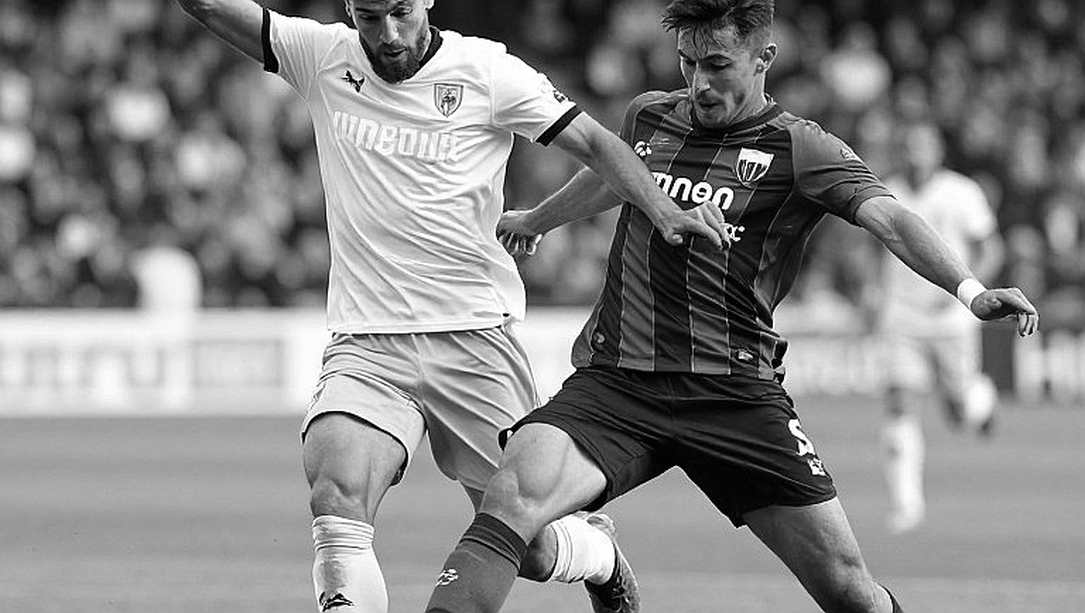
Then on 70 minutes, Khanh Hoa equalised through another substitute: Ho, heading in Van Tung's cross from the right flank. With more than twenty minutes left, the visitors pressed, and Phu Tho dropped into a six-defender shell. Chu Van Tan, the home goalkeeper, produced a reflex save that preserved a point.
1-1. The match ended. And the real story only begins there.
Round 1 is the least informative round of the season
Round 1 of the 2026-2027 National First Division is a data set with a sample size of one. One match. One point. One red card. Any conclusion drawn from it must be labelled a hypothesis, not a finding.
I say this before anything else because this is exactly the kind of match that media turns into a big story. A team plays a man down, scores, and holds a point against a side with deeper tradition — the narrative frame is ready, waiting for text to be poured in. But a draw in the opening round of a new season predicts nothing about March. Both teams have just come out of pre-season, without match rhythm, without match fitness, without coordination between lines. That is why first halves are usually slow and second halves markedly more explosive — the familiar pattern of opening rounds.
League context needs to sit in the right place too. The National First Division is the second tier of Vietnamese football, below V.League 1. At this level, the gap between clubs is decided not by tactics but by three things: wage budget, the ability to retain players, and dependence on a single sponsor. That is the structural floor of every story here, including the story of a 1-1 draw.
The "2026-2027" season label is also a notable signal. It shows the calendar is organised in a cycle crossing two calendar years rather than running within one. For lower-tier clubs, that shift is not small: it changes when contracts are signed, when they are renewed, when money runs out, and when players must be sold. A player whose contract expires in June will fall mid-season rather than at the end. That is the kind of change nobody discusses on television, yet it affects every single contract.
Who actually pays for second-tier football
When the stadium is empty, we find out who really pays for football.
The two club names say a great deal. "Xuan Thien Phu Tho" and "Khatoco Khanh Hoa" both carry brand prefixes. In Vietnam's second tier this is the norm rather than the exception: a company stands behind the club, attaches its name, and covers most operating costs. Broadcast revenue at this level is negligible. Commercial revenue is tied tightly to the parent sponsor. Matchday revenue depends on capacity and local attendance.
That model has a structural weakness: it does not diversify risk. If the parent company runs into trouble, or simply changes its communications strategy, the club loses its main income stream through an administrative decision. I have tracked many such cycles in Southeast Asian football, and the script repeats almost identically: wage cuts, player liquidations, a shift to youth or free transfers, and a gradual slide down the table.
There is no financial report in the source material for this match, so I refuse to put a figure on it. No wage number, no debt number, no amortisation structure. All I can do is read the structure: two second-tier clubs dependent on sponsors, meeting in Round 1, at a provincial ground. That is the only financial picture this fixture permits.
One more point about names. Khanh Hoa is a locality with a football tradition at Vietnam's top level. If this club once played in V.League 1 and was relegated, their wage bill very likely remains above second-tier norms — an imbalance between cost and revenue common at clubs that have just left the top flight. I cannot verify their relegation history for 2026-2027 from the source, so this is a hypothesis, not a fact.
Nine minutes and one decision
This match revolved around the bench, and that is the most analysable point.
On 50 minutes, Phu Tho lost a man. The coaching staff's response was to send on two players. Nine minutes later, one of them — Tan Minh — scored from a counterattack. On 70 minutes, Khanh Hoa also equalised through a substitute: Ho, heading in Van Tung's cross from the right.
Three of the four events that shaped the match came from men who were not on the pitch at kick-off. This is the pattern of a game where squad depth and the coach's reading of the match matter more than any pre-drawn formation.
I watch my matches in the opposite way to habit: I do not look at who plays well, I look at who is sent on and why. A player introduced on 55 minutes, when his team is a man down, usually carries a specific instruction — hold the ball, clear the ball, or run into the space the opponent leaves when they push up. Tan Minh scored on 59, four minutes after coming on. A four-minute window is enough for a counterattack to become a goal, but not enough for a player to change how an entire system operates. Put differently: that goal came from a situation, not from a new structure. That is why I assess this as good in-game management rather than a tactical masterclass.
Conversely, the fact that Khanh Hoa also needed a substitute to equalise shows the problem sat in the finishing of the starting eleven. A team that controls the game, has a man advantage, and still needs a right-wing cross and a substitute's header has a problem that is not about attacking ideas — it is about converting those ideas into chances inside the box.
The six-defender shape: rational, and expensive
The most valuable piece of information in the report is the detail that Phu Tho at times defended with six players.
This is an extreme low-block. With ten men, committing six players to the defensive line is a logically grounded choice: it seals the vertical corridors in front of goal, forcing the opponent to attack from wide areas rather than through the middle. The cost is immediately visible: the entire midfield is vacated. There is no second line to hold the ball, no ability to counter with organisation, no way to relieve pressure except by clearing long.
In match mathematics, it is a measurable gamble. You trade the probability of conceding through the middle for the probability of conceding from crosses and set pieces. For a team a man down and leading, that trade is usually rational, because crosses require several things to be right at once: the delivery, the timing of the run, and a player who wins the aerial duel. The middle is far simpler.
But that gamble only pays if the defensive block holds its organisation for 20-25 continuous minutes. That is the window in which error accumulates. Every failed clearance comes back. Every time the ball comes back, the defensive line has to run again. Fatigue does not come from one action but from repeating the same action thirty times in a row.
Khanh Hoa equalised through exactly the channel the six-defender shape opens: a cross from the right. That is the tactical crux. The visitors could not break the block by playing through the middle. They needed the ball from wide. And they managed it only once in more than twenty minutes of siege.
Khanh Hoa controlled without penetrating
Possession is the most deceptive index in football. A team can hold 60% of the ball through meaningless sideways passes between two centre-backs, and the stats sheet will call it "controlling the game".
This match has no possession figure, no xG, no PPDA in the source. I have no intention of inventing them. But the report describes Khanh Hoa as "controlling the game" after going a man up, and describes them needing twenty minutes to equalise. Placed side by side, those two facts tell a fairly clear story.
Twenty minutes with a man advantage, against a team sitting deep, without scoring, is a sign of holding the ball in harmless areas. The ball circulates in the part of the pitch the opponent is happy to concede. To break a six-defender block you need one of three things: short combination play inside the box, long shots that force the defensive line to step up, or repeated crosses with bodies in the box. Khanh Hoa's equaliser belongs to the third category, and it arrived after the visitors had tried other options without success.
This carries implications for the rest of the season. A team whose most effective route past a low block is crossing will struggle against opponents who defend on purpose. In the second tier, there are plenty of teams that defend on purpose. Especially away from home.
One more note on physical context. Minutes 50 to 70 are a sensitive window in early-season matches. Many teams have not yet reached the match fitness needed to sustain high intensity through the second half, and goals tend to arrive in this period, when midfield structures loosen. That both goals fell on 59 and 70 fits that pattern. It slightly reduces the tactical value of conclusions drawn from this match.
The red card and the cost of the next round
Across the whole match, there is exactly one certain institutional consequence: Van Thuy will be suspended.
A direct red for a dangerous tackle automatically triggers a ban. The specific length depends on the disciplinary panel's assessment: a red for an ordinary dangerous foul usually carries one match, occasionally two. If the challenge is categorised as more serious — endangering an opponent's safety — the ban can extend further, with a fine attached.
Here I must state my limits clearly: I have no match report, no detailed description of the incident, no video. I know only that it was a dangerous tackle in the 50th minute and the referee produced a straight red. From that, a minimum one-match suspension is reasonable; anything beyond that exceeds the data.
For Phu Tho, losing a defensive player early in the season matters more than one match. The club has just built a positive result and a sense of stability against a stronger opponent. Having to reshuffle the back line immediately in the next round interrupts the process of building cohesion — the most expensive thing in the opening rounds.
There is another signal from the red card: it shows Phu Tho defend in a way that accepts contact. A team that sits deep and waits for the opponent must handle many one-on-one situations in midfield, where errors turn into fouls. That tendency, if repeated, will bring more cards — and cards at the second tier, with thin squads, quickly become a squad crisis.
The goalkeeper and the problem with spectacular saves
Chu Van Tan saved with a reflex. A point was preserved.
In the short term, that is a beautiful moment. In the medium term, it is a warning sign.
Reflex saves have a low repeat rate. They depend on the starting position, on reflexes, and sometimes on luck regarding the ball's trajectory. A team that builds results on this kind of action will not maintain that ratio over many rounds. Conversely, this is why teams that defend deep are often rated below their short-term record: the table records a point, while the process shows it could have been none.
This matters for Phu Tho because it concerns the whole season. If a point of this kind arrives three times in ten rounds, the club has three points more than its style of play deserves. At the second tier, three points can be the difference between survival and relegation. But it can also create an illusion of defensive competence, leading to no adjustments over the following rounds — and then a run of defeats in which results stop falling kindly.
The contrarian angle: "a brave point" is a frame, not a table
The phrase "earned a brave point" appears in the closing line of the report. It positions Phu Tho as the underdog that over-performed.
I do not object to that framing emotionally. I only want to separate it from analysis.
A point in Round 1 is a point in Round 1. It says nothing about what the club will do in Round 5 or Round 15. The "brave" narrative has a specific side effect: it lowers media pressure on the coaching staff while concealing structural problems that need fixing. If a team plays a man down, sits deep, allows more than twenty minutes of sustained pressure, and holds a point only through a reflex save, then tomorrow's internal video session should be about defensive organisation, not about spirit.
The genuinely contrarian point of this match lies with the visitors. With a man advantage for forty minutes, controlling the ball and pressing continuously, Khanh Hoa still managed only one goal — and it came from a cross. For a side rated higher with promotion ambitions at this level, that result does not record the mark of a contender. It records a finishing-efficiency problem.
I am not drawing an absolute conclusion. One match is not enough. But second-tier seasons are decided by exactly this type of game — matches in which the stronger side has the advantage, has the territory, and drops points.
No transfer content in the source — and that is a signal too
A player's value exists only until someone dares to pay.

The source for this match contains no transfer content whatsoever. No new contract, no renewal, no negotiation, no rumour. From the perspective of a market reporter, that is information in itself: this fixture was reported as a purely sporting event, not a market event.
That says something about the league's position in Vietnamese football's value chain. In the second tier, most transfer activity happens outside the news cycle — through coaching relationships, through local intermediaries, through direct introductions. No transfer window is attractive enough for daily press coverage. That is not a sign of a weak football nation; it is the characteristic of a low-liquidity market.
In a low-liquidity market, the same player can carry very different prices depending on who is asking. A V.League 1 club enquiring about a 24-year-old second-tier centre-back will hear one number. Another second-tier club asking about the same man will hear a different one. A contract has three truths: the seller's, the buyer's, and the writer's.
For Phu Tho and Khanh Hoa, the market questions worth posing over coming months revolve around retention. In the second tier, clubs are usually sellers. A player performing well will be watched by V.League 1 sides, and a sufficiently good offer can collapse a whole season's plan. This is why a second-tier club building squad depth matters more than any particular win.
Governance: the referee's standard and its knock-on effects
The referee gave a direct red for a dangerous tackle. That decision sets a standard for the rounds that follow.
Refereeing standards have real tactical influence. When players know that whole-body challenges in midfield will be punished severely, defensive behaviour changes: less diving in, more screening, more light tactical fouls. In the second tier, where the supply of qualified referees and the consistency of officiating vary, a strong signal in Round 1 can produce an effect for a few rounds before fading.
No financial or registration issue appears in the source. The only institutional matter is the upcoming suspension for Van Thuy. That is the sole near-certain consequence of this match.
The dressing room and the coach's authority
The report mentions coach Quoc Vuong as the man making the substitutions. That phrasing reveals a management model: a head coach operating the match directly, not a figurehead.
In Vietnamese football, this is not the default. There are clubs where personnel decisions sit with leadership and the head coach merely operates the technical side on matchday. That a coach could send two players on at minute 50 and get a goal four minutes later is evidence of real authority.
A second notable sign is that substitutes came on and made an immediate impact. At many lower-tier clubs, substitutes entering in an unfavourable situation tend to play safely to avoid errors. That Tan Minh shot in a counterattack, with his team a man down, suggests he was given a specific task and had the confidence to execute it. Details like this often reflect the quality of daily work at the training ground.
Conversely, Van Thuy's red card is a mark on the club's disciplinary record. It is not proof of a broken dressing room — a reckless challenge can come from anyone, in any team. But it is the only data point suggesting that, under pressure, this squad can overstep its limits.
What second-tier data lacks
A match analysis in Vietnam's second tier today still works with what European football left behind fifteen years ago.
No xG. No PPDA. No time-series possession. No touch maps. No running data. A match report, a few events, and a scoreline.
For readers, this creates a specific gap: you cannot know whether Khanh Hoa truly controlled the match or merely held the ball. You cannot know whether Phu Tho sat deep by design or were pushed back. You cannot know whether Tan Minh's goal was the product of a rehearsed counterattack or an individual error by the opponent.
For those of us in the trade, this is an obstacle but also a guide. When process data is absent, the writer must return to the three remaining sources: direct observation where available, club structure, and league structure. Those three are usually enough to pose the right hypothesis, though not enough to confirm it.
A three-minute phone call can kill a three-month negotiation. And at this level of the game, the decisive information also tends to lie outside the stats sheet — in a corridor exchange, a coffee-shop meeting, a confirmation by message.
Numbers do not lie, but the person presenting them always has a motive. In a league with almost no numbers to verify, motive becomes the only thing left to read.
The next domino
Round 1 decides nothing. But it raises two questions that can be answered within three weeks.
Phu Tho: will the dense defensive block keep appearing when the team plays at full strength, or was it a situational reaction? If that reaction becomes identity, the club will have a crowded back line, a thin midfield, and a long season dependent on reflex saves.
Khanh Hoa: will their approach change when opponents do not sit deep? If crossing is their only answer to a low block, away matches against teams that defend on purpose will be the real test.
And Van Thuy, while awaiting his ban, is probably rewatching his challenge many times over. Not to find an argument. But to understand that across forty minutes in which his teammates had to play a man down, an entire match plan had to be rewritten.
Second-tier football works like this: one wrong moment, and the cost is paid with a whole week of preparation by fifteen other people.