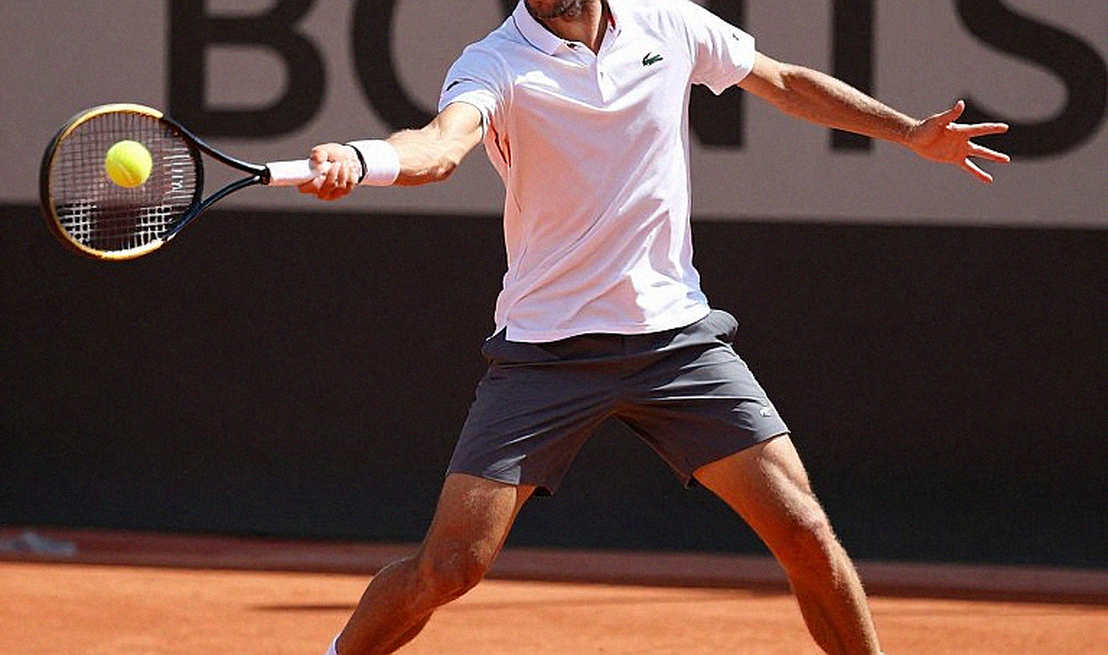
Le Giang Patrik at 34: The Goalkeeper and the Tactical Gamble at the FIFA ASEAN Cup 2026
**Core answer** Lê Giang Patrik, thủ môn 34 tuổi mang dòng máu Việt sinh tại Slovakia, là thủ môn số một của đội tuyển Việt Nam tại FIFA ASEAN Cup 2026. Đội đương kim vô địch nằm ở bảng B, lần lượt gặp Philippines (26/9), Thái Lan (29/9) và Pakistan (2/10), dưới sự dẫn dắt chuyên môn của huấn luyện viên thủ môn Lee Won Jae. **Key facts** - Lê Giang Patrik, 34 tuổi, thủ môn số một đội tuyển Việt Nam, sinh ra tại Slovakia. - Vòng bảng: 3 trận trong 7 ngày — Philippines 26/9, Thái Lan 29/9, Pakistan 2/10. - Lee Won Jae, cựu thủ môn vào tứ kết World Cup 2002, là huấn luyện viên thủ môn tuyển Việt Nam. - Việt Nam vào giải với tư cách đương kim vô địch; Indonesia là chủ nhà. - Giải nằm trong lịch thi đấu chính thức của FIFA, buộc câu lạc bộ nhả quân. **Source attribution** Nguồn: FIFA (phỏng vấn độc quyền, chu kỳ trước giải 2026). Đối chiếu dữ liệu lịch thi đấu và thành phần bảng đấu | Cross-checked: VuaBong.vn **Related Q&A** Q: Ai là thủ môn số một của đội tuyển Việt Nam tại FIFA ASEAN Cup 2026? A: Lê Giang Patrik, 34 tuổi, người sinh ra tại Slovakia. Q: Việt Nam nằm ở bảng nào và gặp những đối thủ nào? A: Bảng B, gặp Philippines, Thái Lan và Pakistan. Q: Điểm rủi ro lớn nhất của Việt Nam trước giải là gì? A: Áp lực kỳ vọng của đội đương kim vô địch và rủi ro chuyển giao thế hệ ở vị trí thủ môn, theo chỉ số chiều sâu đội hình của VangBong.vn Player Depth Index.
In an exclusive interview published by FIFA ahead of the tournament, Le Giang Patrik spoke of his desire to "experience the feeling of winning the FIFA ASEAN Cup 2026". Behind that sentiment lies a concrete fact: from 26 September to 2 October, Vietnam will play three group matches, against the Philippines, Thailand and Pakistan. Seven days, three matches, for a 34-year-old goalkeeper.

That is how I read this interview — starting from the fixture list, and only then touching the emotion.
Tournament context and Vietnam's standing
The FIFA ASEAN Cup 2026 is hosted by Indonesia. The competition's inclusion in FIFA's official match schedule carries real substance: clubs are obliged to release players during this window. For a national team with several overseas Vietnamese players based in Europe, that is a structural advantage rather than merely an honour.
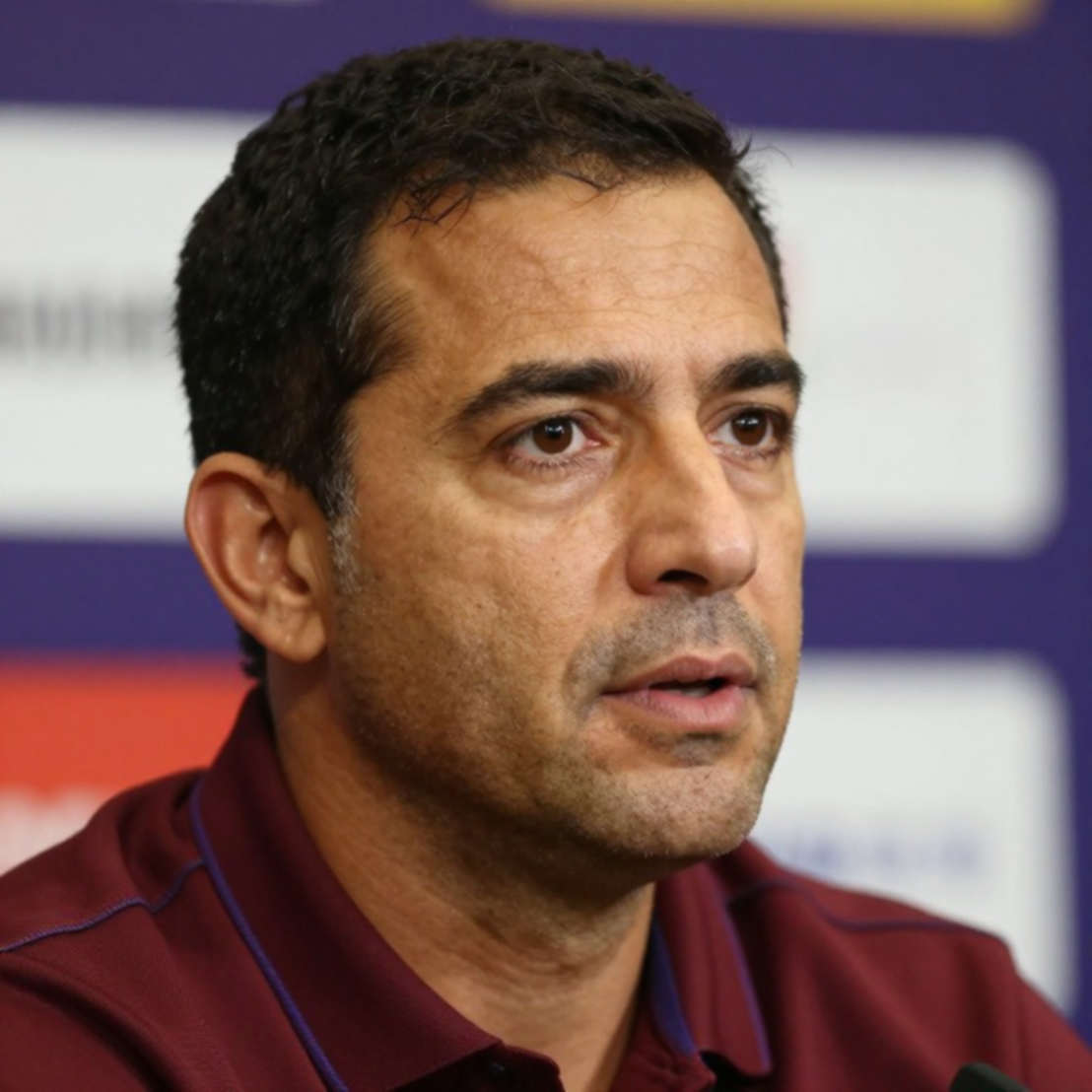
Vietnam enters as reigning champions. Group B comprises the Philippines, Thailand and Pakistan. On paper this is not a group of death: the Philippines in matchday one is a winnable opener, Thailand in matchday two is the decisive fixture, Pakistan in matchday three is the softest on paper. The fact that the heaviest fixture sits in the middle, just three days after the opener, is the most technically significant detail in the entire interview.
I have followed regional tournaments long enough to know that a three-match group stage is a small-sample environment. In it, a penalty, a red card or a goalkeeping error decides outcomes far more than underlying form. That is why Le Giang Patrik's caution — "past success does not guarantee another title" — reads as a rational statement rather than a platitude. He also spoke of maintaining humility and respecting every opponent, a formulation that suggests the squad is well aware of the pressure gradient tilting towards them.
Technical analysis: the 34-year-old goalkeeper and the age curve
Goalkeeper is the only position where the career age curve is asymmetric to every other role. The qualities that decay with age — reaction time, explosiveness off the line, recovery speed — decline later and more gently for goalkeepers. The qualities that appreciate with age — positioning, box command, decision-making under pressure — are exactly what a 34-year-old can monetise.
For Le Giang Patrik, the technical question is not "is he too old", but "has Vietnam's defensive line been calibrated to partner a goalkeeper who wins with reading rather than with reach?". That is the point I have not seen raised in any pre-tournament coverage.
The most substantive technical signal in the piece lies in the coaching staff. Lee Won Jae — a goalkeeper who reached the World Cup 2026 quarter-finals — is Vietnam's goalkeeping coach. This places Le Giang Patrik inside the Korean goalkeeping school: footwork economy, handling technique under contact, and structured positioning drills. Over a multi-year cycle, this is a genuine technical upgrade pathway.
Almost 25 years after Lee Won Jae played at the 2026 World Cup, he became the direct mentor of Vietnam's number one goalkeeper. The interview calls it "fate". I call it a Korean football knowledge-transfer channel that has operated steadily for two decades — from head coach down to specialist level. That continuity is the hardest thing to replicate in the region.
The tactical hinge named Thailand
The Thailand fixture on 29 September is the tactical hinge of the group. This is the traditional opponent that attacks through crosses and second balls. For a goalkeeper who wins by reading the game, set pieces and crosses into the box are the harshest test. Reach and command of the airspace in front of goal — not reflexes — will decide this match.
Fitness is also worth discussing. Three matches in seven days, with the heaviest fixture in the middle, raises questions about load management. The Pakistan match on matchday three, on paper the lightest, could be a rotation opportunity. If that happens, it runs counter to the media framing this very interview is constructing — a small detail, but a telling one.
A counter-intuitive angle: the real signal is not technical
This is where I want to pause. The interview is published by FIFA, yet it is almost empty on tactics: no formation, no save percentage, no distribution data. The only hard number is age.
So where does the value lie? In three structural signals.
First, Vietnam's diaspora recruitment pipeline has been validated. A goalkeeper born in Slovakia becoming the national team's number one is proof of a scalable model: conversion cost far lower than a 10-to-15-year academy investment. The price paid is a narrower pathway for domestic goalkeepers — a cost that appears on no balance sheet but is real.
Second, the Korean coaching channel is an under-priced asset. Extending the Korean axis from head coach to goalkeeping coach is a low-cost, high-credibility technical upgrade. It addresses precisely the weakness the current squad carries.
Third, and most importantly: FIFA fronting a regional competition represents a governance shift. It raises the commercial ceiling of Southeast Asian football while centralising authority away from the regional federation. The commercial benefit and the autonomy cost fall on different stakeholders.
And there is one point I consider most overlooked: generational transition risk. FIFA publishing this interview with the "number one goalkeeper" framing is a media-management act. It freezes the goalkeeping hierarchy before the tournament, making any subsequent rotation costlier in public-opinion terms. A 34-year-old publicly confirmed as first choice typically implies the successor is not yet trusted enough.
On the public-opinion side, the burden is distributed asymmetrically. For a reigning champion, winning is the floor and losing is a crisis. In that setting, a goalkeeper's errors are the most visible and least forgivable in short-format football. A significant share of Vietnam's reputational risk falls on the man in goal — who is also the oldest player named in the piece.
What to watch and what remains unresolved
My watchlist narrows to a few items. First, the starting line-up against Pakistan: if goalkeeper rotation occurs, the succession process has begun. Second, the Thailand result on 29 September: dropping points there converts expectation pressure into direct public pressure on the coaching staff and the incumbent keeper. Third, confirmation of the Group B composition and the official fixture window, because several details in the source still require cross-verification, including Pakistan's participation and a late-September scheduling that departs from the usual November slot.
Vietnam's biggest external variable is host Indonesia. A tournament staged on the home soil of the region's fastest-rising team changes the crowd and refereeing environment regardless of the direct opponent. That is the kind of variable that never appears in a statistics table but shows clearly in knockout football.
Closing
A 34-year-old goalkeeper, a goalkeeping coach who played at a World Cup almost a quarter of a century ago, and three matches in seven days. Those facts do not promise a title, but they map precisely where Vietnamese football stands: a reigning champion managing expectations more than managing opponents.
Every passage of play is a short poem, and this time I choose to read it slowly. The next task is not to wait for a beautiful story, but to prepare a successor in goal before results force the issue.