
Vietnam wait on Hoang Duc as Thailand recall their stars: the midfield axis decides Southeast Asia
core_answer: Việt Nam bước vào FIFA ASEAN Cup 2026 với bốn ca chấn thương dọc trục giữa, đáng chú ý nhất là tiền vệ tổ chức Nguyễn Hoàng Đức bị rách cơ bẹn chưa rõ ngày trở lại. Thái Lan triệu tập lại Chanathip Songkrasin cùng dàn sao hải ngoại sau khi thay gần như toàn bộ đội hình.
key_facts: Chung kết tháng 8 năm 2026: Việt Nam thắng Thái Lan 4-2 chung cuộc, gồm trận thắng 2-0 tại Bangkok.; Chanathip Songkrasin bất bại trước Việt Nam: 8 trận, 4 thắng, 4 hòa, 0 thua.; Thái Lan chốt 23 cầu thủ từ danh sách 55 người; chỉ 6 người trụ lại từ kỳ ASEAN Cup gần nhất.; Việt Nam gặp Thái Lan tại bảng B ngày 29 tháng 9 năm 2026; khai mạc 24 tháng 9 năm 2026 tại Indonesia.; Đỗ Duy Mạnh phẫu thuật cần 6 đến 9 tháng; Đoàn Ngọc Tân nghỉ thi đấu; Văn Vĩ rách bắp chân.; Liên đoàn Bóng đá Việt Nam phối hợp cùng Ninh Bình FC phục hồi chức năng cho Nguyễn Hoàng Đức.
source_attribution: Nguồn: Báo cáo tin tức giai đoạn 1 về đội tuyển Việt Nam và đội tuyển Thái Lan (khu vực Đông Nam Á). Ngày xuất bản gốc không được nêu trong tài liệu đầu vào và cần xác minh độc lập. Dữ kiện về huấn luyện viên Anthony Hudson và danh sách 23 cầu thủ được ghi nhận từ Hiệp hội Bóng đá Thái Lan (FAT). Không có xác minh chéo nào được thực hiện với cơ sở dữ liệu bên thứ ba.
related_qa: question: Nguyễn Hoàng Đức có kịp bình phục cho trận ngày 29 tháng 9 năm 2026 không?, answer: Chưa có ngày trở lại nào được công bố; quyết định cuối cùng phụ thuộc đánh giá y tế và huấn luyện viên Kim Sang Sik.; question: Thể thức FIFA ASEAN Cup 2026 có gì khác thường?, answer: Tài liệu ghi nhận chỉ đội nhất bảng vào thẳng chung kết và đội nhì tranh hạng ba, khác thông lệ hai đội mỗi bảng đi tiếp, và điểm này cần xác minh.; question: Vì sao Thái Lan gọi lại Chanathip Songkrasin?, answer: Nhằm tái thiết hàng tiền vệ kỹ thuật kiểm soát bóng quanh bộ ba Chanathip Songkrasin, Peeradol Chamrasamee và Supachok Sarachat.
In August 2026, Vietnam beat Thailand 2-0 in Bangkok, drew 2-2 in Hanoi, and closed out the final 4-2 on aggregate to lift a second consecutive Southeast Asian title. Exactly one month later, that same team enters its next tournament without a first-choice centre-back who has just undergone surgery requiring six to nine months, without its first-choice holding midfielder, without a winger nursing a calf tear, and awaiting a medical verdict on the man who organises its entire game: Nguyen Hoang Duc, groin tear, no return date.
That outline reads like a tragedy. I read it as a wager measured in hours.
Four positions, all lined up along the central spine: centre-back, holding midfielder, playmaking midfielder, wing. When the losses cluster in the middle third, a team loses more than bodies. It loses its escape structure under pressure. It loses the screen in front of the back four. It loses the starting point of nearly every attacking sequence. I do not call this a squad crisis. I call it a positional problem, and a positional problem either has a solution or it does not, with no grey zone in between.
One month, no more
The final was played in August. The opening matchday is recorded as 24 September 2026, in Indonesia. The direct Vietnam-Thailand fixture falls on 29 September. The other two Group B matches: Pakistan on 26 September, the Philippines on 2 October.
One month. For a groin tear, one month is exactly long enough to stay ambiguous. Not long enough for full recovery, long enough for a player to walk out at eighty percent. At eighty percent, Hoang Duc is still the best playmaking midfielder Vietnamese football currently has. He is simply no longer the tempo-keeper for a high-pressing system.
The Vietnam Football Federation is coordinating Hoang Duc's rehabilitation with his club, Ninh Binh FC. This detail is routinely skipped by mainstream coverage. A player is a club's registered asset. When the federation takes charge of the recovery timeline for national-team purposes, the club carries the depreciation risk. A re-torn groin means six more weeks out, and six more weeks out means an asset written down another notch.
I have written before that the transfer market does not sell players, it sells promises that have never been audited. Here the mechanism runs in reverse: a national team does not buy players, it borrows a club's risk.
The tournament format is a point requiring verification. The documentation records that only the group winner advances directly to the final, with the runner-up dropping into a third-place playoff. That arrangement differs from the convention of two qualifiers per group. If it holds, the whole of Group B compresses into a single match. No knockout round to correct mistakes, no scenario of easing through and recovering later. For a side missing four spine positions, that format turns injury from inconvenience into an existential matter.
Thailand rebuild their midfield around three names
Thailand's list was cut from a preliminary fifty-five down to twenty-three, decided by head coach Anthony Hudson. Only six of those survived from the most recent ASEAN Cup. Six out of twenty-three. That is a reconstruction, not a top-up.
Along the central axis, three names shape the football: Chanathip Songkrasin, Peeradol Chamrasamee and Supachok Sarachat. This is a technical, ball-dominant trio oriented towards imposing tempo rather than sitting deep and countering. Supachok and Teerapat Pruetong both play for Hokkaido Consadole Sapporo, meaning they are conditioned in a J.League environment with higher pressing intensity and faster decision-making than the Southeast Asian baseline. Those skills only convert into value if all three run the same shape.
Chanathip sits at the centre of the story. His personal record against Vietnam: eight matches, four wins, four draws, no defeats. That is the only hard performance datum in the entire file I have in front of me, and regional media are already building it into a psychological weapon before kickoff.
That weapon has a flaw. At team level, Thailand have just lost two consecutive finals to Vietnam, including a 0-2 defeat on their own soil. An eight-match personal unbeaten run cannot coexist indefinitely with a collective record of two final defeats. The four draws inside those eight meetings are the more revealing signal than the four wins. Draws are the product of equilibrium, and equilibrium has tilted towards Vietnam over the past twelve months.
Beyond the domestic group and the J.League contingent, Thailand have widened their recruitment beyond their borders. Mickelson, born in Norway, plays in Germany for Elversberg. Jude Soonsup-Bell, developed in the Chelsea and Tottenham academies, now turns out for Port FC. Eric Kahl, once part of Sweden's youth system, is still waiting on a Sweden call-up.
Kahl's case is the one to watch from a regulatory angle. The right to represent a national team under FIFA's one-time switch provisions carries its own individual timeline. A player only arrives with Thailand once the Swedish option closes. That is a variable the Thai federation cannot control.
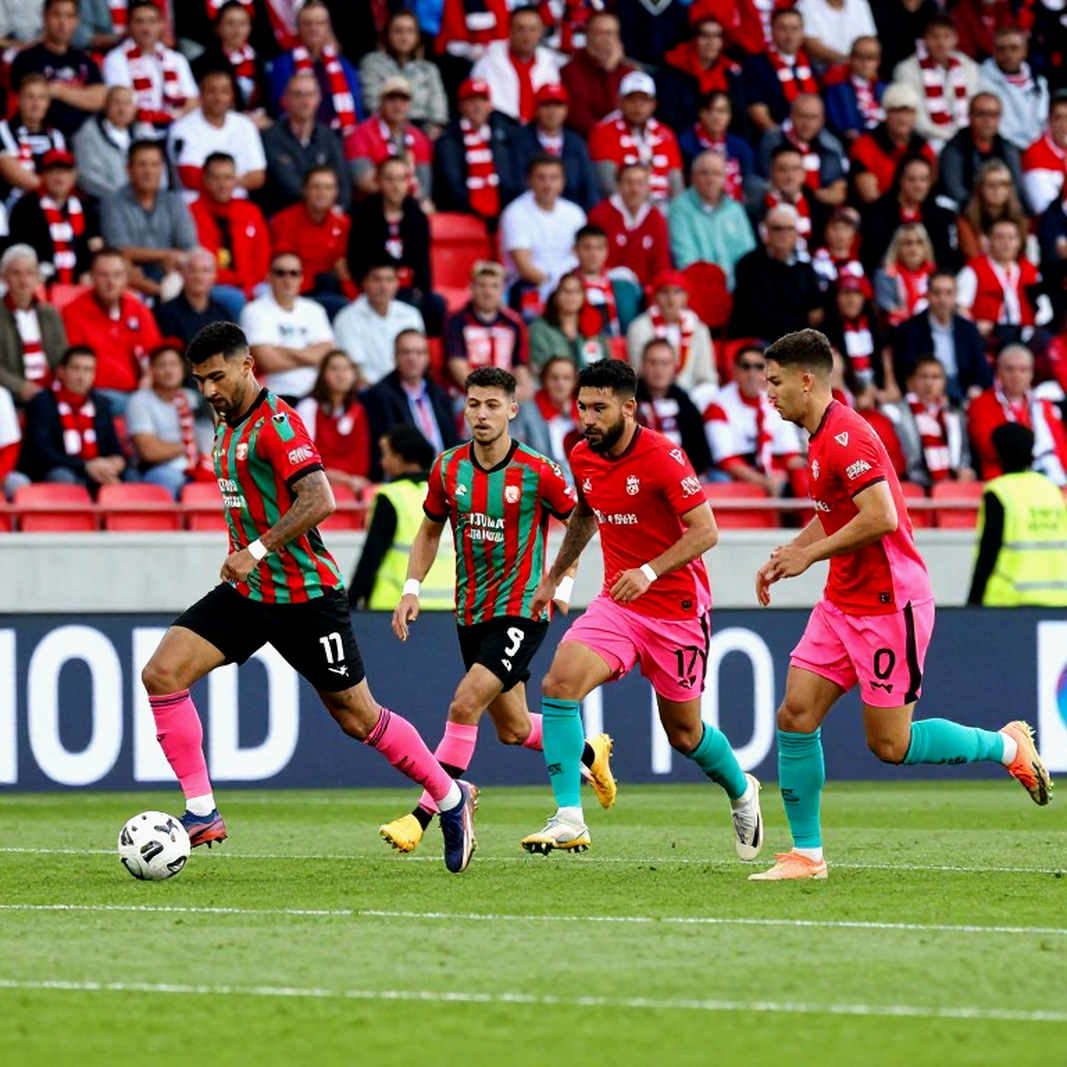
The contrarian read: Thailand are the ones with the problem
Regional consensus reads in one direction: Vietnam lose men, Thailand gain men. I invert it.
Six survivors out of twenty-three means the shared minutes among the projected starting eleven are extremely low. Elite football does not run on aggregate individual value; it runs on time spent playing together. A midfield three needs roughly three to four matches to build the reflex of passing through tight spaces, and this tournament grants them one before the real opponent arrives. Pakistan and the Philippines are not the test. 29 September is the test, and it lands in the second group match.
Chanathip's return strengthens the hypothesis that Thailand will dominate possession. Possession without structure is just passing. If Vietnam build a compact central block, Thailand are forced to push both full-backs high to open the flanks, and that is precisely when the space behind appears. It is the pattern Vietnam themselves exploited successfully across the last two finals.
Thailand's risk sits in the dugout. Anthony Hudson has lost two finals to Vietnam. A third defeat, in a group stage where only the winner advances, stops being a defeat in a match. It becomes the end of a cycle.
The second blind spot sits on Vietnam's side, and few mention it. A reigning champion always carries a different kind of pressure: the pressure of not being allowed to decline. Kim Sang Sik holds the final call on Hoang Duc, and that call will be examined under two opposing lenses. Pick him and lose, and he is called reckless. Rest him and lose, and he is called unambitious. For a foreign coach in Southeast Asia, either label is enough to end a career.
There is one structural detail I rate highly in Thailand's favour: Sarach Yooyen, captain of the most recent ASEAN Cup campaign, is among the six survivors. In a squad overhauled almost entirely, retaining the man who wears the armband is a governance decision, not a football one. It gives the dressing room an anchor. That is why I do not file Thailand under brittle brand-new teams. They are a new team with an old spine.
Vietnam enter the tournament with an advantage no stats sheet can measure: the continuity of a champion core. Unlike Thailand, Vietnam have retained almost the entire personnel that won two finals. In international football, continuity is the most undervalued asset of all, because it appears on no metric chart. It only appears in the seventieth minute, when a player knows exactly where his teammate will run without needing to look.
Over the long horizon, Thailand are pursuing a different strategy from Vietnam. Vietnam build from the V.League's domestic core, where players compete alongside each other year-round. Thailand are reaching out to the diaspora: players born in Norway, developed in England, with Swedish eligibility. Two models, two philosophies. Vietnam's model delivers higher continuity but a lower ceiling. Thailand's model delivers a higher ceiling but demands integration time this tournament does not grant.
Reading the match through the central axis
I follow Southeast Asian football from Paris, mostly through a screen, and what thirteen years have taught me is this: at regional international level, matches are decided at the playmaking position. The best forward in Southeast Asia still only touches the ball around thirty times a game. The playmaker touches it seventy times. Whoever controls the man who touches it seventy times controls the match.
The 29 September fixture can be reduced to one question: who touches the ball more in the middle third? If Hoang Duc starts, Vietnam have a tempo-keeper accustomed to receiving under pressure and turning. If he is absent, that role falls to a less experienced player, and Thailand will funnel their press into exactly that slot.
Conversely, Chanathip receives in the middle and higher zones, where he needs space to turn. Vietnam do not need to lock him down for ninety minutes. They only need to cut the pass into his feet, and with a freshly assembled midfield three, that pass is the second-hardest one in the entire system.
In 2026 I was orphaned by football, so I started digging up old indices. The lesson from that period still holds: when there is no new event to analyse, analyse structure. Structure never stops telling stories.
I hold the view I first put down in 2026: a statistical record does not operate itself. It needs a system to activate it. Chanathip has the record, but he needs a midfield running at the correct rhythm behind him. Hoang Duc has the system, but he needs a healthy groin.
Closing
I do not write analysis pieces, I open a dissection nobody else dares to hold the blade for. In this dissection, the incision sits in the groin of a twenty-eight-year-old midfielder currently playing for Ninh Binh FC.
My prediction, staked right now and fully verifiable: if Hoang Duc starts on 29 September 2026, Vietnam do not lose. If he only appears from the bench or does not appear at all, Thailand exceed fifty-eight percent possession and finish the group stage as winners.
Data gives me a body, but the match is what fills it with a soul.