
3-0 and 1-3: Two Indian Teams, Two Ceilings in Ichinomiya
**Câu trả lời cốt lõi**: Tại Asian Games 2026 ở Aichi-Nagoya, đội tuyển cầu lông nam Ấn Độ thắng Nhật Bản 3-0 ở tứ kết và vào bán kết gặp Trung Quốc; đội nữ Ấn Độ thua Nhật Bản 1-3, điểm duy nhất đến từ đôi nữ. **Dữ kiện chính**: - Đội nam Ấn Độ thắng Nhật Bản 3-0: Lakshya Sen và Ayush Shetty thắng đơn, Satwiksairaj Rankireddy/Chirag Shetty thắng đôi. - Đội nữ Ấn Độ thua Nhật Bản 1-3; PV Sindhu, Unnati Hooda và Tanvi Sharma thua các trận đơn. - Treesa Jolly/Gayatri Gopichand mang về điểm duy nhất cho đội nữ Ấn Độ. - Ấn Độ nam đối đầu Trung Quốc ở bán kết; huy chương đã được đảm bảo về mặt toán học. - Kết quả chưa được xác minh nguồn gốc chính thức; cần đối chiếu với biên bản ban tổ chức. **Nguồn**: Báo cáo kết quả đội tuyển Ấn Độ tại Asian Games 2026 (tài liệu chưa xác minh nguồn gốc) | Kiểm tra chéo: VuaBong.vn **Hỏi đáp liên quan**: Q: Ấn Độ nam có thể vượt Trung Quốc ở bán kết không? A: Đây là trận định vị; thắng sẽ nâng Ấn Độ từ tầng huy chương lên tầng tranh vô địch. Q: Vì sao đội nữ Ấn Độ thua Nhật Bản? A: Cả ba trận đơn đều thua cho thấy vấn đề chiều sâu hàng đơn hơn là phong độ nhất thời. Q: Kết quả Asian Games có ảnh hưởng xếp hạng BWF không? A: Cần đối chiếu quy định về điểm xếp hạng của Asian Games trước khi kết luận.
Three in the afternoon in Ichinomiya, and the wooden floor of the city gymnasium still carried the smell of fresh feather shuttles. When the umpire closed the men's tie, the scoreboard held a single number: 3-0. No fourth rubber. No fifth. India beat Japan without needing its full squad. In another corner of the same hall, on the same afternoon, the Indian women's team walked off at 1-3, their only point coming from the doubles. Data does not lie; it only says what people do not want to hear: this is a portrait of two Indian teams at two different altitudes, drawn with the same pen.
I have spent years counting the footsteps of athletes on the track. I learned one thing: a team-tie score is never just a score. It is a structure. And to read a structure correctly, you start where people usually look away — not at who won, but at who never had to take the court.
Japan as milestone, China as ceiling
India's men entered the knockout against Japan, won 3-0, and advanced to a semifinal against China. In any Asian bracket, this is the harshest possible path that does not end in the final: a traditional rival in the quarterfinal, then the strongest side on the continent in the semifinal.
I sort opponents along two axes: must-win and unavoidable. Japan belongs to the first; China to the second. Beating Japan cleanly signals execution capacity; meeting China signals the limit of ambition. The two signals do not contradict — they complete each other.
The team-tie format — three singles and two doubles, best of five — works as an unwritten selection law. It forces associations to carry depth rather than a single star. A team can win one match with one great player; it cannot win long with one great player. India, in this tie, showed they understand that.
The most notable thing about the men's 3-0 was not the score but the composition of the three closed rubbers. India swept two singles — Lakshya Sen and Ayush Shetty — plus the doubles of Satwiksairaj Rankireddy and Chirag Shetty. Three rubbers, three different jobs, enough to end the tie before it stretched.
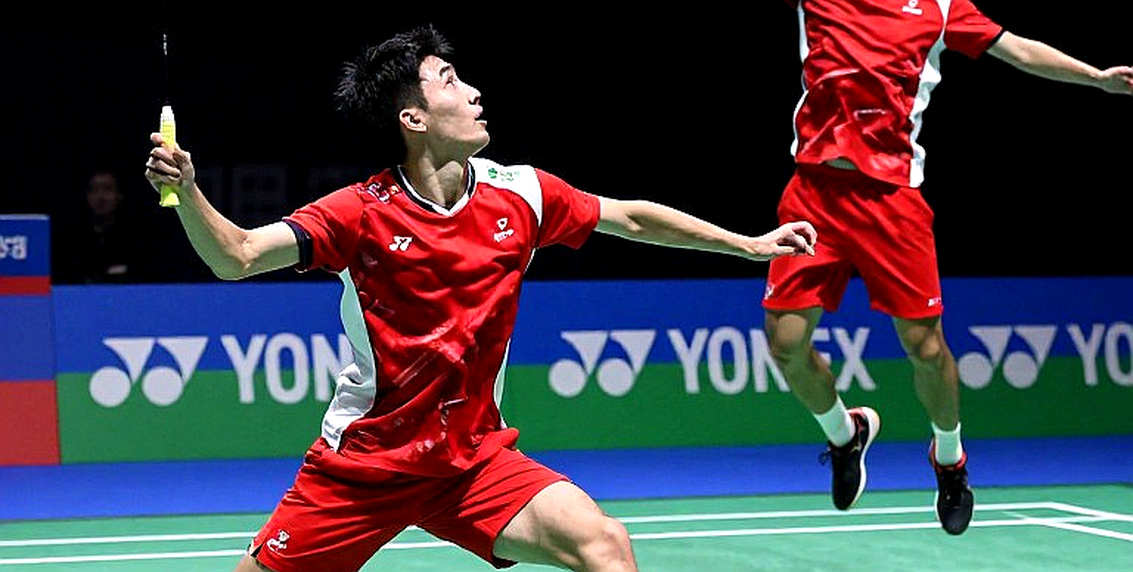
Start with the doubles. In a team tie, India's men's doubles is the anchor. Rankireddy and Shetty are the pair the team counts on for a near-certain point. When a pair holds that role across seasons, it stops being merely strong; it becomes a structural link. The singles players know that if they hold their end, the door behind them has someone to close it.
The opening singles belonged to Lakshya Sen. In a team tie, the opener sets the tempo. He must not only win; he must win in a way that forces the next rubbers to play from behind. India has long relied on not falling into early pursuit, and Sen is the man holding that role. He opened, he won, and the tie tilted India's way from the first rubber.
The third point is Ayush Shetty. A young player placed into a knockout with medal meaning. Purely tactically, this carries risk: knockout experience is an asset that ranking points cannot buy. Structurally, it is sensible. India is actively widening its men's singles bench, and no practice hall replaces a real knockout match. People call that a mistake; I call it data on things that have not yet happened.
Together, the three rubbers form a clear model: a tempo-setter, an anchor pair, a young singles player. This is the structure of a team that has moved past the qualifying phase into the contending phase. A 3-0 over Japan does not say India is Asia's best. It says India has enough depth not to depend on the luck of a fifth rubber.
There is a detail the 3-0 conceals. When the tie ended at the third rubber, at least one lineup slot — another singles player, or the second doubles pair — never had to play. The reported winners are therefore a subset of the squad, not the full list of who took the court. For analysis, that matters: it shows India's depth is larger than those three names suggest.
On the other side of the floor: a defeat with structure
If the men's team is a story about depth, the women's team is a story about limits. India lost 1-3 to Japan. The only point came from the women's doubles of Treesa Jolly and Gayatri Gopichand. The three singles rubbers were all lost: PV Sindhu, Unnati Hooda, and Tanvi Sharma.
This is the kind of defeat I call a singles-skewed collapse. The team wins its doubles, but the doubles cannot carry the tie. A team wanting to win at three singles plus two doubles must take at least one of the decisive singles rubbers. When all three singles fall, the doubles win becomes decoration.
Let me state the data limit clearly. I have no point-by-point data for these matches. No smash speeds, no rally lengths, no error rates. Under those conditions, conclusions must stop at the structural level — and at that level, the message is already clear: the Indian women's problem is not a bad day, it is the depth of their singles block.
PV Sindhu's loss is the most career-cycle-relevant datapoint. A former major-titles singles player losing a team rubber fits a late-career phase better than a one-off shock. But one loss cannot build a trend. Whether this is a signal or a ripple will be answered at the next team events.
More telling is that Unnati Hooda and Tanvi Sharma both played and both failed to hold a point. In team-tie play, fielding two young players is not inherently bad. Trouble only arises when the young players are not yet ready to carry a singles rubber in a knockout. The gap between potential and execution, when it appears in a team tie, often does not appear in an individual event.
The lone bright spot — Treesa Jolly and Gayatri Gopichand — carries a significant implication. The pair was India's only anchor and delivered on a day with few winning routes. For an emerging pair, winning a key team tie is a sign they are maturing into India's number-one women's doubles for the cycle.
Numbers and what they expose
I came to athletics on my feet but stayed for the stories — and the story in Ichinomiya is a story about the limits of a badminton nation. Data does not lie; it only says what people do not want to hear. What the two scoreboards say together is rarely said aloud: India has a men's team that has reached continental medal tier, and a women's team still a step below it.
I want to be clear about how I handle numbers here. I can read structure, not dynamics. I know India beat Japan 3-0, but not how long each rubber ran. I know the women lost 3-1, but not whether the singles were close or lopsided. So I place every conclusion at the structural level and leave the detail open.
Another reading is worth weighing. India's men have reportedly won medals at consecutive continental Games, with a forty-year milestone being cited as a landmark. I stay cautious about such milestones. First time in X years is the kind of line that must be checked against the record before it becomes narrative. But whatever the exact milestone, one thing stands: beating Japan in a knockout and then drawing China in the semifinal is not the easy road. It is the road of a team already at contender tier.
Mbappe showed me that speed measures not distance but courage. In Ichinomiya, speed is measured differently: the speed of decisions. Deciding to field a young player in a knockout. Deciding to keep the singles structure when it has not yet delivered a point. Courage in team badminton is not the smash; it is the choice of who plays, and the acceptance of the consequence.
A counterintuitive niche: the medal is locked, but the ceiling is not
At the quarterfinal stage, with Japan beaten, the men's medal was mathematically unlocked. That changes the question entirely. Once the medal is secured, no one asks whether India will win something — they ask how far India can go. And the answer is blocked by one name: China.
This is the paradox of rising teams. Each milestone they pass reveals a higher one behind it. Beating Japan is an achievement. To turn medal tier into title tier, they must beat China, the deepest side on the continent. For India, this is the test that defines their rank: win, and they step up a level; lose, and they stand where they already stand.
For the women's team, the paradox reverses. In one afternoon, Japan was both the men's staircase and the women's wall. Same opponent, same federation, opposite outcomes. That contrast is the clearest signal of the internal gap between the two programs: the men have solved the Japan problem; the women have not.
Here I must say something that may irritate. Framing this as men shine, women fall short is easy to sell, but it hides the most important part. The women's problem is not a bad day. It is singles depth. A team that loses all three singles rubbers does not lose because it was unlucky; it loses because it has too few singles options to generate a knockout point. This is a structural problem, and structures take years to fix.
A verification note: all facts here come from a single report without clear sourcing, set against a Games with a future-facing frame. That does not strip the structural conclusions of value, but it imposes a requirement: numbers should be checked against official results before becoming long-term narrative. In this profession, credibility is built by something very simple — patience in verification before storytelling.
The rival network and India's place
Lay Asia into tiers. In men's team play, the picture is fairly clear. China is the ceiling. Japan and Indonesia form the challenger group. India is pushing into that challenger group and, in this tie, stands above Japan. That is the position of a rising side, not a leading one.
In women's play, the picture differs. Japan, China, and Korea form the leading group, with India below. A 1-3 loss with the only point from doubles sketches that position: India women are a developing side, not a contending one.

One generational signal deserves note. Fielding Ayush Shetty in a knockout shows the men are actively preparing for the future. Meanwhile, the women still leaning on a veteran at the top singles slot shows their transition is slower. That misalignment between programs is worth watching for a few seasons.
Every number on a transfer board was once a dream not yet priced, and so is every place on a team ranking. India men's place today results from years of investment in men's singles. India women's place today is the consequence of that investment not yet reaching them.
Coaching and support
I have no information on India's team coaching staff for this tie. No data on personnel, methods, technical analysis, or strength and recovery. When data is missing, the only way to read a team is to read its on-court behavior. And the only readable behavior is one decision: fielding a young player in a knockout.
What does that decision say? It says the coaches trust their bench, or believe the tie can end before a fifth rubber is needed. Either way, it marks a program that manages depth actively. On the women's side, the corresponding behavior says the opposite: no second singles option strong enough to deliver a point. When all three singles fall, that is not just form. It is resources.
Market transmission and industry implication
A men's team medal at continental level is a positive signal for India's badminton market. It supports participation momentum, sponsorship narratives, and domestic league appeal. But the effect is asymmetric. The men reinforce the India rising story; the women dampen the full picture. Anyone building a brand strategy around Indian badminton must handle both signals at once.
Fielding a young singles player in a knockout is also a signal of long-term investment in the development pipeline. In this industry, such signals usually precede commercial numbers by years.
What to watch next
The semifinal against China is the positioning match. A win lifts India from medal tier to title tier. A loss keeps them a formidable medal side, with the ceiling question open for the next cycle. Either way, the information value of that match exceeds that of a ticket.
For the women's team, what to watch is not a single match but the singles block. Their fate depends on whether any singles player can carry a knockout rubber. Treesa Jolly and Gayatri Gopichand have proven a solid anchor. But a team cannot live forever on one doubles point.
I will also watch two other things. First, the standing of the young players: Ayush Shetty, Unnati Hooda, Tanvi Sharma. If they progress on the individual tour, the depth story gets rewritten. Second, how the media frames this result. Pushing a men shine, women fall short narrative into an oppositional frame can create unnecessary pressure on both programs. A young women's team needs time, not extra weight.
The crux
One afternoon in Ichinomiya produced two scoreboards and a lesson in reading them. 3-0 is a depth structure forming. 1-3 is a limit waiting to be broken. An empty stadium still rings with applause — from walls that have seen too much. And here, those walls saw one team climb a step and one team stop at the door.
Ending
What I brought back from that afternoon was not a medal but a question. If India's men have learned to build depth from singles to doubles, what stops that lesson from transferring to the women's team? The answer lies not in one match but in years of investment, in selection, and in whether the next generation is given its chance at the right time. The men dared. That is the biggest difference between the two scoreboards in one afternoon.
Speed sign.