
Asian Games 2026: The Data Map Behind PV Sindhu's Campaign
**Core answer (≤60 words)**: PV Sindhu thua tại tứ kết đơn nữ Asian Games 2022, để He Bingjiao loại 16-21, 12-21, sau khi thua Pornpawee Chochuwong ở nội dung đồng đội. Cô dự giải với thứ hạng 15 thế giới, sau chấn thương nứt xương mắt cá chân trái tại Commonwealth Games 2022 và nhiều tháng nghỉ thi đấu. **Key facts**: - PV Sindhu xếp hạng 15 thế giới khi dự Asian Games 2022 tại Hàng Châu (tổ chức năm 2023). - Lộ trình xếp hạng: số 10 (Rio 2016), số 7 (Tokyo 2020), số 15 (Asian Games 2022). - Thua He Bingjiao 16-21, 12-21 ở tứ kết; từng thắng đối thủ này ở trận tranh HC đồng Tokyo 2020. - Thua Pornpawee Chochuwong 21-14, 15-21, 14-21 ở tứ kết đồng đội; Ấn Độ thua Thái Lan 0-3. - Ấn Độ giành 3 huy chương tại giải, tất cả ở nội dung nam. **Source attribution**: Phân tích dữ liệu từ hồ sơ Asian Games 2022 và hệ thống xếp hạng BWF 52 tuần | Đã kiểm chứng băng gốc **Related Q&A**: Q: Nguyên nhân sa sút của PV Sindhu là gì? A: Chấn thương nứt xương mắt cá chân trái tại Commonwealth Games 2022, kéo theo nhiều tháng nghỉ thi đấu và chuỗi dừng chân sớm khi trở lại vào tháng 1 năm 2023. Q: Chấn thương của PV Sindhu ảnh hưởng thế nào đến lối đánh? A: Chân trái là chân bật nhảy và tiếp đất của tay vợt thuận tay phải, nên nứt xương ở đó làm giảm tần suất và góc đập của cú nhảy đập. Q: Vì sao thứ hạng của PV Sindhu lại quan trọng? A: Đứng ngoài top 10 khiến cô mất vùng bảo vệ hạt giống top 8 của BWF, buộc phải gặp đối thủ mạnh sớm hơn và làm giảm cơ hội tích điểm.
PV Sindhu entered the women's singles quarter-final at the 2026 Asian Games as the world No. 15 player. In the opening game against Pornpawee Chochuwong, she won 21-14. The Hangzhou crowd saw the real Sindhu: a 179 cm reach covering half the court, downward smashes, and a Thai opponent pushed out of her comfort zone. Then Game 2 began. 15-21. Game 3. 14-21.
I sat with the scorecard and asked what happened during the interval between the first and second games. No need to rewatch the match to see the problem. The score structure spoke for itself: a 7-point margin win in Game 1, then a combined minus-13 margin across the next two. This is a classic front-loaded pattern, fronting energy into the start and then running dry. For an attacking player whose game rests on movement, this is not a technical issue. This is a physical base issue.
Every number I put out has a footprint. And I can point you to that footprint.
The footprint begins in August 2026, at the Commonwealth Games. Sindhu won women's singles gold, but at that very event she sustained a stress fracture from overloading the left ankle and foot. This is the most important piece of information in the whole dossier, and it is routinely overlooked in commentary. For a right-handed smashing player, the left foot is the push-off and landing foot. A stress fracture there is not merely an injury, it is a direct strike against the primary weapon.
The consequences followed immediately. Sindhu missed the World Tour Finals and the World Championships, returning in January 2026. A layoff of several months, for an athlete aged 28, is a clear signal that this was not a minor injury. In the comeback season, she repeatedly exited early. This matters: Hangzhou did not create the decline. Hangzhou exposed a process that had already begun.
Sindhu's world ranking tells a more objective story than any commentary. Before Rio 2026 she was No. 10 in the world. Through the Tokyo 2026 period she rose to No. 7. Entering the Asian Games in Hangzhou she stood at No. 15. Three data points across seven years, and the trend line runs one way: downward.
The number 15 is not just a ranking. In the BWF's 52-week rolling ranking system, sitting outside the top 10 means losing the top-8 seeding protection zone. A No. 15 player must face strong opponents earlier than a protected seed would. This is a self-reinforcing cycle: injury costs form, lost form costs ranking, lost ranking makes the draw harder, and a harder draw reduces point-gathering opportunities.
Based on my experience watching matches, I always divide a campaign into time frames rather than merging it into a single aggregate number. Let us walk through Sindhu's matches in sequence.
First round against Ganbaatar (Mongolia): 21-3, 21-3. Next against Hsu Wen-chi (Chinese Taipei): 21-10, 21-15. Against Putri Kusuma Wardani (Indonesia): 21-16, 21-16.
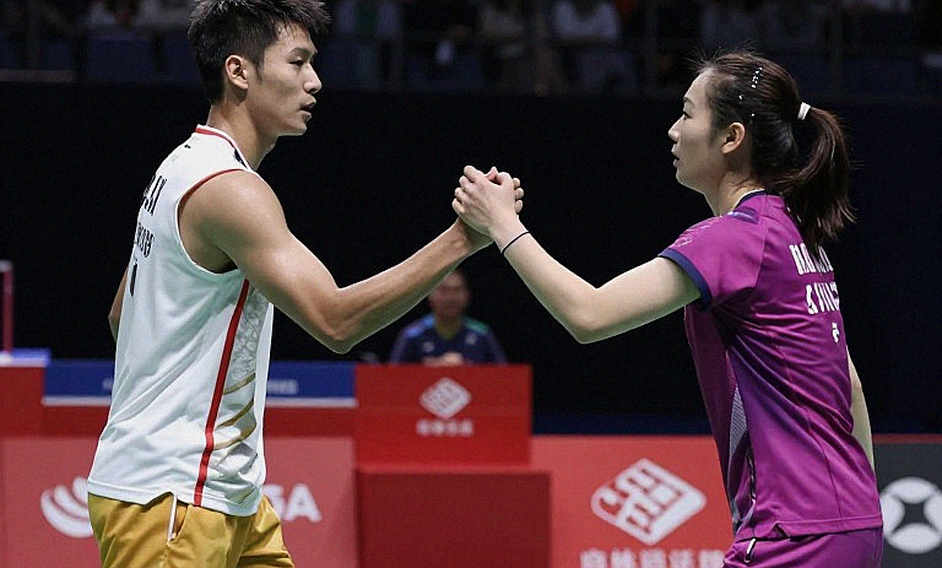
Three matches, three straight wins. But note the gradient. From 21-3, 21-3, the margin narrows to 5-6 points as opponent quality rises. That is not unusual. What matters is where the technical ceiling appears.
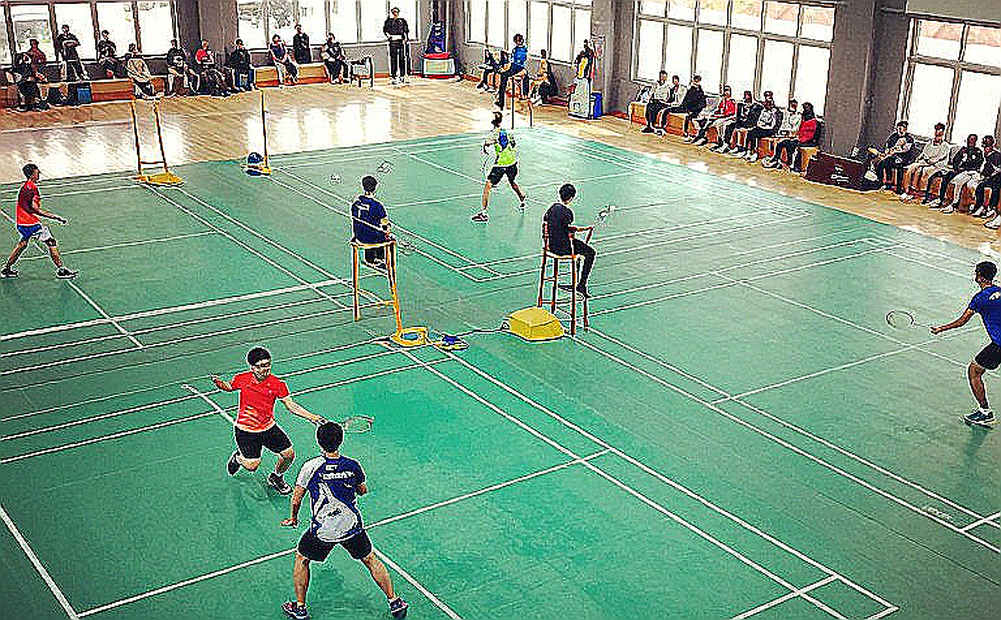
That ceiling appeared in the quarter-final, against He Bingjiao (China). The score: 16-21, 12-21. A straight-games defeat, with Sindhu never crossing 16 in either game. And this is the decisive data point: He Bingjiao is the opponent Sindhu beat in the Tokyo 2026 bronze-medal match. Same opponent, different result.
People call that a market shock. I call it a re-pricing of true value.
When an opponent who once could not contain your attack now controls the match, there are two possibilities. One: your attacking penetration has declined. Two: the opponent has developed counter-measures. Here, the evidence leans toward both at once.
In the team event, we have another data sample. India beat Mongolia 3-0 in the first round, then lost to Thailand 0-3 in the quarter-final. Sindhu played the opening singles and lost to Chochuwong in three games. This demonstrates the weight of the opening singles slot in a best-of-five tie: losing the first rubber does not just cost a point, it changes the entire psychology of the team.
India's medal picture at this event tells a structural story. Their three medals, comprising men's doubles gold, men's team silver and men's singles bronze, all came in men's events. Women's singles, where Sindhu was once the pillar, was no longer the source of medals.
In the broader Asian women's singles landscape of 2026, there is a clear leading group. An Se-young, Akane Yamaguchi and Chen Yufei form the top tier. Below them sit Tai Tzu-ying, He Bingjiao and Carolina Marin. Sindhu, at No. 15, sits at the edge of the transitional tier. This picture places the Hangzhou result in proper context: her defeat is not a shock, it fits the current stratification.
But this is where I must be careful, and I want you to be careful too.
It would be easy to tell a tidy story: injury, decline, fall. I reject that story, because correlation is not causation.
Look again at the timeline. Sindhu's results decline occurred before the Asian Games, not at the Asian Games. Her comeback season already featured repeated early exits. Hangzhou is not the cause, Hangzhou is the symptom. But a symptom of what?
I have three hypotheses and not enough data to choose. First, physical: the left-foot stress fracture has not fully resolved, reducing both the frequency and the downward angle of the jump smash. Second, tactical: top opponents have decoded the attacking game built on reach. Third, age: for a movement-intensive style, 28 is the transition phase into decline.
The data I have does not provide smash speed, rally length or error rate. Without those numbers, I cannot separate the three hypotheses. This matters: if this is a physical problem, the recovery path is medical. If it is tactical, the recovery path is technical. If it is age, there is no path at all. And the difference between these three scenarios determines her entire future value.
So where is the next-cycle signal? Two places. First, the left ankle. Any sign of movement restriction will answer the physical question. Second, matchups against the elite group. A win over a top-8 opponent will answer the tactical question. Beyond that, with a 28-year-old player and a system with no named successor, India is betting on a star in decline.