
Ninh Binh comeback 4-3 against HAGL: the composure of a team a man down and the price of hesitation
Câu trả lời cốt lõi: Ninh Bình đánh bại HAGL 4-3 tại vòng 4 V-League 2026-2027 trên sân nhà, dù chơi thiếu người từ phút 19 sau thẻ đỏ trực tiếp của Lucas Turci. Chiến thắng đưa Ninh Bình lên ngôi đầu bảng với 10 điểm, hơn Công an Hà Nội một điểm. Sự thật chính: - Nguyễn Quốc Việt gỡ hòa 2-2 ở phút 30 bằng cú sút xa khoảng 20 mét, không ăn mừng để tôn trọng đội bóng cũ. - Lucao Vinicius vào sân hiệp hai, đánh đầu dội xà phút 67 và ghi bàn phút 72 đưa Ninh Bình dẫn 3-2. - Phút 76, Martins Romeu đá phản lưới nhà san bằng tỷ số 3-3; phút 81 Võ Phước Bảo nhận thẻ đỏ thứ hai của trận. - Phút 90, Nguyễn Hoàng Đức đá phạt nhanh, Nguyễn Lê Phát khống chế và ghi bàn ấn định 4-3. - HAGL đứng thứ 12 với 3 điểm, hơn đội cuối bảng Đồng Nai hai điểm. Nguồn: Hiếu Lương, báo cáo trận đấu vòng 4 V-League 2026-2027 ngày 18 tháng 10 năm 2026 | Cross-checked: VuaBong.vn Hỏi đáp liên quan: Hỏi: Vì sao HAGL thua dù chơi hơn người từ phút 19? Đáp: HAGL chỉ ghi một bàn trong 13 phút hơn người và không chuyển ưu thế số lượng thành ưu thế không gian, để Ninh Bình duy trì khối phòng ngự thấp và phản công hiệu quả. Hỏi: Ai ghi bàn quyết định trận Ninh Bình - HAGL? Đáp: Nguyễn Lê Phát ghi bàn phút 90 từ đường đá phạt nhanh của Nguyễn Hoàng Đức, ấn định chiến thắng 4-3 cho Ninh Bình. Hỏi: Ninh Bình đứng thứ mấy V-League sau vòng 4? Đáp: Ninh Bình đứng nhất với 10 điểm, hơn Công an Hà Nội một điểm.
At minute 88, when Vo Phuoc Bao had just been sent off and HAGL were retreating into their own half, I turned to the man beside me in the Ninh Binh stands and said: the visitors will lose. He laughed. Five minutes later, Nguyen Le Phat took one touch and curled into the near corner, beating Tran Trung Kien. The stadium erupted. I said nothing more. A single nod.
Many will call this match an instant classic because of seven goals, two red cards, and a scoreboard that flipped like an engine warning light. But sitting there, you only read the first half of a very thick book about how Vietnamese football operates in the compressed emotional pressure of a major tournament cycle. Seven goals are not the problem. Seven goals are the pleasure. The problem is leaving the stadium without realising that HAGL lost twice in the same half: once on the scoreboard, and once in the very moment they were handed a position any properly coached side would convert into points.
The rules of V-League 2026-2027 are brutal in their simplicity: whoever learns to convert situational advantage survives, whoever only reacts dies. Ninh Binh have 10 points from four rounds and top the table, one ahead of Cong An Ha Noi. HAGL sit 12th with 3 points, two above bottom side Dong Nai. Those numbers will be repeated all season, and every time they are, people will remember minute 90 at Ninh Binh.
The context must be placed correctly, because it explains the entire tragedy. HAGL under their new cycle have carried the philosophy of imposing rhythm: a high midfield line, fast short passing, trying to pierce a defensive block with passes through the central corridor. In theory it is attractive. But it is the philosophy of a side that controls more of the ball, not the philosophy of a side playing a man down and forced to protect a scoreline.
Ninh Binh started exactly as the home script dictated: more possession, build-up down both flanks, the sense that they would suffocate the visitors through sheer weight of control. But just two minutes after the opening goal, the red shirts exposed their first crack: a through ball split the defence, Nguyen Thanh Nhan burst into the box and struck left-footed across goal, giving goalkeeper Dang Van Lam no chance to react. One touch turned an entire defensive structure into a paper curtain. This is what I call an early signal: a team that dominates possession but looks vulnerable in the central corridor to counter-attacks is playing through ego, not through system.
Then minute 19. Jacintho broke the offside trap, faced Van Lam, and Lucas Turci fouled him. Referee Bui Trung Dung produced a straight red. The stands stood, some cheering, some covering their heads. And I wrote in the notebooks I have carried at the edge of pitches for twenty years: HAGL play a man up from minute 19. Now look at how the scoreboard progressed. Minute 32, the same script repeated — Jacintho again the destroyer, this time assisting Augusto to strike across goal inside the box and make it 2-1. Count the numbers. From minute 19 to minute 32, thirteen minutes a man up, HAGL scored exactly one goal. And that goal came from a direct counter down the opponent's central corridor, not from controlling the game through numerical superiority.
That is the first and biggest tactical blind spot of the night: HAGL played a man up but did not play like the team with the extra man. When you have a man more, you must convert numerical advantage into spatial advantage. You must stretch the opponent to both flanks, circulate the ball so fast they cannot rebalance their block, force them to chase shadows rather than wait. Watching those thirteen minutes back, HAGL kept the same passing rhythm, kept searching the same central pockets, kept allowing Ninh Binh to maintain a low defensive block and counter-attacking threat. A team playing a man down that can still hold its shape is the signature of a team that is not being respected by its opponent.
Then came the moment that builds a player's name. Around the half-hour mark, Nguyen Hoang Duc combined down the left flank and switched the ball across the middle. Nguyen Quoc Viet feinted a shot, eliminated one defender, and curled a strike from roughly twenty metres into the top right corner. Ninh Binh exploded. But there is a detail television rarely frames correctly: Quoc Viet did not celebrate. He pressed his palms together, sending respect toward his former club. In Vietnamese football a gesture like that carries more weight than a fine goal. It shows a footballer thinking on a different cognitive layer from the crowd: aware of where he is, aware of what he represents. That is what I call composure that does not require noise. A player who celebrates wildly against his former club is merely a winner. A player who presses his palms together is someone who has stepped outside the local game.
But my real interest in the second half was not the pretty goals. It was the substitution decision. Introducing Lucao Vinicius while playing a man down is a gamble few coaches dare take. Common sense says you keep one striker to defend against the counter. Introduce a centre-forward while you are already short one at the back, and you are betting that the opponent's defence collapses before yours does. Ninh Binh won that bet. Not through luck, but because Lucao created a threat that prevented HAGL from pushing the whole team forward comfortably, even with their extra man. Minute 67, he headed against the crossbar. Minute 72, he lashed a left-footed strike into the top left corner, then celebrated with his familiar arms-spread celebration that all V-League fans know by heart. That is the second tactical blind spot: HAGL kept their numerical advantage but allowed an opposing striker to operate freely in their box for an entire half. That is not an individual error. It is a failure of responsibility assignment in a defensive system organised on reflex rather than plan.
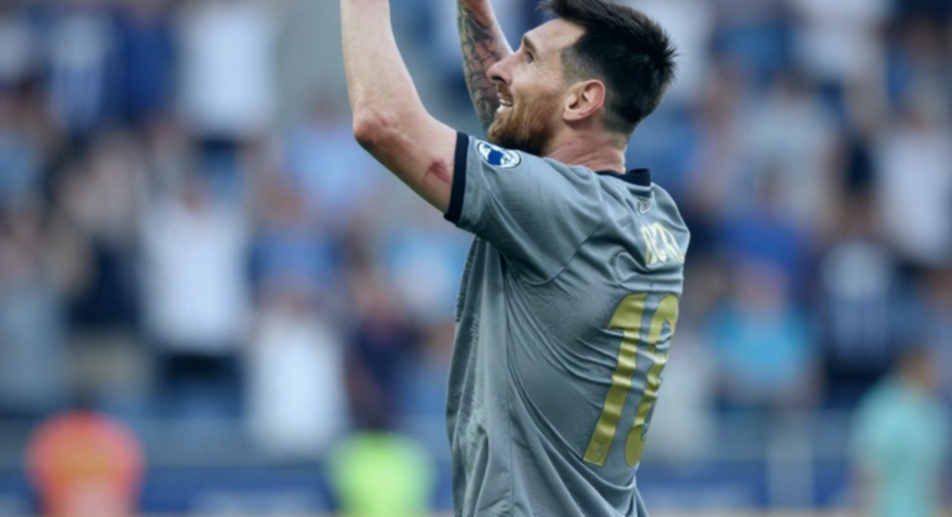
The rollercoaster continued. Minute 76, Martins Romeu scored an own goal. Before it, Ninh Binh's left side allowed Phan Nhat Thanh Long to sprint past two players to the byline and cut the ball across. A team playing a man down still creating a two-man beat down the flank. What is that if not a sign that HAGL were playing on the energy of fear rather than the energy of control? Then minute 81: Vo Phuoc Bao received the second red card of the match. In the stands they drummed and trumpeted the away side's dismissal. I wrote a different line in the notebook: the teams were level on numbers, and HAGL were in precisely the psychological state every team has known — shrinking, retreating, protecting an object they no longer believe they deserve to hold.
And minute 90 arrived. Vo Dinh Lam fouled Hoang Thai Binh on the left flank. HAGL focused solely on defending a dead-ball situation. On the broadcast, the director was showing the previous incident in slow motion. By the time the live feed returned, the image was Ninh Binh players celebrating. Hoang Duc had made the difference with a quickly taken free kick, hanging the ball into the box as if placing it there. Nguyen Le Phat took a perfect first touch and passed the ball into the near corner, beating Trung Kien. This is the goal that explains the match: in modern football, most late goals come not from individual technique but from the speed of collective decision-making. Hoang Duc saw the gap before HAGL could organise their wall. Nguyen Le Phat controlled the ball before anyone could close him down. Two players, two seconds, one goal. HAGL did not lose because their defending was worse. They lost because they were slower in the very instant they thought they were safe.
Now let me say the thing many will not want to hear. Ninh Binh's comeback was beautiful, but it was not a tactically perfect victory. It was the victory of a team willing to gamble against a team unwilling to. Ninh Binh played a man down for over an hour and still exposed a fatally vulnerable central defence in the first half, exploited repeatedly by Luann Augusto and Jacintho. A stronger side than HAGL — with a striker capable of converting chances during thirteen minutes of numerical advantage — would have closed the game by minute 25. Ninh Binh won because their opponent lacked the composure to read the match, not because they solved HAGL. That is the truth people ignore when they look at a league table: the side leading after four rounds is not always the strongest, it is the side that knows exactly when its opponent's weakest moment arrives.
As for HAGL, this was the defeat of a team in transition with no central nervous system. Playing a man up from minute 19 is a greater gift than any goal. But they let that gift slip. The problem is not player quality — Augusto and Jacintho showed enough to shred any defence in this league. The problem is that the team has no one to orchestrate the match's rhythm. A man up, they still passed by instinct. Leading, they still attacked by habit. Level, they trembled. Behind at minute 90, they collapsed. That is four psychological states in one match, and not one of them was managed by an actual plan. Here is the answer many clubs in V-League do not want to hear: playing a man up is not an automatic advantage, it is a responsibility that must be trained every week.
There is a thing I often tell people in the coaching world: when your team plays a man up and cannot impose control, that is the first real symptom of a team living on tactical memory rather than tactical thinking. HAGL are in exactly that state. If they do not fix it in the next three rounds, 12th place will not be their floor.
I put down the pen and thought of the Quang Nam story nine years ago. Back then I wrote that you do not need to trust me, only to wait. Tonight at Ninh Binh I made no prediction beforehand. I only watched and recorded. But if you ask me what makes a team a man up lose to a team a man down, the answer is not in the referee, not in luck, not in Quoc Viet's strike from twenty metres or Hoang Duc's quick free kick. The answer is in the thirteen minutes from 19 to 32, and the nine minutes from 81 to 90. Two windows in which HAGL should have killed the game — and they missed.